- Training
- 16 views

- What Is Glycerol?
- What Is Glycerol Used For?
- Contraindications and Side Effects
- Frequently Asked Questions
What Is Glycerol?
Glycerol is an organic compound belonging to the alcohol family, more specifically a triol, because its structure contains three hydroxyl groups (-OH). Its chemical formula is C3H8O3. At room temperature, it appears as a transparent, colourless, viscous and hygroscopic liquid, meaning that it can absorb and retain moisture.
This molecule is naturally present in triglycerides, the main components of many fats and oils. In the body, it plays a role in lipid metabolism: it can be used in various metabolic processes and contribute to glucose production under certain physiological conditions.
One of glycerol's most interesting characteristics is its ability to bind water. This property underlies some of its industrial uses and the applications studied in the field of sports hydration. In particular, glycerol has been used in hyperhydration protocols, generally together with a controlled amount of fluid, to promote a temporary increase in total body water.
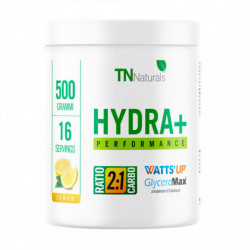
Concentrated, patented powdered raw materials are also available in the sports supplement sector, developed to make the use of the active ingredient more practical: Glyceromax, the best source of glycerol, a raw material used in some sports nutrition formulations.
Difference Between Glycerol and Glycerin
Glycerol and glycerin are two names for the same substance. They do not refer to two different molecules: glycerol is the most commonly used chemical name, while glycerin is a common name, particularly frequent in commercial contexts.
The English term glycerin is also used to refer to the same compound. Different names may appear on food, cosmetic and pharmaceutical labels, but it is always important to check the quality and purity grade required for the specific use.
Glycerol intended for food, pharmaceutical or cosmetic use must meet specific quality and purity requirements: products formulated for different applications should not be considered interchangeable.
Origin and Chemical Composition
Glycerol is an alcohol with three carbon atoms and three hydroxyl groups. This structure gives it a strong affinity for water and explains some of its physical properties, including its viscosity and hygroscopic capacity.
In nature, glycerol is found in triglycerides, molecules consisting of a glycerol backbone bonded to three fatty acids. When these fats undergo hydrolysis or saponification, the bonds can be broken and glycerol is released together with fatty acids or their salts, depending on the process used.
It can be obtained by processing vegetable and animal oils and fats. It can also be produced as a by-product of certain manufacturing processes, including biodiesel production, followed by appropriate purification treatments.
The composition and purity grade of the final product depend on the raw material and the production process. For this reason, when glycerol is used in foods, medicines or supplements, it must meet the specifications required for its intended use.
What Is Glycerol Used For?
Glycerol is used in various sectors thanks to its physical and chemical properties. In the food industry, for example, it can help retain moisture and improve the texture of certain preparations. In cosmetics, it is mainly used as a humectant, while in pharmaceuticals it may be included in formulations for different purposes.
In sports, interest in glycerol is mainly related to its ability to bind water and its potential use in hyperhydration protocols. Some studies have examined the combination of glycerol and fluids before or after exercise, observing temporary changes in plasma volume and total body water. However, the results depend on the conditions of use and do not demonstrate an automatic improvement in performance for every athlete or sport.
Food Use as an Additive
In food applications, glycerol is identified by the code E422 and is used as an additive with several technological functions. One of its main functions is as a humectant: thanks to its ability to retain water, it helps maintain moisture and limit the drying out of certain products.
It can also be used as a solvent or carrier for certain ingredients and can contribute to the texture of food preparations. Its slightly sweet taste may also influence the flavour profile of some foods, but it should not be confused with high-intensity sweeteners or calorie-free sugar alternatives.
The technological functions of glycerol in food include:
- Humectant action: helps retain moisture and maintain a soft texture in certain preparations;
- Solvent and carrier function: can facilitate the dispersion or incorporation of certain ingredients;
- Contribution to texture: can influence the physical properties and structure of specific products;
- Contribution to taste: has a moderate sweetness that can be useful in certain food formulations.
The presence of glycerol in a food does not necessarily mean that the product is sugar-free or low in calories. To assess its nutritional characteristics, it is always necessary to consider the entire formulation and read the nutrition table.
Glycerol may also be present in products formulated to reduce the use of traditional sugar, but it should not automatically be considered equivalent to zero-calorie sweeteners.
In the European Union, glycerol E422 is an authorised food additive, provided that it complies with the conditions of use and purity requirements established by legislation. Its presence in the ingredients list should therefore be interpreted in relation to its technological function and the amount used in the product.
Contraindications and Side Effects
Glycerol is used in various food and pharmaceutical products, but its tolerability depends on the amount, method of administration and intended use. The small quantities used as a food additive should not be confused with the higher doses used in certain pharmacological or hyperhydration protocols.
In sports, consuming large amounts of glycerol together with high volumes of fluids may cause unwanted effects. Those reported in studies and safety assessments include:
- Nausea and gastrointestinal disturbances: may occur after consuming large amounts or following inappropriate methods of use;
- Headache: is a possible side effect observed in some intake protocols;
- Vomiting and abdominal discomfort: may occur, particularly in cases of poor individual tolerance;
- Changes in fluid balance: combining glycerol with large amounts of water requires caution, as hydration management also depends on electrolyte balance and individual circumstances.
It is important not to improvise hyperhydration protocols or independently increase the amounts of glycerol and water. Excessive fluid intake can be risky and does not guarantee improved sports performance.
Particular care is needed in the presence of kidney or cardiovascular conditions, disturbances in fluid and electrolyte balance, or conditions requiring controlled fluid management. Anyone taking medication or undergoing treatment should also seek medical advice before using concentrated glycerol products for sports purposes.
In the event of persistent constipation, significant abdominal pain, vomiting or other unusual symptoms, it is advisable to consult a doctor or pharmacist rather than independently increasing the dose or repeating the application. Safety always depends on the specific formulation and compliance with the instructions in the package leaflet.
Frequently Asked Questions
Is Glycerol Considered a Sugar?
Glycerol is not a sugar like glucose or sucrose. Chemically, it is an alcohol with three hydroxyl groups, known as a triol. It can be classified among polyols, but its structure differs from that of simple sugars and other carbohydrates commonly found in food.
Glycerol has a slightly sweet taste and can be used as a food additive, but this does not mean that it is a calorie-free sweetener or that it can be considered nutritionally equivalent to sugar in every respect. Some of the glycerol absorbed can be used by the body in metabolic processes.
What Should You Do If a Glycerol Suppository Does Not Work?
If a glycerol suppository does not produce the expected effect, it is important not to repeat the administration automatically and not to exceed the doses indicated in the package leaflet. The time required to have a bowel movement may vary depending on the product and the individual situation, so it is advisable to check the specific instructions on the packaging.
If you experience severe abdominal pain, vomiting, significant bloating or an inability to pass stools or gas, you should seek prompt medical assessment. These symptoms may indicate conditions that should not be treated independently with a laxative.
How Is Liquid Glycerol Used?
Liquid glycerol may be found in products intended for different uses, such as food, cosmetic, pharmaceutical or supplement formulations. There is no single method of administration that applies to all products: it is necessary to check that the formulation is actually intended for the desired use and follow the manufacturer's instructions.
In sports nutrition, glycerol is mainly studied in combination with water to temporarily promote hyperhydration.
The protocols described in scientific literature use specific amounts and controlled fluid volumes, but they are not instructions to follow independently. When use is appropriate, the amount to be taken must be assessed in relation to the product, physical activity and individual circumstances.
Cosmetic-grade or technical-grade glycerol must not be used to prepare drinks or supplements, and liquid products must not be ingested if their labels do not indicate food use.
For those who prefer a powdered formulation, concentrated raw materials developed for sports supplementation are available, such as Glyceromax.
How Is Glycerin Produced?
Glycerin, or glycerol, can be obtained by processing oils and fats. These raw materials contain triglycerides, molecules made up of glycerol and fatty acids. Through industrial processes such as hydrolysis or saponification, triglycerides are separated and the glycerol can be recovered and subsequently purified.
The final quality depends on the raw material, the production process and the checks carried out. For this reason, glycerol intended for the food, pharmaceutical or cosmetic industries must meet specific purity and safety requirements.
Glycerol is a versatile molecule used as a food additive, a cosmetic ingredient and a component in certain pharmaceutical and sports formulations. Its ability to bind water is the basis of the interest in its use for hydration during physical activity, but the results depend on the method of use and should not be considered guaranteed. To choose a product responsibly, it is important to check its intended use, quality and instructions, paying attention to quantities and any contraindications.