- Diet
- 16 views
- Properties and benefits of beetroot juice
- Contraindications of beetroot juice
- Frequently asked questions
Properties and benefits of beetroot juice
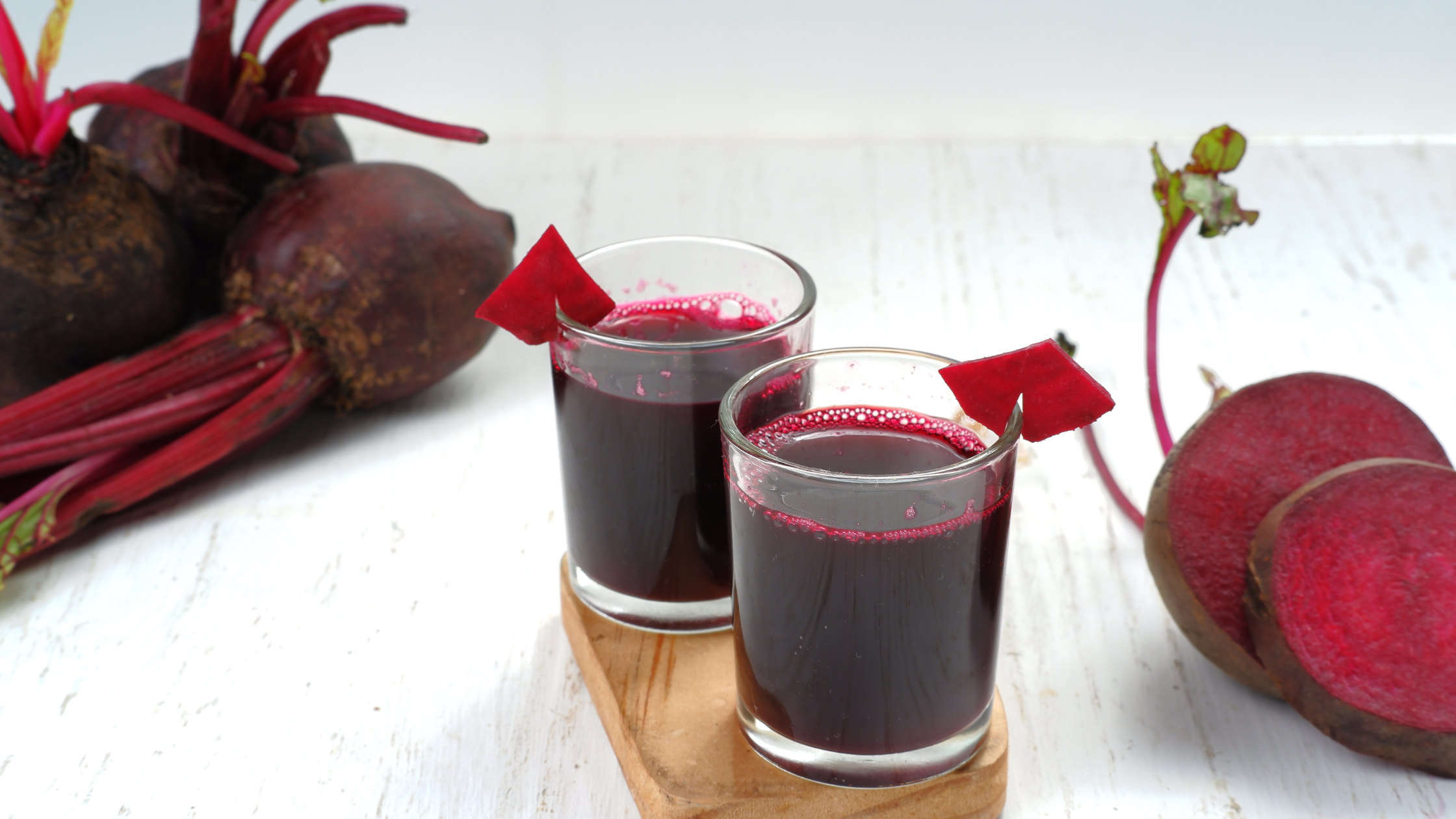
Beetroot juice is obtained by pressing or processing the root of Beta vulgaris, a plant belonging to the Amaranthaceae family. Its intense red colour is due to the presence of plant pigments called betalains, including betanin, while its nutritional profile includes water, carbohydrates and various micronutrients.
One of the most extensively studied components is its inorganic nitrate content. After ingestion, some of the nitrates are absorbed and take part in a process that also involves their conversion into nitrites by bacteria in the mouth. Nitrites can subsequently contribute to the formation of nitric oxide (NO), a molecule that promotes the relaxation of the smooth muscles in blood vessels and plays a role in regulating circulation.
Beetroot juice also provides plant compounds with antioxidant activity, although the actual amount depends on the beetroot variety and the processing method.
Some of the most interesting aspects of beetroot juice include:
- Natural nitrate content: these are the compounds most extensively studied for their potential role in nitric oxide production;
- Plant pigments: betalains contribute to beetroot's characteristic colour and are among the root's bioactive compounds;
- Micronutrient content: depending on the raw material, the drink may provide varying amounts of minerals and vitamins;
- Dietary versatility: it can be included in a varied diet as an alternative to other plant-based drinks or as part of fruit and vegetable preparations.
Support for energy and sports performance
The relationship between beetroot juice and physical activity is mainly linked to its nitrate content. In the body, these compounds can contribute to the production of nitric oxide, which plays a role in vasodilation and the regulation of blood flow. During exercise, this process may help distribute blood and oxygen to the muscles involved in the effort and contribute to reducing the oxygen cost of certain activities performed at submaximal intensity.
It is therefore appropriate to describe beetroot juice as potentially supporting endurance and efficiency during aerobic activity, without considering it a product that automatically increases energy or muscle strength.
When used for sports purposes, the most frequently studied timing is approximately 2–3 hours before training or competition. Some protocols instead involve repeated consumption over several days. However, there is no single amount of juice that is suitable for everyone: nitrate content varies according to the raw material and the product's concentration.
Research has also examined red beetroot extracts and concentrates, formulated to provide more controlled amounts of nitrates. One example in this field is Beet4Perf™, a patented ingredient obtained from concentrated beetroot juice and characterised by the presence of natural nitrates.
Contraindications of beetroot juice
Beetroot juice can be included in the diet of most people, but its consumption requires some precautions, particularly when taken in large quantities or in concentrated form. The presence of nitrates can affect the mechanisms involved in regulating blood circulation and blood pressure.
People with low blood pressure or those taking medication to control it should consult their doctor before regularly using concentrated nitrate-rich products. The potential vasodilatory action of nitric oxide could contribute to a further reduction in blood pressure in some people. Caution is also advisable when taking medications that affect blood pressure or circulation, and concentrated products should not be combined with these treatments without medical advice.
Another aspect to consider is the oxalate content of beetroot. People who suffer from kidney stones, particularly those made of calcium oxalate, should discuss with their doctor or dietitian whether frequent beetroot juice consumption is appropriate, especially in large quantities.
Beetroot juice may also cause gastrointestinal discomfort in some people, particularly when consumed in large quantities or when the digestive system is particularly sensitive. In these cases, reducing the serving size and checking individual tolerance may be helpful. Consumption should not be continued if persistent discomfort occurs.
After consuming beetroot or beetroot juice, the urine and, occasionally, the stools may appear pink or reddish. This phenomenon is known as beeturia and is linked to the elimination of beetroot pigments. In most cases, it is temporary and harmless. However, if the discolouration occurs without having consumed beetroot, persists or is accompanied by pain or other symptoms, it is advisable to consult a doctor to rule out other causes.
Moderate dietary consumption is generally well tolerated. However, people with medical conditions, those taking medication or anyone wishing to use nitrate concentrates for sports purposes should first discuss their situation with a healthcare professional.
Frequently asked questions
How much beetroot juice is recommended per day?
There is no recommended daily amount of beetroot juice that is suitable for everyone. Consumption depends on the drink's composition, its nitrate content and individual needs. Sports studies have used different amounts and concentrations, often taken before exercise, but these protocols do not constitute a recommendation for everyday consumption that applies to everyone.
If the aim is to support physical activity, it is important to check the nitrate content stated on the product label rather than relying solely on the number of millilitres consumed. People with low blood pressure, medical conditions or undergoing drug treatment should seek medical advice before regularly using concentrated juices.
Does packaged beetroot juice contain added sugars?
Packaged beetroot juice does not necessarily contain added sugars. Some products consist exclusively of beetroot juice, while others may include fruit juices, sugars, flavourings or additional ingredients to alter their taste. It is therefore important to read the ingredient list to understand what a drink contains.
Why can beetroot juice turn urine red?
Beetroot juice can turn urine pink or red because of plant pigments called betalains, including betacyanins, which can be absorbed and eliminated by the body. This phenomenon, known as beeturia, is generally temporary and does not in itself indicate a health problem.
The colour change can vary from person to person and does not necessarily occur after every consumption. However, if urine appears red without having eaten beetroot, if the phenomenon persists or if it is accompanied by pain, burning or other discomfort, it is important to consult a doctor to check that the cause is not blood in the urine or another condition.
Is beetroot juice suitable for people following a vegan diet?
Pure beetroot juice is plant-based and can be included in a vegan diet. Beetroot is a root vegetable, and the drink obtained by pressing it does not require ingredients of animal origin. However, it is important to check the composition of packaged products, as some formulations may contain additional ingredients that need to be verified.
When choosing plant-based supplements or sports products containing beetroot, it is also advisable to check the manufacturer's information and any certifications listed.
Beetroot juice is an interesting plant-based drink, particularly because of its natural nitrate content, which has been studied for its role in nitric oxide production and in supporting efficiency during certain endurance activities. Moderate consumption can be part of a varied diet, while the use of concentrates for sports purposes requires more careful consideration, particularly in the presence of low blood pressure, medication or specific kidney conditions.