- Diet
- 22 views
- Properties and nutritional values of coconut water
- Health benefits of coconut water
- Does coconut water cause weight gain?
- Contraindications and side effects
- How to choose coconut water
- Frequently asked questions
Properties and nutritional values of coconut water
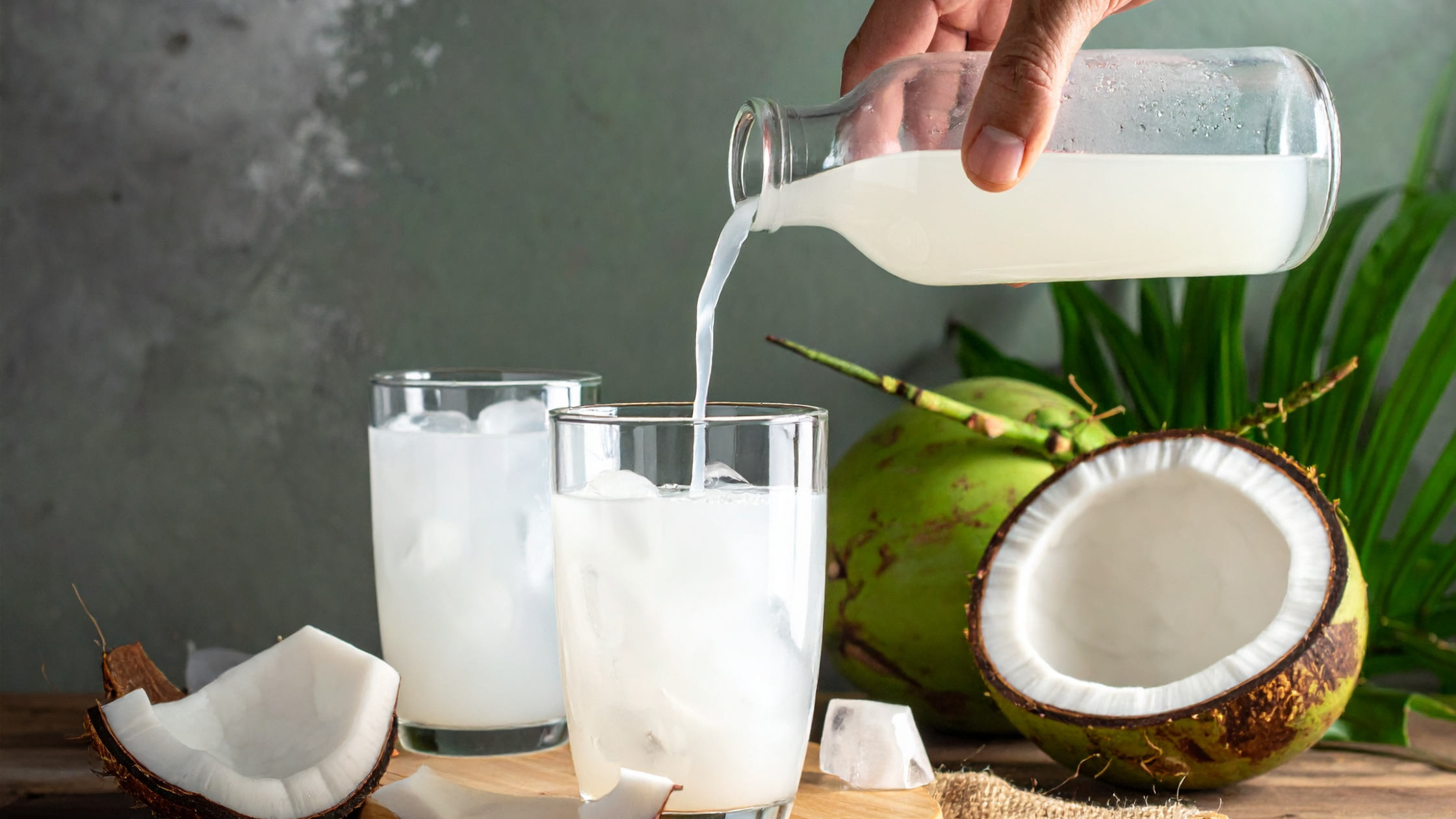
Coconut water is the clear liquid naturally found inside the coconut, especially when the fruit is still young and not fully ripe. It should not be confused with coconut milk, which is made using the flesh and has a very different nutritional composition.
It consists mainly of water and naturally contains several electrolytes, including potassium, sodium, magnesium and calcium. Potassium is generally the mineral present in the greatest amount, although the values may vary depending on the coconut variety, its degree of ripeness and the processing methods used.
The drink also provides carbohydrates, mainly in the form of naturally occurring sugars, while containing small amounts of protein and fat. Its calorie content is generally low, but not zero: a serving still contributes to daily energy intake.
As a general indication, 100 ml of natural coconut water may provide:
- Energy: approximately 15–25 kcal;
- Carbohydrates: approximately 3–5 g, with varying amounts of natural sugars;
- Fat: generally very low amounts;
- Protein: generally small amounts;
- Potassium: one of the most abundant minerals, although its levels can vary considerably.
Potassium contributes to the normal functioning of the nervous system, normal muscle function and the maintenance of normal blood pressure. Sodium, together with potassium and other electrolytes, plays a role in regulating fluid balance and transmitting nerve impulses. Potassium and magnesium are often taken together to support general wellbeing.
The drink can contribute to fluid and mineral intake, but it is not a complete source of all electrolytes and does not replace the consumption of fruit, vegetables and other foods rich in micronutrients.
Health benefits of coconut water
The potential benefits of coconut water are mainly related to its composition: it contains a large amount of water, provides potassium and other minerals, and can be an alternative to sugary drinks when a variety without added sugars is chosen.
Its consumption can therefore be part of a varied diet, contributing to daily hydration and the intake of certain micronutrients. However, it should not be considered a therapeutic product: scientific evidence does not demonstrate that it can treat digestive disorders, prevent diseases or guarantee better sports recovery than other drinks.
Intestinal health and digestion
Coconut water can contribute to daily fluid intake, which is also important for the normal functioning of the digestive system. Maintaining adequate hydration helps support various physiological functions, including regular intestinal transit.
However, it is important to distinguish this general contribution from a specific effect on digestion. There is insufficient evidence to claim that coconut water treats gastric acidity, reflux or constipation. It is not a remedy for gastrointestinal disorders, and individual tolerance may vary.
The drink also contains small amounts of fibre, particularly when it is filtered. It therefore cannot replace plant-based foods such as fruit, vegetables, legumes and whole grains, which contribute the fibre intake needed to support intestinal regularity.
In the case of recurring digestive problems, bloating or persistent changes in bowel habits, it is preferable to identify the cause with the support of a healthcare professional rather than relying on a single drink or considering supplements for gastrointestinal health.
Hydration and sports recovery
Thanks to its high water content and the presence of electrolytes, coconut water is often promoted as a natural alternative to sports drinks. Its potassium content can contribute to the intake of this mineral, which is involved in normal muscle function and fluid balance within cells.
During physical activity, especially when it is prolonged or performed in hot environments, the body loses water and electrolytes through sweating. In these situations, it is important to replace fluids and also consider the amount of mineral salts lost. Sweat composition varies depending on the individual, temperature, exercise duration and intensity.
However, coconut water has one characteristic that should not be overlooked: it is generally richer in potassium than in sodium. Since sodium is one of the main electrolytes lost through sweat, the drink alone may not be sufficient to replace all losses during long, intense workouts or activities involving heavy sweating.
For short, moderate-intensity workouts, drinking water and following a balanced diet is generally sufficient in most cases.
During prolonged activity or in very hot conditions, however, it may be necessary to consider products formulated to replenish mineral salts with a more targeted supply of sodium and other electrolytes.
Another aspect to consider is its carbohydrate content. Coconut water naturally provides carbohydrates, but the amount may not be sufficient to meet energy requirements during more demanding endurance activities. For this reason, it should not automatically be considered equivalent to a sports drink formulated to provide specific amounts of carbohydrates and electrolytes.
Does coconut water cause weight gain?
Coconut water does not automatically cause weight gain: as with any food or drink that provides calories, its effect on body weight depends on the amount consumed and overall energy balance. Compared with many sugary soft drinks and some fruit juices, the natural version without added sugars generally has a moderate calorie content.
This does not mean that it is calorie-free or that it can be consumed without considering portion sizes. The naturally occurring sugars contribute to carbohydrate and energy intake. If consumed frequently in large quantities, especially alongside other calorie-containing drinks, it can increase daily energy intake.
For people following a diet aimed at weight management, choosing coconut water without added sugars and including it in their meal plan may be useful. Plain water nevertheless remains the main drink for daily hydration because it contains no calories.
Contraindications and side effects
Coconut water is generally well tolerated by healthy people when consumed in moderate amounts. However, its potassium content and the presence of natural sugars make it important to consider certain precautions, particularly in the presence of specific medical conditions.
The main concern relates to people with kidney disease or difficulty eliminating excess potassium. When kidney function is impaired, potassium can accumulate in the blood and reach potentially dangerous levels. In these situations, it is necessary to follow the advice of a doctor or dietitian, who can determine whether foods and drinks rich in this mineral can be consumed and in what quantities.
Caution is also advisable when taking medications that may increase potassium levels, such as certain antihypertensive drugs and potassium-sparing diuretics. Coconut water is not automatically prohibited in all these cases, but regular consumption or large amounts should be discussed with the healthcare professional supervising the treatment.
Another precaution concerns people who need to monitor their blood glucose levels. Although natural coconut water may contain less sugar than some sweetened drinks, it still provides carbohydrates. People with diabetes or following a diet with controlled sugar intake should consider the amount consumed and check the nutritional information on the label.
Possible side effects, particularly when consumed in large amounts, include gastrointestinal discomfort such as bloating or diarrhoea. The response depends on individual sensitivity and the composition of the drink. If symptoms recur, it is preferable to reduce or stop consumption and discuss the situation with a healthcare professional.
How to choose coconut water
The first thing to check is the ingredient list. If you want a simple drink, it is preferable to choose products made exclusively from coconut water, without added sugars, syrups or other juices. The product's marketing description alone is not enough to establish its actual composition.
It is also useful to check the nutrition facts table, paying attention to:
- Calories: these indicate the energy content per 100 ml and per serving;
- Carbohydrates and sugars: these help establish how much natural sugar is present and how much the drink contributes to daily intake;
- Potassium: this is one of the characteristic minerals in coconut water, although the amount can vary depending on the product;
- Sodium: this is particularly important to consider if you intend to use the drink after physical activity;
- Added ingredients: check for flavourings, sweeteners, preservatives or other components.
Coconut water may be pasteurised, packaged in long-life containers or made from concentrate. These processes can affect its organoleptic properties and, in some cases, its final composition.
For people who practise sports, the choice should also depend on their goal. If you simply want a drink to consume throughout the day, a natural version without added sugars may be sufficient. If, on the other hand, you want to replace losses caused by heavy sweating, it is important to check the sodium content in particular and assess whether the drink really meets the needs of the activity performed.
Frequently asked questions
How much coconut water can you drink per day?
There is no single daily amount that is suitable for everyone, because consumption depends on dietary habits, individual needs and the product's composition. An occasional serving can be included in the diet of most healthy people, but it is important to consider the overall intake of calories, sugars and potassium.
People with kidney disease, those who need to monitor potassium levels or those taking medications that affect potassium concentrations should seek advice from their doctor. People who need to monitor blood glucose levels should also check the amount of carbohydrates stated on the label.
When is the best time to drink coconut water?
Coconut water can be consumed at different times of the day: there is no time that has been proven to be best for everyone. It can be consumed as a drink throughout the day or after physical activity, when you want to take in fluids and certain minerals.
During long workouts or activities involving heavy sweating, however, its sodium content may not be sufficient to compensate for all losses. In these cases, it is important to assess a hydration strategy suited to the duration and intensity of the effort, without considering coconut water a substitute for sports drinks.
How should coconut water be stored after opening?
After opening, coconut water should be stored in the refrigerator, keeping the container tightly closed. It is important to follow the instructions on the packaging to determine how long the product can be consumed after opening, as this period may vary depending on the treatment and type of packaging.
If the drink has an unusual smell, taste or appearance, it is preferable not to consume it. Even when stored correctly, it should not be left at room temperature for extended periods after opening.
What is the difference between coconut water and coconut milk?
Coconut water and coconut milk are two different products, obtained from different parts of the fruit. Coconut water is the liquid naturally found inside the coconut, especially when it is young. Coconut milk, on the other hand, is made from the flesh, which is grated and mixed with water or processed to obtain a thicker, creamier drink.
The main differences concern their nutritional composition. Coconut water mainly contains water, potassium and other electrolytes, with generally low amounts of fat and calories. Coconut milk, on the other hand, has a much higher fat content, largely consisting of saturated fats, and generally provides more energy.
Coconut flesh also contains medium-chain triglycerides (MCTs), but the amount and composition of fats depend on the product and processing method, as is also the case with coconut oil.
Coconut water is a plant-based drink that mainly provides fluids and potassium, along with varying amounts of other electrolytes and natural sugars. It can be an alternative to sugary drinks when chosen without added ingredients, but it is not necessarily more hydrating than water and does not always replace drinks specifically designed for sports recovery. To include it appropriately in your diet, it is useful to check its composition, consider portion sizes and take your health conditions into account.