- Health and wellness
- 27 views

- Continuous Folic Acid Supplementation
- Dosages and When to Take It
- Side Effects and Contraindications
- Frequently Asked Questions
Continuous Folic Acid Supplementation
Folic acid is often associated with pregnancy, but its role is not limited to this stage of life. Vitamin B9 is involved in essential processes for all the body's cells, particularly those that renew themselves rapidly. An adequate intake is therefore important even outside pregnancy.
Taking folic acid every day may be appropriate when there is a specific indication, such as preventing neural tube defects during the preconception period or correcting a diagnosed deficiency.
However, it is important not to confuse the need to regularly obtain folate through food with the need to take a supplement every day. A varied diet can help meet the requirements of most people, while supplementation should be assessed according to individual needs.
Difference Between Folate and Folic Acid
The term folates refers to the family of natural forms of vitamin B9 found in foods and the compounds used in supplements. Folic acid, on the other hand, is the synthetic, oxidised form of the vitamin, commonly used in supplements and fortified foods.
The distinction mainly concerns their chemical structure and the way these substances are absorbed and processed by the body:
- Dietary folates: naturally present in leafy green vegetables, legumes, fruit and other foods. Their availability may vary depending on the composition of the food and how it is prepared;
- Folic acid: the synthetic form used in most traditional supplements and in some fortified foods. It is generally more stable and has greater bioavailability than the folates naturally present in foods;
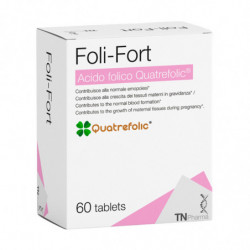
- 5-MTHF: a form of folate already involved in the body's normal metabolic processes and also available in some supplement formulations. One of the raw materials used is the active form Quatrefolic.
5-MTHF, also known as 5-methyltetrahydrofolate, is a biologically active form of folate. Some supplements use this formulation to provide a form that directly participates in normal metabolic processes, without requiring the same conversion steps as folic acid. However, the presence of an active form does not automatically mean that the product is more effective or necessary for everyone.
The differences between folate and folic acid are also important when reading product labels. The stated amount may be expressed in micrograms of folate or in dietary folate equivalents, depending on the conventions used. To compare products correctly, it is therefore advisable to check the unit of measurement, the form of vitamin B9 and the recommended daily dose.
Under normal circumstances, both dietary folates and the forms used in supplements contribute to vitamin B9 intake. The choice between folic acid and forms such as 5-MTHF should be based on the product's composition and individual needs, without assuming that one formulation is essential or superior in every situation.
When You Can Take Folic Acid All the Time
Daily folic acid supplementation may be recommended when requirements are increased, when a deficiency has been diagnosed or when certain conditions make additional intake necessary. In these cases, consistency may be important to achieve and maintain adequate levels, but the duration should be determined according to the cause and the individual's response.
One of the best-known situations is the period before pregnancy. The Italian Ministry of Health recommends that women planning a pregnancy, or who are not actively ruling one out, take 400 micrograms of folic acid per day, starting at least one month before conception and continuing until the end of the third month of pregnancy. This supplementation helps reduce the risk of neural tube defects, such as spina bifida and anencephaly.
Outside pregnancy, continuous supplementation may be considered in the following situations:
- Diagnosed folate deficiency: a doctor may recommend daily supplementation to correct the deficiency and determine how long it should continue;
- Malabsorption: some gastrointestinal conditions can reduce nutrient absorption and make specific nutritional intervention necessary;
- Increased requirements: certain physiological or clinical conditions may require a higher intake than that normally provided by the diet;
- Taking certain medicines: some medicines can interfere with folate metabolism or availability. In these cases, any supplementation should be agreed upon with a doctor.
Several folic acid supplements are available for people who need to increase their vitamin B9 intake, with different amounts and formulations. The choice should take into account the actual need, the dose per serving and the instructions on the label.
It is important to remember that not everyone needs to take folic acid every day. If there are no deficiencies, specific conditions or medical recommendations, prolonged supplementation may not provide additional benefits. If in doubt, it is best to assess your dietary intake and consult a healthcare professional before starting or continuing supplementation.
Dosages and When to Take It
The amount of folic acid to take depends on age, stage of life, diet and any existing medical conditions. It is important to distinguish the daily folate requirement, which can be met through food, from the dose of folic acid used in supplements for a specific purpose.
For adults, a commonly used nutritional reference is approximately 400 micrograms of folate per day. Requirements increase during pregnancy, while specific supplementation of 400 micrograms of folic acid per day is recommended during the preconception period, according to the Italian Ministry of Health.
If a deficiency has been diagnosed or a condition requires specific supplementation, a doctor may prescribe different amounts. In certain higher-risk situations, for example following a previous pregnancy affected by neural tube defects or in the presence of certain medical conditions, higher doses may be recommended, exclusively under medical supervision.
To understand the main recommendations, it is useful to distinguish between the following:
- Adults: the general nutritional reference is approximately 400 micrograms of folate per day;
- Pregnancy: overall folate requirements increase; the Italian recommendation for preventing neural tube defects is 400 micrograms of supplemental folic acid per day during the specified period;
- Breastfeeding: nutritional requirements remain specific and should be considered as part of overall dietary intake;
- Deficiencies or medical conditions: the dosage may differ and must be determined by a doctor according to the cause and individual circumstances.
An important safety reference is the tolerable upper intake level established by the European Food Safety Authority. For adults, EFSA sets a limit of 1,000 micrograms per day for forms of folate added to foods or contained in supplements, under the authorised conditions of use. This limit does not include folates naturally present in foods and does not apply to higher doses prescribed and monitored by a doctor.
As for the time of day, folic acid can generally be taken at breakfast, lunch or dinner. There is no universally best time: taking it regularly and following the recommended dose are the most important factors. If the product includes specific instructions, these should be followed.
Side Effects and Contraindications
Folic acid is generally well tolerated when taken in appropriate amounts. However, as with other supplements, unnecessary use or doses higher than recommended may involve risks, especially if supplementation continues for a long time without an assessment of individual needs.
The main precaution concerns the possibility that a high folic acid intake may correct some blood-related symptoms of vitamin B12 deficiency without addressing the underlying problem. For this reason, if symptoms suggest a vitamin deficiency or risk factors are present, it is important to assess vitamin B12 status as well.
When Too Much Folic Acid Can Be Harmful
Taking more folic acid than necessary does not mean you will obtain greater benefits. High amounts, particularly when obtained through supplements or fortified foods over prolonged periods, may interfere with the correct identification of certain nutritional deficiencies.
The best-known concern relates to vitamin B12 deficiency. A B12 deficiency can cause megaloblastic anaemia and, if left undiagnosed and untreated, neurological damage as well. Taking high amounts of folic acid may correct some blood abnormalities associated with B12 deficiency without resolving the neurological damage. As a result, blood-related signs may become less noticeable, potentially delaying diagnosis.
Another aspect to consider is the upper intake level. For adults, EFSA sets a limit of 1,000 micrograms per day for forms of folate added to foods or contained in supplements. This value does not apply to folates naturally present in foods and does not replace medical instructions for people who need higher therapeutic doses.
Some medicines may also interact with folates. Medicines requiring particular attention include certain antiepileptic drugs and methotrexate. Interactions depend on the medicine and the condition for which it is used: you should not change a treatment or start supplementation without consulting your doctor.
Main Side Effects
Folic acid taken in the usually recommended amounts is generally well tolerated. However, some people may experience unwanted effects, particularly when high doses are used.
Possible side effects include:
- Nausea: may occur after taking the supplement, although it is not common at standard doses;
- Gastrointestinal disturbances: some people may experience bloating, abdominal discomfort or changes in bowel habits;
- Reduced appetite: this may be reported in certain circumstances, but it is not a predictable or intended effect of folic acid;
- Hypersensitivity reactions: these are rare but may occur in response to the active ingredient or other components of the formulation.
The appearance of a symptom after taking a supplement does not automatically prove that folic acid caused it. Other ingredients in the product, the amount taken or individual circumstances may also play a role. If symptoms persist, it is advisable to seek advice from a doctor or pharmacist.
Before using a supplement for prolonged periods, it is useful to check:
- Daily dose: check the amount of folic acid or other forms of folate per serving;
- Other supplements being used: multivitamins and B-complex products may already contain vitamin B9;
- Medicines: some medicines may alter folate metabolism or interact with supplementation;
- Individual circumstances: pregnancy, breastfeeding, medical conditions and diagnosed deficiencies require specific guidance.
Folic acid supplements do not replace a varied and balanced diet and should not be used to self-treat persistent fatigue, anaemia or other symptoms. If a deficiency is suspected, it is important to identify its cause through a healthcare assessment.
Frequently Asked Questions
What Time of Day Should You Take Folic Acid?
There is no best time to take folic acid. In general, it can be taken in the morning, at lunchtime or in the evening, following the instructions on the packaging or those provided by your doctor. The most important thing is to take it regularly and follow the recommended daily amount.
Folic acid can generally be taken with or without food. If it causes gastrointestinal discomfort, it may be useful to ask a pharmacist or doctor whether taking it with a meal would be preferable. There is no evidence that taking it on an empty stomach or at a specific time of day significantly increases its benefits.
During the preconception period, however, the most important factors are starting supplementation sufficiently early and continuing it for the recommended period. The Italian Ministry of Health recommends 400 micrograms per day, starting at least one month before conception and continuing until the end of the third month of pregnancy. If there are conditions requiring different dosages, you should follow your doctor's instructions.
Folic acid can be taken daily when there is a nutritional need or a specific indication, but not everyone needs to take it continuously without interruption. The preconception period and the first trimester of pregnancy are stages when supplementation has a clearly defined preventive role. In the presence of deficiencies or specific medical conditions, the duration should be determined by a doctor.