- Health and wellness
- 2 views

- What essential amino acids are used for
- Main benefits for the body
- Difference between essential and branched-chain amino acids
- When to take essential amino acids
- Before or after training
- Taking them during training
- Taking them on rest days
- Daily dosage and formats
- How many grams to take per day
- Powder or tablet supplements
- Contraindications and side effects
- Frequently asked questions
- How many grams of protein are equivalent to 10 grams of essential amino acids?
- What are the typical signs of an amino acid deficiency in the body?
- Is it better to take essential amino acids or whey protein isolate after training?
- Can essential amino acid supplements be taken on an empty stomach?
What essential amino acids are used for
Amino acids are the building blocks the body uses to make proteins. Their functions include maintaining and renewing tissues, synthesizing enzymes, and producing certain molecules involved in regulating physiological activities.
There are nine essential amino acids: histidine, isoleucine, leucine, lysine, methionine, phenylalanine, threonine, tryptophan, and valine. They are called essential because the body cannot synthesize them on its own in adequate amounts, so they must be obtained through the diet.
EAA supplements may be useful in certain situations, for example when someone wants to supplement their amino acid intake as part of a nutrition and sports program.
Main benefits for the body
The main role of essential amino acids is to enable the body to synthesize new proteins. This process is important for maintaining tissues and is particularly relevant during physical activity, when muscles are exposed to a stimulus that requires subsequent adaptation and recovery processes.
The functions of EAAs include:
- Muscle protein synthesis: they provide the amino acids needed to build new muscle proteins, alongside adequate nutrition and training stimulus;
- Tissue maintenance: they contribute to the renewal of proteins found in muscles and other body tissues;
- Recovery after physical activity: they help make the building blocks required for post-exercise protein synthesis available;
- Physiological functions: they are involved in producing various proteins, enzymes, and other molecules needed for the body to function normally.
It is important not to confuse these biological functions with a guaranteed effect of supplementation. Taking EAAs does not automatically ensure greater muscle mass, increased strength, or faster recovery. Results also depend on overall diet quality, daily protein intake, training, rest, and individual characteristics.
Difference between essential and branched-chain amino acids
The main difference between essential amino acids and branched-chain amino acids (BCAAs) lies in the number and type of molecules involved. EAAs include all nine essential amino acids, whereas BCAAs are a smaller group consisting of three amino acids: leucine, isoleucine, and valine.
These three amino acids are called branched-chain because of their particular chemical structure and are themselves part of the essential amino acid group.
This distinction is also important when choosing a supplement. A product containing only BCAAs does not provide all nine essential amino acids, whereas a complete EAA formula is designed to supply the entire group. This does not mean that EAAs are always the best choice: the decision depends on habitual diet, goals, and individual needs.
When to take essential amino acids
Essential amino acids can be taken at different times of the day. For people who train, timing is often organized around the workout, but there is no single best time for everyone. Overall protein and amino acid availability throughout the day is generally more important than choosing a specific supplementation window.
Before or after training
EAAs can be taken before or after training, depending on meal timing and individual needs.
Before a workout, they can provide a source of amino acids when training follows several hours without food or when a complete meal is impractical. After physical activity, they can help provide the building blocks needed for protein synthesis.
It is not necessary to take essential amino acids immediately after every workout if the diet already provides adequate protein and an appropriate meal can be eaten within a timeframe that fits one's usual routine. For many people, distributing protein across the day's meals is a practical and effective strategy.
The choice between EAAs and other protein sources may also depend on convenience, tolerability, and individual preferences. It is therefore useful to assess supplementation within the context of the overall nutrition plan, without treating pre-workout or post-workout intake as mandatory.
Taking them during training
Taking essential amino acids during training, also known as intra-workout supplementation, may be considered especially when a session is long, the last meal was eaten a long time earlier, or eating around the workout is not possible. In these circumstances, a powder formula may be convenient to use during the session.
It is important to clarify that EAAs do not replace hydration and do not, on their own, guarantee reduced muscle catabolism or improved performance. The usefulness of supplementation depends on workout duration and intensity, prior nutrition, and overall protein intake.
Carnitine can also be taken after training if this approach is consistent with the product instructions. However, there is insufficient evidence to claim that post-workout intake is always better than pre-workout intake. Taking a supplement consistently over several weeks may be more relevant than the specific time of day it is taken.
Taking them on rest days
Essential amino acids can also be taken on days when you do not train, but daily EAA supplementation is not mandatory if dietary intake already meets your needs.
Muscle recovery is not limited to the hours immediately after a workout: the body continues to renew its proteins on rest days as well. For this reason, it is useful to maintain adequate and regular protein intake throughout the week rather than focusing exclusively on workout timing.
On recovery days, the priority should be a balanced diet that provides sufficient energy and nutrients. An EAA supplement may be considered when there are specific needs, practical difficulties in reaching the desired protein intake, or recommendations from a nutrition professional.
Daily dosage and formats
The amount of essential amino acids to take depends on the product, dietary composition, and individual goal. There is no daily EAA dosage that is suitable for everyone, and the amount of supplement should not be confused with total protein requirements.
How many grams to take per day
Studies on essential amino acids have used different amounts depending on product composition, the population studied, and the context of use. For this reason, it is not appropriate to indicate a single amount as necessary for everyone or as a guarantee of muscle-related results.
When assessing daily intake, it is useful to consider:
- Overall protein requirements: these depend on age, body weight, physical activity level, health status, and individual goals;
- Protein already obtained from the diet: meat, fish, eggs, dairy products, legumes, and other protein-rich foods contribute to amino acid intake;
- The supplement's composition: check the total amount of EAAs per serving and the profile of individual amino acids;
- Manufacturer instructions: follow the dosage stated on the label and do not exceed it on your own initiative.
An EAA supplement is not equivalent to a complete meal and does not necessarily provide all the nutrients found in protein-rich foods. For people who play sports, it may be useful to assess their daily intake and determine how much protein per day is appropriate for their characteristics and type of training.
Powder or tablet supplements
Essential amino acids are available in different formats, particularly powder and tablets. The choice should be based on convenience, the amount of product needed, and tolerability, not just on the commercial format.
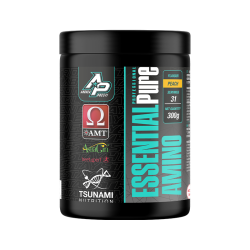
- Powder supplements can be mixed into a drink and may be convenient during or around a workout. The amount can be adjusted according to the label instructions, taking care to measure the serving correctly;
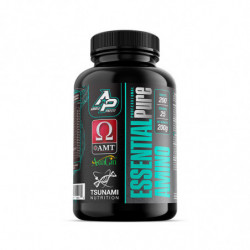
- Tablets are easy to carry and do not require preparing a drink. However, the number of tablets needed to reach a given amount of amino acids depends on the product's concentration, so it is important to check the amount per serving.
It is not accurate to claim that powder is always faster-acting or more effective than tablets. The method of intake, formulation, and actual amount of amino acids should be considered together.
Contraindications and side effects
Essential amino acids are normally present in food and perform indispensable physiological functions. However, this does not mean that every supplement is suitable for everyone or that high doses are risk-free. Tolerability depends on the amount taken, formulation, health status, and the possible presence of other ingredients.
Side effects that may occur with some amino acid supplements, especially when high amounts are taken or individual tolerability is poor, include:
- Gastrointestinal disturbances, such as nausea, bloating, or abdominal discomfort;
- Tolerability issues related to the product's concentration or added ingredients;
- Excessive nutrient intake if the supplement is used without considering total dietary intake.
It is advisable to consult a doctor or healthcare professional before taking EAAs if you have kidney or liver disease, metabolic disorders, follow a therapeutic diet, or take medication that requires specific dietary monitoring. In these cases, protein and amino acid intake may need to be individualized.
To use a supplement cautiously, it is advisable to follow the label instructions, avoid combining products with similar compositions without checking their quantities, and never consider EAAs a substitute for a balanced diet. If symptoms persist after taking the product, stop using it and seek advice from a healthcare professional.
Frequently asked questions
How many grams of protein are equivalent to 10 grams of essential amino acids?
10 grams of essential amino acids are not automatically equivalent to 10 grams of dietary protein in every nutritional respect. EAAs are components of proteins and can contribute to protein synthesis, but a free-form amino acid supplement does not necessarily provide the same complete nutrient profile as a protein-rich food or protein powder.
In terms of quantity, 10 grams of EAAs represent 10 grams of amino acids, but they should not be interpreted as a perfect substitute for a serving of dietary protein.
The differences relate to composition, the presence of other amino acids, and any nutrients associated with the protein source. To assess overall intake, it is therefore useful to consider both the grams of protein consumed and the quality of food sources and their amino acid profile.
What are the typical signs of an amino acid deficiency in the body?
An essential amino acid deficiency may be associated with insufficient protein intake or conditions that impair nutrient absorption and utilization. However, there is no single specific symptom that can reliably identify an EAA deficiency.
When energy and protein intake remain insufficient for a prolonged period, signs such as unintended weight loss, reduced muscle mass, weakness, and difficulty maintaining normal bodily functions may occur. These symptoms can also result from many other conditions and should not be interpreted independently as proof of an amino acid deficiency.
If symptoms persist, it is important to consult a doctor to identify the cause and determine whether further assessment is needed. Starting amino acid supplementation based solely on symptoms is not recommended without first considering diet, health status, and possible alternative causes.
Is it better to take essential amino acids or whey protein isolate after training?
The choice between EAAs and protein isolate depends on overall diet, individual needs, and convenience. Free-form essential amino acids provide the nine essential molecules directly, whereas whey protein isolates provide complete proteins, which are digested and subsequently broken down into peptides and amino acids.
Whey protein isolates can be a practical way to increase protein intake after training, especially when it is not possible to eat a meal straight away. EAAs may be an alternative in specific situations, but they are not automatically superior to complete proteins. The choice should take into account the amount of protein already consumed throughout the day, the product's composition, and individual needs.
Can essential amino acid supplements be taken on an empty stomach?
In many cases, essential amino acids can be taken on an empty stomach, provided the product instructions allow it and the person tolerates them well. However, taking them on an empty stomach is not necessary to obtain benefits, nor is it proven to be consistently better than taking them with a meal.
The choice depends on the formulation, eating habits, and individual response. Some people may experience nausea or gastrointestinal discomfort when taking concentrated supplements on an empty stomach; in these cases, it is advisable to follow the label instructions and consider a more tolerable method of intake.
It is also important to remember that taking EAAs on an empty stomach does not make them essential if the diet already provides adequate amounts of protein and amino acids. Before introducing a supplement, it is worth assessing your requirements and the product's actual usefulness within your daily diet.
Essential amino acids are indispensable for protein synthesis and the body's normal functioning. For people who play sports, intake can be scheduled before, during, or after training, but the priority remains achieving adequate protein intake through the diet. There is no daily dosage or timing that works for everyone: choosing an EAA supplement should take into account its composition, convenience, tolerability, and individual circumstances, without expecting automatic improvements in muscle mass or recovery.