- Health and wellness
- 32 views

- Meaning of the term liposomal
- Liposomal vitamin C
- Other popular liposomal supplements
- Frequently asked questions
Meaning of the term liposomal
The term liposomal refers to a formulation method in which a substance is enclosed within specific lipid structures called liposomes. These are delivery systems developed to transport active ingredients and influence their behaviour as they pass through the body.
This technology is used in various fields, from pharmaceutical research to nutraceuticals, particularly to formulate substances that may present absorption or stability challenges when taken orally.
What are liposomes?
Liposomes are small spherical vesicles made up of one or more phospholipid bilayers. Phospholipids are lipid molecules with a hydrophilic part, which interacts with water, and a hydrophobic part, which tends to repel it.
This particular arrangement allows phospholipids to spontaneously form a bilayer structure, creating an aqueous internal space in which different substances can be enclosed. Depending on the active ingredient's chemical properties, it can be incorporated into the aqueous cavity or associated with the lipid component of the membrane.
Liposomes can carry both water-soluble and fat-soluble substances. Their size, composition and membrane characteristics may vary depending on the manufacturing technology used.
What is liposomal technology used for?
Liposomal technology is used to deliver active ingredients, with the aim of improving their stability, facilitating their dispersion and influencing their absorption.
In particular, the structure of liposomes may help protect enclosed substances from direct exposure to certain environmental and chemical factors. In oral formulations, this may be important as they pass through the gastrointestinal tract, where stomach acidity, digestive enzymes and bile salts can affect the integrity of lipid structures.
It is important to note that liposomes do not provide complete protection against gastric degradation: their stability depends on the composition, size and characteristics of the formulation.
Another interesting aspect is the possibility of promoting interactions between active ingredients and biological membranes, which also contain a lipid component.
Research in the nutraceutical sector has led to the development of several patented technologies designed to optimise the delivery of functional substances, such as Liposovit, a technology also used in the formulation of liposomal supplements.
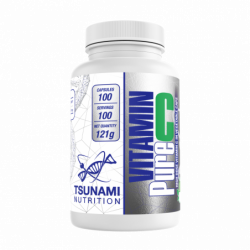
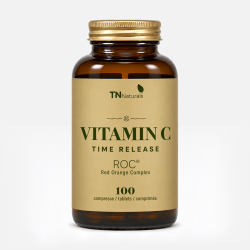
Liposomal vitamin C
Liposomal vitamin C is a formulation of ascorbic acid in which the vitamin is incorporated into or associated with structures made of phospholipids.
Traditional vitamin C is a water-soluble substance involved in numerous physiological processes. It contributes to the normal function of the immune system, collagen formation, the protection of cells from oxidative stress and normal energy-yielding metabolism.
Some of the vitamin C obtained through food is absorbed in the intestine by specific transporters. However, absorption may become less efficient when large amounts are consumed, partly because the transport mechanisms can become saturated.
Liposomal formulations have also been developed in an attempt to overcome some of the limitations of conventional formulations and modify the bioavailability of ascorbic acid.
Benefits compared with the conventional formulation
The main difference between liposomal vitamin C and conventional vitamin C lies in the delivery system used for the active ingredient.
In conventional formulations, ascorbic acid is generally taken in its free form, whereas in liposomal formulations it is associated with phospholipid vesicles. This difference may influence how the vitamin behaves as it passes through the digestive system and how it is subsequently absorbed.
The potential advantages of the liposomal formulation include:
- Potentially higher bioavailability: some studies have observed higher plasma vitamin C concentrations after taking liposomal formulations compared with conventional ones;
- Phospholipid-based delivery: the presence of a lipid structure may change how the vitamin interacts with the gastrointestinal environment and biological membranes;
- Potentially better tolerability: some formulations may be better tolerated in the gastrointestinal tract, although this depends on their composition and dosage.
Some scientific reviews and clinical studies have found higher bioavailability for liposomal vitamin C compared with conventional ascorbic acid. These findings are interesting, but they do not demonstrate that all liposomal formulations are equivalent or that they necessarily provide greater clinical benefits.
When and how to take it
Liposomal vitamin C can be taken when you want to supplement this nutrient using a formulation different from traditional ascorbic acid. As with other vitamin C supplements, its use may be considered when dietary intake is insufficient or requirements are increased, taking individual needs into account.
There is no specific time of day that is best for taking it. It is advisable to follow the instructions on the product label and adhere to the manufacturer's recommended daily amount.
Liposomal formulations may be available in different forms:
- Liquid: often sold in bottles or sachets, they can be taken directly or diluted according to the instructions;
- Capsules: they contain vitamin C associated with a lipid matrix or a liposomal preparation;
- Powder: they can be reconstituted or taken according to the manufacturer's instructions.
It is important not to assume that liposomal formulations are free from potential side effects. Vitamin C, especially when taken in large amounts, can also cause gastrointestinal discomfort.
Other popular liposomal supplements
Liposomal technology is not used only for vitamin C. In recent years, it has also been applied to the formulation of various micronutrients and functional compounds, with the aim of improving their stability and modifying their bioavailability.
Supplements available in this form include iron, glutathione and some fat-soluble vitamins, such as vitamins D3 and K2.
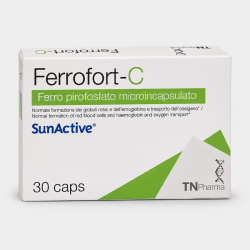
Liposomal iron
Liposomal iron is a formulation that uses lipid structures to deliver the mineral. Its main characteristic is the presence of an encapsulation or coating system that may change how iron interacts with the gastrointestinal tract.
Iron is an essential mineral for several functions in the body. It contributes to normal red blood cell and haemoglobin formation, oxygen transport, and the reduction of tiredness and fatigue. Supplementation may be useful in cases of confirmed deficiency or when dietary intake does not meet requirements, but it should be assessed according to individual circumstances and blood test results.
One of the main challenges associated with conventional iron supplementation is gastrointestinal tolerability. Some formulations may cause nausea, abdominal pain, constipation or other digestive complaints. Encapsulated or coated iron formulations have also been developed in an attempt to reduce direct contact between the mineral and the gastrointestinal mucosa, potentially improving tolerability.
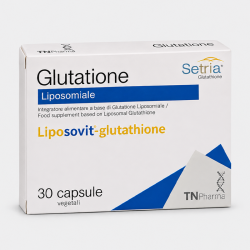
Liposomal glutathione
Liposomal glutathione is a formulation that combines glutathione with a lipid structure, with the aim of improving its stability and availability following oral intake.
Glutathione is a tripeptide made up of three amino acids: glutamate, cysteine and glycine. It is naturally produced by the body and plays an important role in antioxidant defence mechanisms, helping maintain the redox balance of cells.
Interest in liposomal formulations is also linked to the characteristics of orally ingested glutathione. This molecule may be broken down by digestive enzymes, while its bioavailability can vary depending on the formulation used.
Encapsulation in liposomes has been studied as a possible strategy to protect glutathione during gastrointestinal transit and promote its absorption.
Liposomal vitamins D3 and K2
Vitamins D3 and K2 can also be included in liposomal formulations, using the lipid component to deliver these fat-soluble micronutrients.
- Vitamin D3, or cholecalciferol, contributes to the normal absorption and utilisation of calcium and phosphorus, the maintenance of normal bones and teeth, and the normal function of the immune system;
- Vitamin K2 contributes to normal blood clotting and the maintenance of normal bones. One of its best-known forms is menaquinone-7 (MK-7).
The combination of vitamins D3 and K2 is of interest because these two nutrients are involved in complementary processes related to calcium metabolism. Vitamin D contributes to calcium absorption, while vitamin K is involved in activating proteins such as osteocalcin, which play a role in bone metabolism.
Liposomal formulations can be used to deliver both vitamins, but they should not automatically be assumed to provide better absorption than all other preparations.
Frequently asked questions about liposomal supplements
What is liposomal vitamin B used for?
Liposomal vitamin B is used to supplement one or more B vitamins through a formulation that uses lipid structures to deliver the active ingredients. B vitamins are involved in numerous physiological processes, including energy metabolism, nervous system function and red blood cell formation.
The liposomal formulation may influence the bioavailability of certain vitamins, but the available evidence varies depending on the nutrient and the technology used. It is therefore not possible to attribute the same absorption benefits to all B vitamins.
What contraindications do liposomal supplements have?
Liposomal supplements are not free from contraindications. Their safety depends on the active ingredient they contain, the dosage, the excipients and the individual circumstances of the person taking them.
Excessive vitamin C intake may cause nausea, diarrhoea and abdominal cramps. High doses require particular caution in people predisposed to kidney stones or those with haemochromatosis, a condition characterised by excessive iron accumulation in the body.
Iron supplements should also be used with care, as excess amounts of this mineral can be harmful. With vitamins D3 and K2, it is important to consider possible interactions with medicines and pre-existing health conditions.
During pregnancy or breastfeeding, in the presence of medical conditions or when taking medication, it is advisable to consult a doctor before using a supplement.
How should liquid liposomal products be stored?
Liquid liposomal products should be stored according to the instructions on the packaging, as the stability of lipid vesicles can be affected by several factors.
In particular, it is advisable to pay attention to:
- Temperature: avoid exposing the product to heat sources and follow any refrigeration instructions;
- Light: protect the bottle from direct light, especially when the product is packaged in transparent containers;
- Oxygen: close the container carefully after each use to limit exposure to air;
- Contamination: use the product according to the manufacturer's instructions and avoid introducing unclean utensils into the bottle.
However, there is no single rule that applies to all liposomal supplements: always follow the manufacturer's instructions.
Is liposomal vitamin C better than conventional vitamin C?
Liposomal vitamin C may have higher bioavailability than conventional ascorbic acid, as suggested by some clinical studies. However, this does not mean it is always the best choice for everyone.
The conventional formulation remains an effective source of vitamin C and may be sufficient to meet daily requirements. The choice between the two forms depends on individual needs, tolerability and the characteristics of the product.
Can you take liposomal vitamin C every day?
Liposomal vitamin C can be taken daily if supplementation is appropriate and the recommended dosage is followed. It is also important to consider the vitamin C obtained through food and avoid excessive intake.
Supplementation should not replace a varied and balanced diet. If you have a medical condition or are taking medication, it is preferable to consult your doctor. Liposomal technology represents an interesting development in the supplement sector, as it allows phospholipids to be used as delivery systems for vitamins, minerals and other functional substances.
Vitamin C is one of the most widely studied ingredients in this field, and some evidence suggests that its liposomal formulation may improve its bioavailability. As with any supplement, it is important to assess the composition, dosage and quality of the formulation, choosing the product that best suits your needs.