- Health and wellness
- 18 views

- Caffeine with prolonged release: characteristics and how it works
- What Time-Release technology means
- How prolonged release differs from immediate release
- Time-Release caffeine and duration of effects
- Potential uses before and during physical activity
- Timing, sleep and precautions
- Frequently asked questions
- What does prolonged-release caffeine mean?
- Does Time-Release caffeine last longer?
- What is the difference between immediate-release and prolonged-release caffeine?
- Is prolonged-release caffeine suitable before a workout?
- Can Time-Release caffeine affect sleep?
Caffeine with prolonged release: characteristics and how it works
Prolonged-release caffeine is a form of caffeine designed to release its active ingredient gradually, rather than making it available all at once. It is intended for activities that require attention and alertness, including sports.
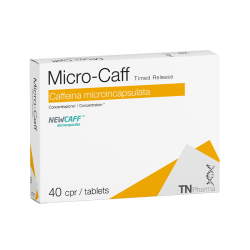
Tsunami Nutrition has developed Micro-Caff Time-Release by TN Pharma, a supplement containing patented microencapsulated Newcaff™ caffeine. Its distinctive feature is the microencapsulation system, designed to promote the gradual release of caffeine over time.
To understand how this technology works, it is useful to distinguish the release of the active ingredient from the overall duration of its effects: these aspects are related, but not identical. The response also depends on the amount of caffeine consumed, individual sensitivity and other sources consumed throughout the day.
What Time-Release technology means
The term Time-Release refers to a formulation technology designed to release an active ingredient gradually over time. In microencapsulated caffeine, the active ingredient is enclosed in a coating that changes how it is released compared with caffeine that does not use this system.
Micro-Caff Time-Release uses Newcaff™ microencapsulated caffeine. The lipid coating of the microcapsules allows caffeine to be released progressively during digestion. The formulation is designed to distribute the release over a longer period rather than making the caffeine available quickly.
It is important to note that prolonged release does not mean an absence of stimulation or adverse effects. Caffeine continues to act on the central nervous system and may affect alertness, the perception of fatigue and sleep. The technology changes how the active ingredient is released, but does not remove the need to monitor total caffeine intake.
Gradual release also does not guarantee the same response in everyone. Metabolism, habitual caffeine consumption, individual sensitivity and the presence of other stimulant sources may affect the subjective experience and tolerability.
How prolonged release differs from immediate release
The main difference between immediate-release and prolonged-release caffeine concerns how quickly the active ingredient becomes available to the body.
- Immediate release: caffeine becomes available more quickly after consumption. However, how quickly its effects are felt varies according to the formulation and individual characteristics;
- Prolonged release: a specific technology, such as microencapsulation, is designed to release the active ingredient gradually over time.
The choice depends on the goal, timing of use and personal tolerance. Gradual release does not necessarily mean that the perceived effect is stronger or that caffeine is eliminated more slowly from the body: the release of a substance and its metabolism are distinct processes.
Time-Release caffeine and duration of effects
Caffeine may temporarily promote alertness and reduce feelings of sleepiness through its action on the central nervous system. With a Time-Release formulation, the aim is to make the active ingredient available more gradually. However, the duration of the perceived effect is not the same for everyone and cannot be determined solely by the name of the technology.
Micro-Caff Time-Release uses Newcaff™ microencapsulated caffeine and is intended for those who want a gradual-release formulation. When deciding when to use it, it is important to consider both the activity to be performed and the potential impact of caffeine on nighttime rest.
Potential uses before and during physical activity
Caffeine has been studied in sports nutrition for its potential contribution to performance under specific conditions. It may affect alertness and the perception of effort, but its effects depend on the sport, the amount consumed and individual response. It is not correct to consider every caffeine-containing supplement a guarantee of improved performance.
A prolonged-release formulation may be considered when gradual caffeine availability over time is desired. In sports, however, it is necessary to assess the type and duration of the workout: the needs of someone performing a short, intense activity may differ from those of someone undertaking a prolonged endurance session.
Micro-Caff Time-Release by TN Pharma should be assessed according to its composition and directions for use. Before using it in connection with training, it is important to check the amount of caffeine per serving and account for caffeine already consumed through coffee, tea, energy drinks or other supplements. Additional caffeine sources should not automatically be added in an attempt to increase the effect.
Prolonged release does not mean that the product must be taken during physical activity or that the dose needs to be repeated during a workout.
Caffeine does not replace an adequate diet, proper hydration or recovery. People who are particularly sensitive to stimulants, experience sleep problems, take medication or have specific health conditions should consult a healthcare professional before using caffeine-containing supplements.
Timing, sleep and precautions
Timing is an important factor when using a caffeine supplement. Even when caffeine is released gradually, it may affect sleep because its stimulating effects do not necessarily wear off shortly after consumption.
The EFSA notes that, in some adults, even a single dose of 100 mg of caffeine may affect the duration and quality of sleep, particularly when consumed close to bedtime. Sensitivity varies from person to person: those who tend to have difficulty falling asleep may need to avoid caffeine from the afternoon onwards, or even earlier.
With a Time-Release formulation, it is therefore particularly important not to interpret gradual release as a reason to take caffeine later in the day. Progressive release may extend the period during which caffeine becomes available, but it does not guarantee that sleep will remain unaffected.
Before taking caffeine, it is useful to consider the following precautions:
- Check total intake: add up caffeine from supplements, coffee, tea, energy drinks and other sources;
- Consider timing: avoid taking it close to bedtime, especially if you are sensitive to caffeine;
- Follow the directions: do not exceed the dose stated on the label or combine different stimulant products without checking their composition;
- Monitor tolerability: agitation, nervousness, tremors, palpitations or difficulty sleeping are signs that should not be ignored;
In the presence of medical conditions, medication use, pregnancy or breastfeeding, it is advisable to consult a healthcare professional before using caffeine-containing supplements.
Frequently asked questions
What does prolonged-release caffeine mean?
Prolonged-release caffeine is a formulation designed to release the active ingredient gradually over time. One technology used for this purpose is microencapsulation, which involves a coating capable of changing how caffeine is released.
Does Time-Release caffeine last longer?
Time-Release technology is designed to release caffeine more gradually than an immediate-release formulation. However, the duration of the perceived effects may vary depending on the formulation, the amount consumed and individual sensitivity. It is not possible to guarantee that the effect will last exactly the same number of hours for everyone.
What is the difference between immediate-release and prolonged-release caffeine?
Immediate-release caffeine becomes available more quickly, whereas prolonged-release caffeine uses a formulation technology designed to release the active ingredient gradually. This difference mainly concerns the release mechanism: it does not necessarily mean that the latter is more powerful, safer or free from adverse effects.
Is prolonged-release caffeine suitable before a workout?
It may be considered in relation to physical activity because caffeine has been studied for its potential effects on alertness and certain aspects of performance.
The choice depends on the sport, workout timing, total caffeine intake and personal tolerance. For Micro-Caff Time-Release, it is important to follow the directions on the label and not exceed the recommended daily dose.
Can Time-Release caffeine affect sleep?
Yes. Even when released gradually, caffeine may affect the ability to fall asleep and the quality of rest. The effect depends on the amount consumed, timing and individual sensitivity. People who experience insomnia or notice that caffeine interferes with their sleep should limit their intake and discuss appropriate precautions with a healthcare professional.
Micro-Caff Time-Release by TN Pharma uses Newcaff™ microencapsulated caffeine, a formulation technology designed to release the active ingredient gradually. When considering its use in sports, it is essential to take into account the dose, timing, other sources of caffeine and individual response, without neglecting sleep and recovery.