- Health and wellness
- 7 views

- The best potassium and magnesium supplements
- Best potassium supplement
- How to choose the best potassium and magnesium supplement
- How we evaluated the supplements
- Frequently asked questions
The best potassium and magnesium supplements
Potassium and magnesium supplements can have very different formulations: some are designed primarily to provide these two minerals, while others include them in more complex blends intended for hydration and support during physical activity. To choose the most suitable product, it is important to consider the amount of minerals per serving, their chemical form, the format, and the other ingredients included.
Below, we have selected 8 products available from Tsunami Nutrition that contain both minerals. This is not a ranking from best to worst: each formulation addresses different needs, and not all of them are intended simply for the daily supplementation of magnesium and potassium.
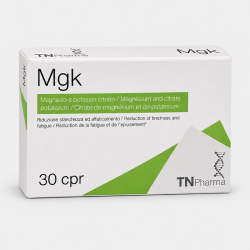
MGK Magnesium and Potassium Citrate 30 tablets
TN Pharma's MGK Magnesium and Potassium Citrate 30 tablets is a tablet formulation combining magnesium and potassium. Its composition is characterised by the presence of magnesium glycerophosphate and potassium citrate, two different forms of these minerals.
The daily serving indicated on the label, consisting of 3 tablets, provides:
- Magnesium: 300 mg;
- Potassium: 300 mg.
The product is suitable for those who prefer a solid format and want to supplement both minerals with a relatively simple formulation. It is also declared vegan, gluten-free and lactose-free.
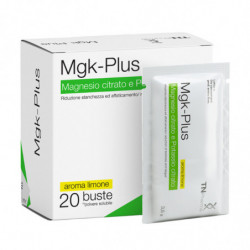
MGK Plus Citrate Lemon 20 sachets
MGK Plus Citrate Lemon 20 sachets is a powder to be dissolved in water, combining magnesium citrate and potassium citrate. The sachet format may be convenient for those who prefer taking minerals as a drink.
Each 5 g sachet provides:
- Magnesium: 150 mg;
- Potassium: 539 mg.
The product information recommends taking one sachet twice a day, preferably on a full stomach. The formulation is vegan, gluten-free and lactose-free. In addition to the two mineral salts, it contains maltodextrin, lemon flavouring and sucralose.
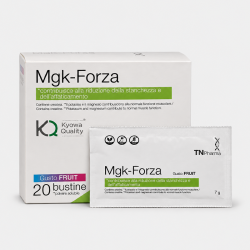
MGK-Forza 20 sachets
MGK-Forza 20 sachets has a more complex formulation than the previous products. In addition to magnesium and potassium, it contains creatine, AAKG, Kyowa Quality® glutamine, taurine and beta-alanine.
Each 7 g sachet provides:
- Magnesium: 65.3 mg;
- Potassium: 300 mg;
- Creatine: 2,000 mg.
It is intended primarily for those looking for a blend to include in their sports routine, rather than a product made exclusively from mineral salts. The presence of creatine also means that the product is intended for adults: the product information includes specific warnings regarding pregnancy, childhood and prolonged use. It is declared vegan, gluten-free and lactose-free.
GLYCOPure Hydra 720 g
GLYCOPure Hydra 720 g is an intra-workout powder combining electrolytes, vitamins and Cluster Dextrin™, a form of highly branched cyclic dextrins. Its formulation is designed to accompany training sessions while providing carbohydrates and various minerals.
The daily serving indicated in the nutritional table, consisting of 60 g of product, provides:
- Magnesium: 145 mg;
- Potassium: 300 mg;
- Highly branched cyclic dextrins: 50 g.
The presence of carbohydrates and other micronutrients distinguishes it from traditional magnesium and potassium supplements. It is therefore more suitable for those looking for a drink to use during demanding training sessions, while also considering their energy requirements. It is declared vegan, gluten-free and lactose-free.
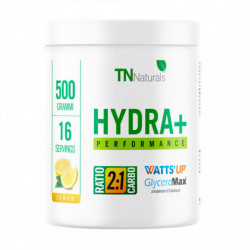
Hydra+ Performance 500 g
TN Naturals' Hydra+ Performance 500 g is a carbohydrate-electrolyte blend combining electrolytes and carbohydrates with several ingredients used in sports formulations, including citrulline malate, beta-alanine, betaine and GlyceroMax®.
For a 30 g serving, the nutritional table reports:
- Magnesium: 85.5 mg;
- Potassium: 135 mg;
- Sodium: 385 mg.
The product may be considered by those looking for a formulation to use during physical activity, particularly when training is intense or prolonged. It is not simply a magnesium and potassium supplement: it also provides carbohydrates and other ingredients intended for sports use. It is declared vegan, gluten-free and lactose-free.
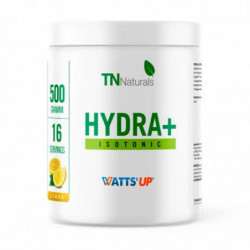
Hydra+ Isotonic 500 g
Hydra+ Isotonic 500 g is a powdered drink containing carbohydrates and electrolytes, including sodium, magnesium and potassium. The formulation also includes vitamin C, WATTS’UP® hesperidin, proanthocyanidins and diosmin.
A 30 g serving, dissolved in 500 ml of water according to the manufacturer's instructions, provides 85.5 mg of magnesium. Potassium citrate appears in the ingredient list, but the product information does not specify its separate quantity in the nutritional table. For this reason, it is not possible to make a precise comparison with the other selected products.
It is designed to support hydration and energy intake during physical activity. Its carbohydrate content makes it different from a formulation consisting exclusively of mineral salts. The product is declared vegan, gluten-free and lactose-free.
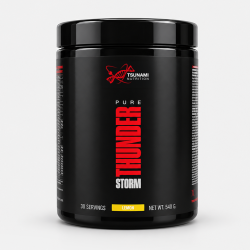
Thunder Storm Pure Professional 540 g
Thunder Storm Pure Professional 540 g is a pre-workout supplement combining vitamins, minerals, caffeine, antioxidants and ingredients used in sports formulations. It also contains magnesium and potassium.
The serving indicated in the nutritional table, consisting of 18 g, provides:
- Magnesium: 100 mg;
- Potassium: 1,000 mg.
The formula also contains citrulline malate, beta-alanine, betaine, tyrosine and caffeine. Because it contains stimulants, it should not be considered a simple electrolyte supplement. It is important to assess the overall caffeine content and personal consumption habits, particularly when using other pre-workout products or caffeinated drinks.
It is declared vegan, gluten-free and lactose-free. The product information recommends taking it before training, following the manufacturer's instructions and warnings.
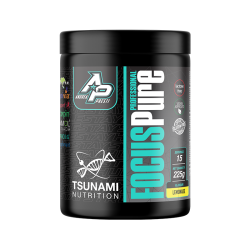
Focus Pure Professional 225 g
Focus Pure Professional 225 g is a pre-workout supplement from the Andrea Presti Series, formulated without caffeine and creatine. Its composition includes several nutraceutical and herbal ingredients, as well as minerals such as magnesium and potassium.
The nutritional table reports the following amounts per serving:
- Magnesium: 120 mg;
- Potassium: 300 mg;
- Sodium: 140 mg.
The product stands out for ingredients such as citrulline malate, beta-alanine, taurine, magnesium bisglycinate and potassium chloride, which are included in a broader formula intended to support focus and preparation for training.
The presence of the two minerals is therefore one aspect of its composition, but it is not the product's only purpose. It is declared vegan, gluten-free and lactose-free.
Best potassium supplement
Those who primarily want to supplement potassium, without necessarily taking magnesium as well, may prefer a dedicated formulation. In this case, it is important to check the amount of elemental mineral per serving and the chemical form used, without confusing the weight of the salt with the amount of potassium actually provided.
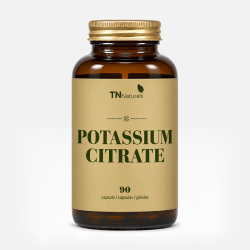
Potassium Citrate 90 tablets
TN Naturals' Potassium Citrate 90 tablets is a potassium citrate supplement that does not contain magnesium as an active ingredient. The recommended daily serving, consisting of 3 tablets, provides 900 mg of potassium.
The tablet format may be convenient for those who prefer to avoid powders that need to be dissolved in water. The formulation is declared vegan, gluten-free and lactose-free.
This product may be considered a specific option for potassium intake, but it is not automatically suitable for everyone. Before using it, it is important to assess potassium intake from the diet and consider any health conditions or medications that may affect blood potassium levels.
How to choose the best potassium and magnesium supplement
There is no single best potassium and magnesium supplement for everyone: the choice depends on the composition, the amount of minerals per serving and individual needs. A simple tablet product, for example, meets different needs from an intra-workout drink that also contains carbohydrates, vitamins and other ingredients.
Bioavailability and types of mineral salts
The chemical form of the minerals is one of the aspects to consider. Magnesium can be found as citrate, bisglycinate, glycerophosphate and other compounds, while potassium can be provided through salts such as citrate and chloride.
These forms differ in composition, solubility and the amount of elemental mineral they provide. Bioavailability, meaning the proportion that is absorbed and made available to the body, also depends on the formulation and individual characteristics. Simply reading the name of the salt is therefore not enough to determine which product is more effective: it is necessary to check the actual amounts of magnesium and potassium stated on the label.
For magnesium, it may be useful to explore the differences between magnesium citrate and bisglycinate, two forms commonly used in food supplements.
Choosing between tablets and water-soluble sachets
The format mainly affects convenience and how the supplement is taken. Tablets are easy to carry and provide a defined serving without the need to prepare a drink. Water-soluble sachets, on the other hand, allow the powder to be dissolved in water and may be convenient for those who prefer to take minerals in a drink.
Powder formulations intended for sports use may also contain carbohydrates, sodium, vitamins and other ingredients. In this case, it is important to distinguish a product designed for hydration during training from a supplement that primarily provides magnesium and potassium.
The choice should also take into account the number of daily servings and the amount of minerals per serving: a pack containing many tablets is not necessarily more cost-effective if a large number of tablets are required to reach the recommended serving.
Sugar-free formulations and additives
Another factor to check is the ingredient list. Some products contain only mineral salts and the excipients needed for the formulation, while others include flavourings, sweeteners, carbohydrates and additional ingredients.
Sports drinks may contain sugars or other carbohydrate sources to provide energy during prolonged exercise. If the goal is instead to supplement minerals without adding carbohydrates, it is advisable to read the nutritional table and check the sugar content per serving.
However, a product without flavourings or sweeteners should not automatically be considered better: the choice depends on personal preferences, tolerance and intended use. It is also useful to check for ingredients to which you may be sensitive or intolerant.
Nutritional needs can change at different stages of life. For women, for example, it is important to consider their overall diet and lifestyle, without automatically attributing tiredness or changes in energy levels to a mineral deficiency. During menopause, individual needs can instead be assessed with a healthcare professional.
How we evaluated the supplements
To select the eight products featured in this guide, we consulted the product information available on the Tsunami Nutrition website, checking that magnesium and potassium were actually included in their composition. The selection includes both supplements specifically dedicated to these two minerals and more complex sports formulas that contain them among their ingredients.
In particular, we considered:
- Presence of both minerals: we included products whose product information lists magnesium and potassium in the composition or nutritional table;
- Amount per serving: we reported the values declared by the manufacturer, specifying when the amount of a mineral is not listed separately;
- Chemical form: we considered the salts used, such as citrate, glycerophosphate, chloride and bisglycinate;
- Format: we distinguished between tablets, sachets and powders used to prepare drinks;
- Overall composition: we noted the presence of carbohydrates, vitamins, caffeine, creatine and other ingredients that characterise sports formulations;
- Directions for use and warnings: we considered the instructions provided in the product information, without transferring dosages or directions from one formulation to another.
This selection is not a clinical assessment or a ranking based on comparative evidence of effectiveness. The characteristics described reflect the available formulations and do not mean that every product is suitable for everyone or that taking supplements is necessary to achieve an adequate mineral intake.
Frequently asked questions
Can magnesium and potassium be taken every day?
Yes, magnesium and potassium can be taken daily when supplementation is genuinely necessary and the dosage is appropriate. Both are essential minerals that must be consumed every day, primarily through the diet. A supplement may be useful when dietary intake is insufficient or in the presence of specific needs, but it is not essential for everyone.
Before using a product every day, it is important to check the amount of minerals per serving and also consider the intake from food and other supplements. Excessive magnesium intake from supplements can mainly cause diarrhoea and gastrointestinal discomfort. Excess potassium, on the other hand, can cause hyperkalaemia, a condition that can interfere with the normal electrical activity of the heart.
Anyone with kidney failure, cardiovascular conditions or taking medications that affect electrolyte balance should seek medical advice before starting supplementation.
What are the benefits of taking potassium and magnesium together?
Taking potassium and magnesium together provides two minerals involved in normal muscle and nerve function and electrolyte balance. Magnesium also contributes to normal energy metabolism and the reduction of tiredness and fatigue, while potassium contributes to the maintenance of normal blood pressure.
Having both minerals in the same formulation may be useful when supplementation of both is needed. However, this does not mean that combining them automatically produces a greater effect than taking them separately or necessarily prevents cramps and fatigue. Their usefulness depends on overall intake, individual circumstances and the possible presence of deficiencies.
When is the best time of day to take magnesium and potassium?
There is no single best time to take magnesium and potassium. The time of day depends on the formulation, the manufacturer's instructions and individual tolerance. Some products are intended to be taken during or after meals, while sports drinks may be designed for use before, during or after training.
It is therefore preferable to follow the instructions on the packaging rather than considering morning or evening as times that are necessarily more effective.
How long should a course of magnesium and potassium supplementation last?
There is no standard duration that applies to every course of magnesium and potassium supplementation. The period of use depends on the reason for supplementation, the amount taken, dietary intake and any conditions that may affect mineral levels in the body.
In the presence of kidney or heart conditions, medication use or a need for prolonged supplementation, the duration and dosage should be assessed by a doctor. The goal is not to follow predetermined courses, but to maintain an adequate intake that is compatible with individual needs.
Potassium and magnesium supplements may be useful when it is necessary to increase the intake of these minerals, but they are not all equivalent. Before choosing a product, it is important to compare its composition, the actual amount provided per serving and its intended purpose, distinguishing simple supplements from more complex sports formulas. If you have a medical condition or take medication, it is always advisable to seek medical advice before starting supplementation.