- Health and wellness
- 3 views
- What thiamine is
- What thiamine is used for
- Where vitamin B1 is found
- Supplements and commercially available preparations
- Contraindications and effects of excessive intake
- Frequently asked questions
What Is Thiamine?
Thiamine, also known as vitamin B1, is an essential water-soluble vitamin for the proper functioning of the body. It participates in several metabolic processes, particularly those that allow energy to be obtained from carbohydrates, and contributes to the normal functioning of the nervous system and heart.
The body cannot produce sufficient amounts of thiamine on its own and must therefore obtain it through food. It is found in various foods, including whole grains, legumes, seeds, nuts, pork and fish. A varied and balanced diet is generally the main source of this micronutrient.
Vitamin B1 deficiency can impair energy metabolism and the functioning of tissues that require a constant energy supply, such as the brain, nerves and heart. Certain conditions, including chronic excessive alcohol consumption, malabsorption and inadequate food intake, can increase the risk of deficiency.
Understanding the characteristics of thiamine helps explain why it is important to consume it regularly and under which circumstances supplementation may be necessary. It is equally important to distinguish nutritional requirements from the higher doses used in specific clinical settings.
Structure and Properties of Vitamin B1
Thiamine is an organic molecule made up of two heterocyclic structures, a pyrimidine ring and a thiazole ring, joined by a methylene bridge. Its structure allows it to participate in enzymatic reactions that are essential for nutrient metabolism.
Vitamin B1 is water-soluble, meaning that it dissolves in water. This characteristic affects its absorption and storage in the body: bodily reserves are limited, and some excess vitamin is eliminated through urine. For this reason, it is important to obtain it regularly from food.
Once absorbed, thiamine is converted into its main biologically active form, thiamine pyrophosphate (TPP), also known as thiamine diphosphate. This form acts as a coenzyme, meaning that it works alongside specific enzymes to enable certain metabolic reactions.
Vitamin B1 is also available as a supplement, generally in the form of thiamine hydrochloride or thiamine mononitrate. Derivatives with different characteristics also exist, such as benfotiamine, a synthetic fat-soluble form studied for its bioavailability.
Thiamine is relatively sensitive to heat and food processing. Prolonged cooking in water can cause it to leach into the cooking liquid, while grain refining can significantly reduce its content. For this reason, alternating different food sources and choosing whole grains whenever possible can help maintain an adequate intake.
What Is Thiamine Used For?
Vitamin B1 plays an important role in energy metabolism and nervous system function. Its activity is mainly linked to the ability of certain cells to use nutrients obtained through food and support energy-dependent processes.
Its contribution is particularly important in carbohydrate metabolism, but it also involves reactions affecting other nutrients. Thiamine is also important for tissues with high energy requirements, such as the brain, heart and muscles.
Adequate intake helps support normal physiological functions, but this does not mean that consuming more than the required amount automatically produces more energy, greater endurance or improved cognitive performance. Supplementation is particularly relevant when a deficiency exists or there is a genuine risk of developing one.
Benefits for Energy Metabolism
One of the main functions of thiamine is to participate in the reactions that allow the body to obtain energy from food. Its active form, thiamine pyrophosphate, acts as a coenzyme in several metabolic processes, including the conversion of pyruvate into acetyl-CoA and the functioning of the Krebs cycle.
These processes are important for carbohydrate metabolism and contribute to the production of ATP, the molecule used by cells as an immediate source of energy. Vitamin B1 also participates in the activity of the enzyme transketolase, which is involved in the pentose phosphate pathway, a metabolic route also required to produce molecules used in cellular processes to cope with fatigue and demanding schedules.
It is therefore more accurate to say that thiamine helps the body use carbohydrates to produce energy, rather than claiming that it directly converts food into glucose or provides energy on its own. Its role is to enable certain essential enzymatic reactions.
Thiamine is also often considered in relation to the wellbeing of people who practise sports, because energy metabolism is essential during physical activity. However, there is insufficient evidence to claim that supplementation above the recommended intake automatically improves athletic performance in people who already consume adequate amounts of vitamin B1.
It is important to remember that persistent fatigue should not automatically be attributed to a vitamin deficiency: medical assessment may be necessary to identify its cause.
Role in the Brain and Nervous System
The nervous system requires a constant energy supply to perform its functions. Thiamine contributes to carbohydrate metabolism and the functioning of nerve cells, participating in processes that are essential for maintaining normal brain activity and the transmission of nerve signals.
Vitamin B1 is also involved in certain mechanisms related to neurotransmitter production and the metabolism of nerve cells. However, it is not accurate to claim that it directly stimulates acetylcholine synthesis or has a memory-enhancing effect: its role is primarily to support the metabolic processes required for the nervous system to function.
Thiamine also contributes to maintaining the structures and functions of nerve cells. A deficiency can impair the functioning of the central and peripheral nervous systems and, in more severe cases, cause significant neurological symptoms.
Maintaining an adequate intake of vitamin B1 is important for neurological wellbeing, memory and cognitive functions.
Where Is Vitamin B1 Found?
Thiamine is present in numerous foods of both plant and animal origin. To obtain adequate amounts, it is useful to vary protein and plant-based food sources, also choosing whole grains and fortified products when available.
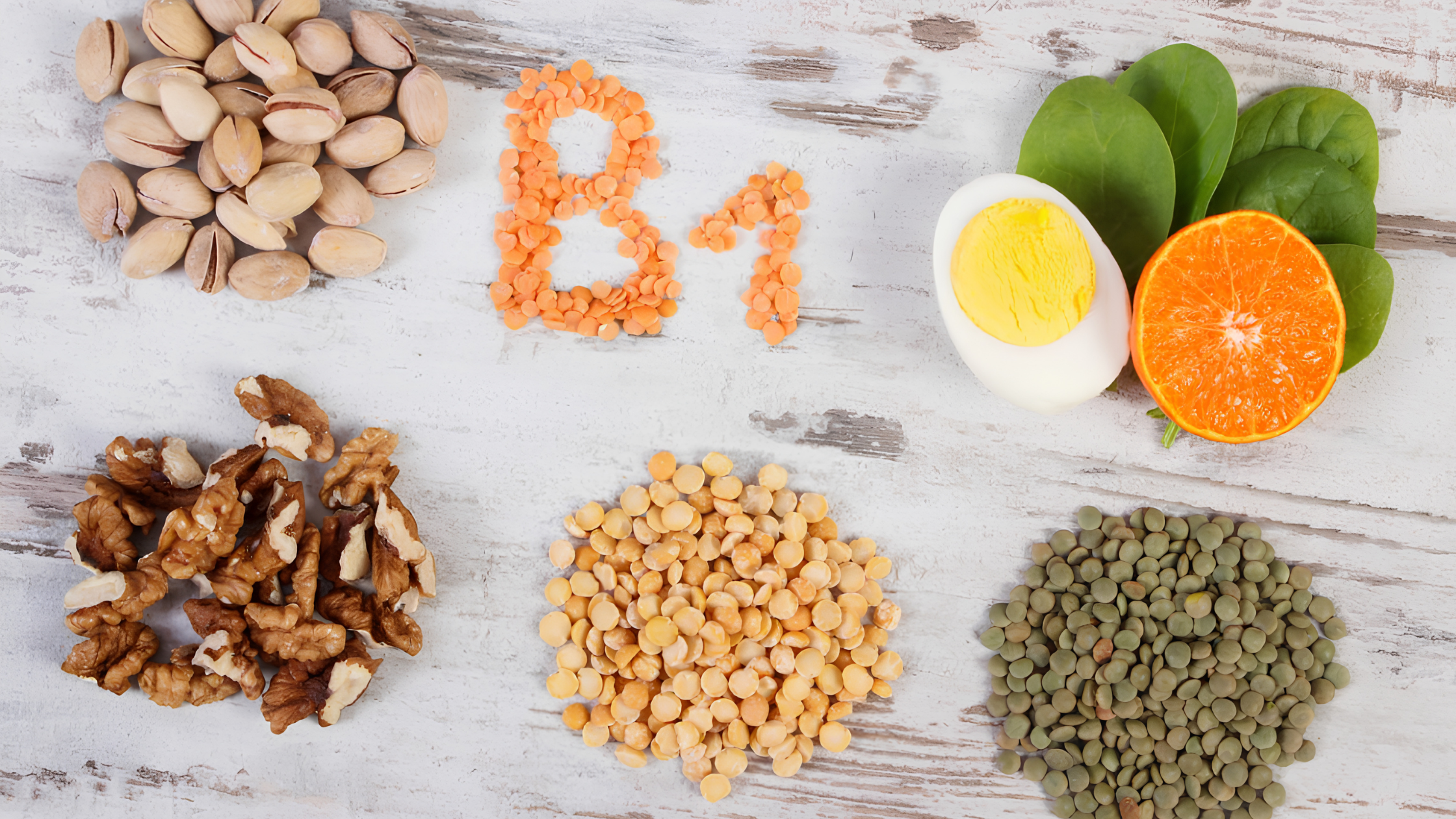
Some of the foods that contribute most to vitamin B1 intake include pork, seeds, legumes, nuts, whole grains and certain grain-based products. The actual amount may vary depending on the food variety, processing, storage and preparation.
A varied diet generally makes it possible to meet requirements without necessarily needing supplements. However, it is important to consider individual eating habits and conditions that may increase the risk of deficiency, such as a highly restrictive diet or absorption problems.
Foods with the Highest Thiamine Content
There are many dietary sources of vitamin B1. Some stand out for their relatively high content, while others contribute to daily intake because of how frequently they are consumed.
- Pork: one of the most interesting dietary sources of thiamine. Its content varies depending on the cut and preparation method;
- Sunflower seeds: provide vitamin B1 and other nutrients, including unsaturated fats and minerals;
- Wheat germ: a concentrated source of several B vitamins, including thiamine;
- Legumes: beans, lentils, peas and soy contribute to vitamin B1 intake, as well as providing plant-based protein and fibre;
- Whole grains: brown rice, oats, whole wheat and other grains retain some of the thiamine found in the outer layers of the grain;
- Nuts: pistachios, walnuts and other oilseeds can contribute to daily intake;
- Fish: some varieties contain thiamine, although the amount can vary considerably;
- Fortified foods: some breakfast cereals, flours, breads and grain-based products may be enriched with vitamin B1.
Because it is water-soluble, thiamine can leach into cooking water. Prolonged boiling and the use of large amounts of water can therefore reduce the final content of the food. Whenever possible, alternating short cooking times, steaming and other preparation methods that limit this loss can help preserve a greater amount.
Grain refining also affects vitamin B1 content. During the production of refined flours and rice, some of the grain layers containing a proportion of the B vitamins are removed. For this reason, whole grains and fortified products can be useful sources as part of a varied diet.
Supplements and Commercially Available Preparations
Vitamin B1 supplements may be considered when dietary intake is insufficient, when conditions increase the risk of deficiency or when a healthcare professional recommends their use. Available formulations may contain thiamine alone or combine it with other B vitamins. Thiamine is also often included in B-complex supplements, which bring together several micronutrients involved in energy metabolism and other physiological functions.
The choice depends on the composition, the amount of vitamin B1 per serving and individual needs. There is no need to take a high-dose supplement simply because you practise sports or are going through a period of fatigue: it is important to establish whether there is a genuine nutritional need first.
Benfotiamine and Sublingual Formulations
In addition to traditional forms of thiamine, there are preparations containing derivatives with different chemical characteristics. These include benfotiamine, a synthetic compound derived from vitamin B1, characterised by greater fat solubility compared with conventional water-soluble forms.
Benfotiamine has been studied for its bioavailability and its potential use as a source of thiamine. Some data indicate that it may result in greater thiamine availability in the body compared with certain water-soluble forms. However, this does not mean that it is clinically superior for every purpose or should be preferred in every situation.
Another type of preparation consists of sublingual supplements, designed to be taken under the tongue. This method is intended to promote absorption through the oral mucosa, but it is not accurate to claim that it always guarantees greater bioavailability than conventional tablets or capsules.
Actual absorption depends on the formulation, the amount of active ingredient, individual characteristics and how the product is used. When comparing different products, it is therefore important to read the manufacturer's information rather than relying exclusively on the term sublingual or claims of faster absorption.
Before choosing a thiamine- or benfotiamine-based preparation, it is useful to check:
- Form used: check whether the product contains thiamine hydrochloride, thiamine mononitrate, benfotiamine or another formulation;
- Amount per serving: distinguish the actual vitamin B1 content from the total amount of the compound used;
- Directions for use: follow the instructions on the label, especially for sublingual products;
- Other ingredients: check for additional vitamins, minerals or added substances;
- Individual needs: consider whether supplementation meets a specific nutritional requirement or a healthcare recommendation.
Contraindications and Effects of Excessive Intake
Thiamine is generally well tolerated in the amounts normally obtained from food. As a water-soluble vitamin, some excess is eliminated through urine. This helps explain why no tolerable upper intake level has been established for vitamin B1.
However, the absence of a defined upper limit does not mean that it is advisable to take high doses without a reason. High-dose supplements should be assessed according to individual needs, formulation and health conditions, particularly when used for prolonged periods or alongside other products.
Vitamin B1 deficiency is generally more clinically relevant than the risk of toxicity from oral intake. It may occur in cases of inadequate food intake, malabsorption, chronic excessive alcohol consumption or conditions that increase vitamin loss or reduce its utilisation.
Symptoms and Risks of Overdose
No systematic toxic effects have been established in association with oral thiamine intake at the doses normally found in supplements. The available information has not made it possible to establish a tolerable upper intake level, partly because the vitamin appears to have low oral toxicity and excess amounts are primarily eliminated through urine.
Before using high-dose supplements, it is advisable to consider some precautions:
- Do not increase the dose on your own: higher amounts do not guarantee more energy or better performance;
- Check other supplements: verify whether vitamin B1 is already included in B-complex or multivitamin products;
- Consider your health conditions: if you have medical conditions, malabsorption or are taking medication, seek advice from a healthcare professional;
- Do not replace medical treatment: a significant deficiency or neurological symptoms require medical assessment and should not be managed solely with over-the-counter products;
- Follow the instructions: respect the dose and directions for use on the packaging or prescribed by your doctor.
Thiamine deficiency may cause fatigue, loss of appetite, irritability, muscle weakness and neurological disorders. In more severe cases, it can lead to beriberi or Wernicke's encephalopathy, conditions that require prompt medical treatment. It is therefore important not to confuse the risks of excessive intake with those of deficiency: both must be considered according to the individual situation.
Frequently Asked Questions
Why Is Thiamine Useful for People with Alcoholism?
People with alcohol use disorder have a higher risk of vitamin B1 deficiency for several reasons. Chronic excessive alcohol consumption can reduce intestinal thiamine absorption, impair liver stores and interfere with the body's ability to use the vitamin. Inadequate food intake and malnutrition may also contribute.
Deficiency can have particularly serious consequences for the nervous system and increase the risk of Wernicke's encephalopathy and Korsakoff syndrome. The dose and route of administration must be determined by healthcare professionals, because oral administration may not be sufficient in certain situations.
It is important to remember that vitamin B1 supplementation does not eliminate the effects of alcohol on the body or provide a way to detoxify the liver after excessive alcohol consumption.
Is Taking Thiamine Effective Against Mosquitoes?
No, there is no reliable scientific evidence that taking thiamine orally makes the skin less attractive to mosquitoes or protects against bites. The hypothesis that vitamin B1 may alter body odour and act as a repellent has been studied, but controlled trials have not demonstrated any preventive effectiveness.
To reduce the risk of bites, it is preferable to use authorised insect repellents, follow the instructions on the label and adopt physical protective measures, such as appropriate clothing and mosquito nets. Vitamin B1 remains important for metabolism and the nervous system, but it is not a proven insect repellent.
When Is a 300 mg Dose of Thiamine Indicated?
A dose of 300 mg of thiamine is far higher than the daily requirement for an adult, which is generally around 1.1–1.2 mg per day. It is therefore not a dose that should routinely be taken to support energy metabolism or improve athletic performance.
A 300 mg dose should not be interpreted as a general recommendation. Before taking products containing this amount of vitamin B1, it is advisable to seek medical advice. A doctor can assess the actual need, duration of use and most appropriate formulation.
What Is the Recommended Daily Requirement of Vitamin B1?
Thiamine requirements vary according to age, sex and certain physiological conditions. For adults, commonly used reference values are approximately 1.2 mg per day for men and 1.1 mg per day for women. During pregnancy and breastfeeding, requirements increase and are generally indicated at around 1.4 mg per day.
Recommended amounts are different for children and adolescents and gradually increase with growth. To meet requirements, it is useful to regularly consume foods such as whole grains, legumes, seeds, nuts, pork and fish.
These values are nutritional references for healthy populations and are not therapeutic doses. In the presence of diagnosed deficiencies, malabsorption, chronic excessive alcohol consumption or other medical conditions, a doctor may recommend different amounts and specific methods of administration.
Vitamin B1 is essential for energy metabolism and the functioning of the nervous system. A varied diet can generally help meet daily requirements, while supplements may be useful when specific needs arise. High doses, particularly those used in therapeutic settings, must be managed by a healthcare professional and should not be chosen independently.