- Health and wellness
- 23 views

- Duration of vitamin K2 supplementation
- When and how to take vitamin K2
- Combined vitamin D3 and K2 supplementation
- Types of supplements and contraindications
- Frequently asked questions
Duration of vitamin K2 supplementation
The duration of vitamin K2 supplementation depends on nutritional needs, dietary habits and any recommendations from a doctor. There is no standard period that applies to everyone, nor is there any scientific rule requiring supplementation cycles to alternate with breaks. In a healthy person who follows a varied diet, vitamin K intake may already be adequate through food.
When choosing a supplement, it is therefore important to consider the reason for using it and the amount contained in the formulation. Vitamin K2 contributes to the activation of proteins involved in blood clotting and bone metabolism, but the available evidence does not support considering its supplementation a necessary preventive strategy for everyone.
Recommended duration of supplementation cycles
There is no universally recommended duration for vitamin K2 supplementation cycles. Unlike some other supplements for which specific periods of use may be recommended, there are no general guidelines requiring this vitamin to be taken for one, two or three months and then stopped.
Duration can be assessed according to several factors:
- Diet: people who regularly consume foods containing vitamin K may already have an adequate intake without needing a supplement;
- Supplement composition: formulations may contain different amounts of vitamin K2 and different forms, such as MK-4 and MK-7;
- Individual needs: certain conditions may make it necessary to consult a healthcare professional about vitamin K intake;
- Combination with other nutrients: K2 may be included in products combined with vitamin D3 or calcium, which require an overall assessment of the doses.
Anyone using a supplement for a specific need should follow the instructions on the label or those provided by their doctor, without independently extending or repeating supplementation cycles.
When long-term use may be considered
Long-term supplementation may be considered in certain situations, but there is no general recommendation for all adults to take vitamin K2 continuously. The decision must take into account nutritional status, health conditions and any ongoing drug treatments.
For example, people with fat malabsorption, certain intestinal diseases or conditions affecting the liver and bile ducts may have a higher risk of inadequate absorption of fat-soluble vitamins. In these cases, however, vitamin K intake must be managed by a doctor: K2 supplementation is not necessarily the appropriate option.
People interested in maintaining bone health can also ask a healthcare professional whether a supplement may be useful. Vitamin K contributes to the activation of osteocalcin, a protein involved in bone metabolism, but studies on supplementation have not yet conclusively demonstrated that K2 prevents osteoporosis or fractures in the general population.
When and how to take vitamin K2
Vitamin K2 is fat-soluble, meaning that it is absorbed together with dietary fats. For this reason, when using a supplement, taking it with a meal may be helpful. However, no time of day has been shown to guarantee better results.
The method of administration also depends on the formulation chosen: tablets, capsules and drops may have different concentrations and instructions. It is therefore important to check the amount of vitamin K2 provided by the recommended daily dose.
The most suitable time of day
There is no scientifically established best time of day to take vitamin K2. It can be taken in the morning, at lunchtime or in the evening, provided that the product instructions are followed and supplementation is kept consistent.
The choice may depend on personal habits: some people prefer to take the supplement with breakfast, while others choose lunch or dinner. There is insufficient evidence to claim that any of these times enhances the vitamin's activity or produces greater benefits.
Consistency is mainly a practical matter: taking the supplement at a time that is easy to remember can help you follow the recommended instructions. There is no need to adjust the timing according to the sleep-wake cycle or supposed stimulating effects, as vitamin K2 is not considered a stimulant.
Taking it with meals
As a fat-soluble vitamin, K2 is absorbed through intestinal processes involving fats and bile secretion. Taking it with a meal containing some fat may help its absorption.
There is no need to eat a particularly large meal or one that is high in fat. It may be sufficient to take it alongside a balanced diet that includes foods such as:
- extra virgin olive oil;
- nuts and oilseeds;
- eggs;
- fish;
- avocado.
Many vitamin K2 supplements are also formulated as capsules or drops with an oil base. Even in these cases, it is advisable to follow the instructions on the packaging rather than assuming that the presence of a lipid carrier makes any other instructions unnecessary.
Combined vitamin D3 and K2 supplementation
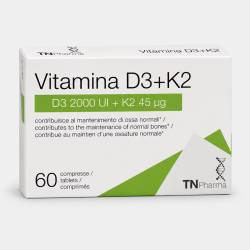
Vitamin D3 and vitamin K2 are involved in different physiological processes that are both connected to calcium metabolism. Vitamin D3 supports the normal absorption and utilisation of calcium and phosphorus, while vitamin K2 contributes to the activation of vitamin K-dependent proteins, including osteocalcin, which is involved in bone tissue metabolism.
This complementary role has led to the development of supplements that combine the two nutrients in the same formulation. Combining them may be convenient when both vitamins are needed, but this does not mean they must always be taken together or that the combination automatically provides greater protection for bones and blood vessels.
Taking them together versus separately
Vitamin D3 and K2 can be taken together or separately. There is no requirement to combine them; the choice depends on individual needs and whether supplementation with each nutrient is indicated.
Vitamin D3 contributes to calcium absorption in the intestine and the maintenance of normal bones. Vitamin K, on the other hand, is necessary for the activation of certain proteins, including osteocalcin, which participates in bone tissue mineralisation. Another vitamin K-dependent protein, matrix Gla protein (MGP), is being studied for its involvement in regulating tissue calcification.
These mechanisms explain the scientific interest in combining D3 and K2, but they do not demonstrate that taking both vitamins necessarily prevents vascular calcification, kidney stones or fractures. Clinical evidence of additional benefits from the combination is still evolving.
A combined formulation may be convenient for people who have an indication to supplement both nutrients, while taking them separately allows independent dosage choices.
Recommended daily intake
There is no official recommended daily intake specifically for vitamin K2 alone. The nutritional reference values established by scientific authorities apply to vitamin K and do not define an amount that must necessarily be consumed in the form of MK-4 or MK-7.
EFSA has established an adequate intake of 70 micrograms of vitamin K1 (phylloquinone) per day for adults. This value is not a recommended dose of K2 and cannot be used to independently determine the dosage of a supplement containing menaquinones.
Products containing different amounts of vitamin K2 are available on the market. Some formulations provide doses in the tens or hundreds of micrograms, but the choice should not be based solely on the highest concentration. It is important to consider the vitamin form, the overall composition and whether vitamin D3 or other nutrients are also included.
When choosing a combined formulation, the amount of vitamin D3 should also be assessed separately. Its requirements and the potential need for supplementation depend on factors such as age, diet, sun exposure and vitamin status.
Types of supplements and contraindications
Vitamin K2 supplements may contain different forms of menaquinone, mainly MK-4 and MK-7. These molecules differ in their chemical structure and certain pharmacokinetic characteristics, such as how long they remain in the blood.
When choosing a product, it is important to consider the form used, the dosage per serving, additional ingredients and the quality of the raw material. Although vitamin K has a low toxicity potential, important precautions apply, particularly to people taking vitamin K antagonist anticoagulants.
Benefits of the MK-7 form
Vitamin K2 in the form of MK-7 (menaquinone-7) is one of the forms most commonly used in supplements. Compared with MK-4, it remains in the bloodstream for longer, meaning it can be detected in the body for a more extended period after intake.
This property is related to its half-life: MK-7 can remain in circulation for several days, whereas MK-4 is eliminated more rapidly. Its longer presence in the bloodstream makes MK-7 suitable for formulations designed for daily intake at relatively low doses.
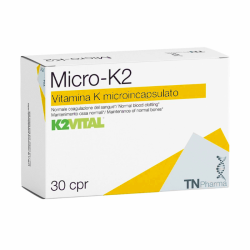
Some raw materials used to produce MK-7 are obtained through fermentation processes, while others are manufactured through synthesis. Available patented forms include K2VITAL, an all-trans MK-7 raw material. A randomised clinical study compared a synthetic form of MK-7 with a fermentation-derived form, finding bioequivalence for the parameters analysed and measurable biological activity.
The main contraindication concerns interactions with vitamin K antagonist anticoagulants, such as warfarin and acenocoumarol. These medicines work by interfering with the vitamin K cycle: introducing a supplement or significantly changing intake may alter the effect of the treatment and the monitoring of blood clotting.
Anyone taking these medicines should not start, stop or change their vitamin K2 intake without consulting their doctor. It is also important to keep dietary vitamin K intake relatively consistent and inform a healthcare professional about any changes in diet or supplement use.
Frequently asked questions
Should vitamin K2 be taken every day?
Vitamin K2 can be taken daily when a daily supplementation schedule is recommended, but not everyone needs a supplement. Frequency depends on the formulation, the amount contained in each dose and the instructions provided by the manufacturer or healthcare professional.
Because it remains in the blood for longer, the MK-7 form is often used in supplements designed to be taken once a day. This does not mean, however, that it must be taken continuously for life: duration should be assessed according to individual needs and dietary intake.
Anyone receiving anticoagulant treatment with vitamin K antagonist medicines should consult their doctor before using any supplement containing K2.
What are the risks associated with excessive vitamin K2 intake?
No toxic effects have been established for vitamin K intake at the amounts considered in the available evidence and, due to its low toxicity potential, no tolerable upper intake level has been defined. However, this does not justify taking high doses without a specific need.
The most important precaution concerns interactions with medicines such as warfarin and acenocoumarol. A significant change in vitamin K intake may reduce or alter the anticoagulant effect, potentially affecting the monitoring of blood clotting.
For people who do not take these medicines, vitamin K2 is generally well tolerated at the amounts commonly used in supplements. It is still advisable to follow the product instructions and consult a professional if you have a medical condition, take medication or have problems with nutrient absorption.
Can prolonged vitamin K2 supplementation cause weight gain?
No, prolonged vitamin K2 supplementation is not considered a cause of increased body weight. The vitamin does not provide significant calories, and there is no scientific evidence demonstrating a direct effect on fat accumulation.
K2 contributes to the activation of proteins involved in blood clotting and bone metabolism, but it is neither an appetite stimulant nor a nutrient that promotes an increase in fat mass. Likewise, there is no evidence that it has a slimming effect or directly reduces abdominal fat.
Changes in body weight mainly depend on the balance between energy intake and expenditure, as well as individual, hormonal and metabolic factors. Vitamin K2 supplementation therefore does not replace a balanced diet and an active lifestyle.
There is no standard duration for taking vitamin K2, nor is there any requirement to follow supplementation cycles with predetermined breaks. Frequency and dosage depend on the formulation and individual needs. Combining it with vitamin D3 may be convenient when both nutrients are needed, but it is not mandatory for everyone. Before starting supplementation, particularly if you are taking anticoagulant medication, it is important to consult a healthcare professional.