- Training
- 33128 views
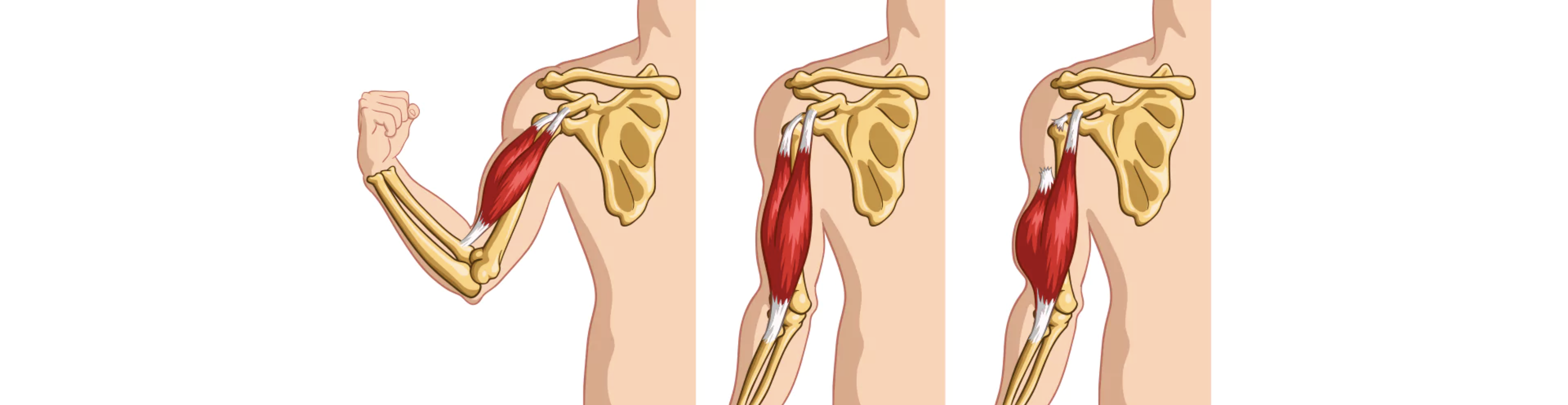
Muscle is an organ that enables our body, or certain parts of it, to move; however, it is not solely responsible for motor function, but also performs various vital functions such as respiration, circulation and digestion, and the energy required for these functions comes from ATP. Muscle tissue is divided into smooth muscle and striated muscle.
Skeletal muscle
A muscle is an organ composed of muscle fibres capable of contracting in relation to one another. Each muscle fibre is made up of myofibrils, which are themselves composed of myofilaments of actin, myosin, troponin and tropomyosin; these, in turn, make up the sarcomere, which is the functional unit of the muscle.
What are muscle fibres?
Muscle fibres are divided into:
- Red or slow-twitch fibres (type I)
- White or fast-twitch fibres (type IIb)
- Intermediate fibres (type IIa)
What are the most common muscle injuries?
Sports-related muscle injuries are very common and can result from an incorrect or inadequate warm-up, or from performing an exercise incorrectly. Warming up is a very important part of training that we often neglect and underestimate, but which helps us prepare for the physical exertion ahead. The most common sports injuries are:
- Bruising
- Muscle spasms
- Strains
- Tears
In this article, we will focus on muscle tears, which constitute a genuine muscle injury and can vary in severity. They affect the skeletal muscles that cover the skeleton, as the smooth muscles of the internal organs do not suffer this type of injury. They can occur as a result of direct trauma, such as a contusion, or as a result of excessive stretching. The severity of the injury is assessed using ultrasound or MRI to determine not only the degree of the injury but also its location. The scale for assessing muscle tears is based on three grades:
- Grade 1: a few muscle fibres are affected, with a minor injury that would allow the individual to continue training.
- Grade 2: a larger number of muscle fibres are affected, a haematoma is visible and it is not possible to continue training.
- Grade 3: at least three-quarters of the fibres are torn, with pain, a bruise and an inability to use the muscle.
To support muscle health, it is recommended to take a potassium and magnesium-based supplement such as MGK Magnesium and Potassium Citrate from TN Pharma: the new supplement based on magnesium extract and potassium citrate developed by TN Pharma’s Research & Development team, which helps reduce fatigue and exhaustion, promotes electrolyte balance and normal energy metabolism, as well as muscle function.
What is the spine and what is its function?
The spine, or vertebral column, consists of 33 to 34 bones divided into several segments: the cervical segment with 7 vertebrae, the thoracic segment with 12 vertebrae, the lumbar segment with 5 vertebrae, the sacral segment with 5 vertebrae and the coccygeal segment with 4 to 5 vertebrae. The spine is a structure composed of bones, joints and connective tissues that perform static or supportive, dynamic, circulatory and neurological functions. Problems that can often affect the spine, particularly as a result of incorrect training, include the following:
- Low back pain
- Lumbosciatica
- Sciatica
Before moving on to the assessment of these individual problems, it should be noted that all lower back pain may have specific causes, such as trauma, infections, deformities or tumours, or non-specific causes of a mechanical nature resulting from excessive strain on this area. Low back pain is pain localised in the lumbar region, between the ribcage and the buttocks, which radiates down to the knee but never below it. Lumbosciatica is characterised by involvement of the sciatic nerve, with unilateral pain in the lower limbs that radiates below the knee, causing paraesthesia or hypoaesthesia in some cases. Sciatica is caused by compression of the nerve roots in the L5-S1 region, often due to a herniated disc or, in some cases, piriformis syndrome. These conditions can be assessed using X-rays, MRI or CT scans.
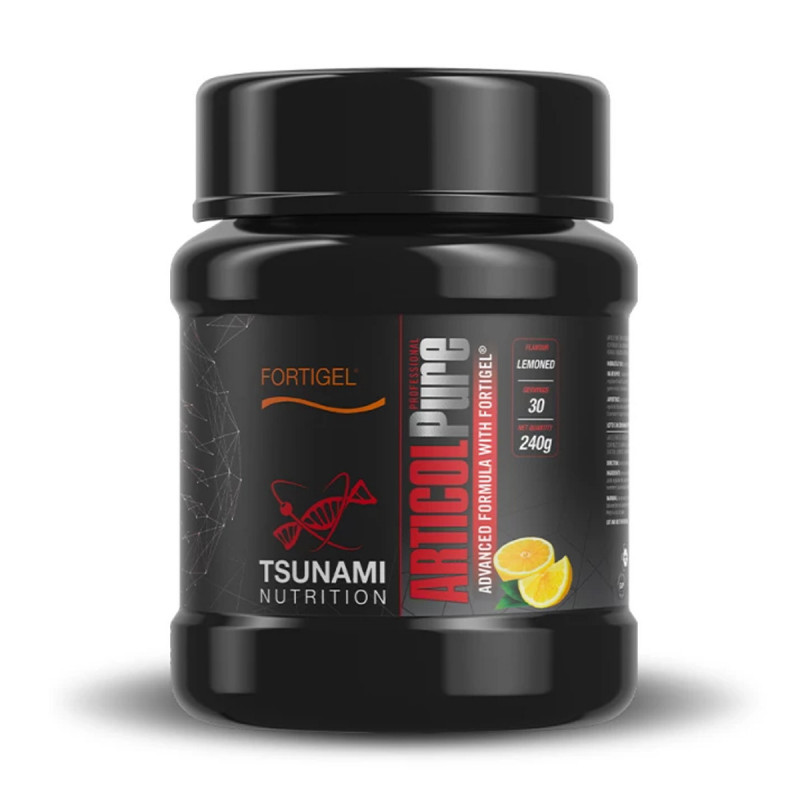
For the prevention and health of the sciatic nerve, it is recommended to take: Vitamin B Complex by TN Naturals (1 tablet at breakfast), whilst for joint health, ARTICOLPure PROFESSIONAL by Tsunami Nutrition (8 g once a day): ARTICOLPure PROFESSIONAL is the new dietary supplement from Tsunami Nutrition, based on the exclusive FORTIGEL® patent, which helps to prevent and alleviate joint problems.