- Health and wellness
- 2507 views
What is GLP-1 and how does it promote weight loss?
GLP-1 is a hormone produced naturally by our bodies, which slows down gastric emptying and induces a feeling of fullness. It is precisely because of its benefits for weight management and weight loss that this hormone has become central to body composition programmes and the treatment of obesity.
When GLP-1 levels rise, the brain receives longer-lasting signals of fullness in response to food intake. This mechanism helps to regulate calorie intake and better control hunger, supporting gradual weight loss. Today, GLP-1 is stimulated by both specific medicines and targeted supplements.
The mechanism of action on the feeling of fullness
GLP-1 acts primarily on the brain and the digestive system by increasing the feeling of fullness. After meals, this hormone is released by the gut and stimulates the receptors in the brain responsible for controlling appetite.
This information, processed by the brain, slows down gastric emptying, making the stomach feel full and reducing the risk of eating between scheduled meals, thereby lowering daily calorie intake.
The difference between endogenous GLP-1 and agonist medicines
Endogenous GLP-1 is produced naturally by the gut in response to meals, and by regulating appetite, it promotes a feeling of fullness. However, its duration of action is short, and the levels produced naturally by the body may not be sufficient to achieve significant weight loss.
GLP-1 medicines consist of molecules that mimic the action of the natural hormone over a longer period and with more effective results. Substances such as semaglutide and liraglutideact on the receptors for endogenous GLP-1, increasing the feeling of fullness and helping to reduce calorie intake in a controlled manner. In the long term, however, these medicines may slow down the metabolism.
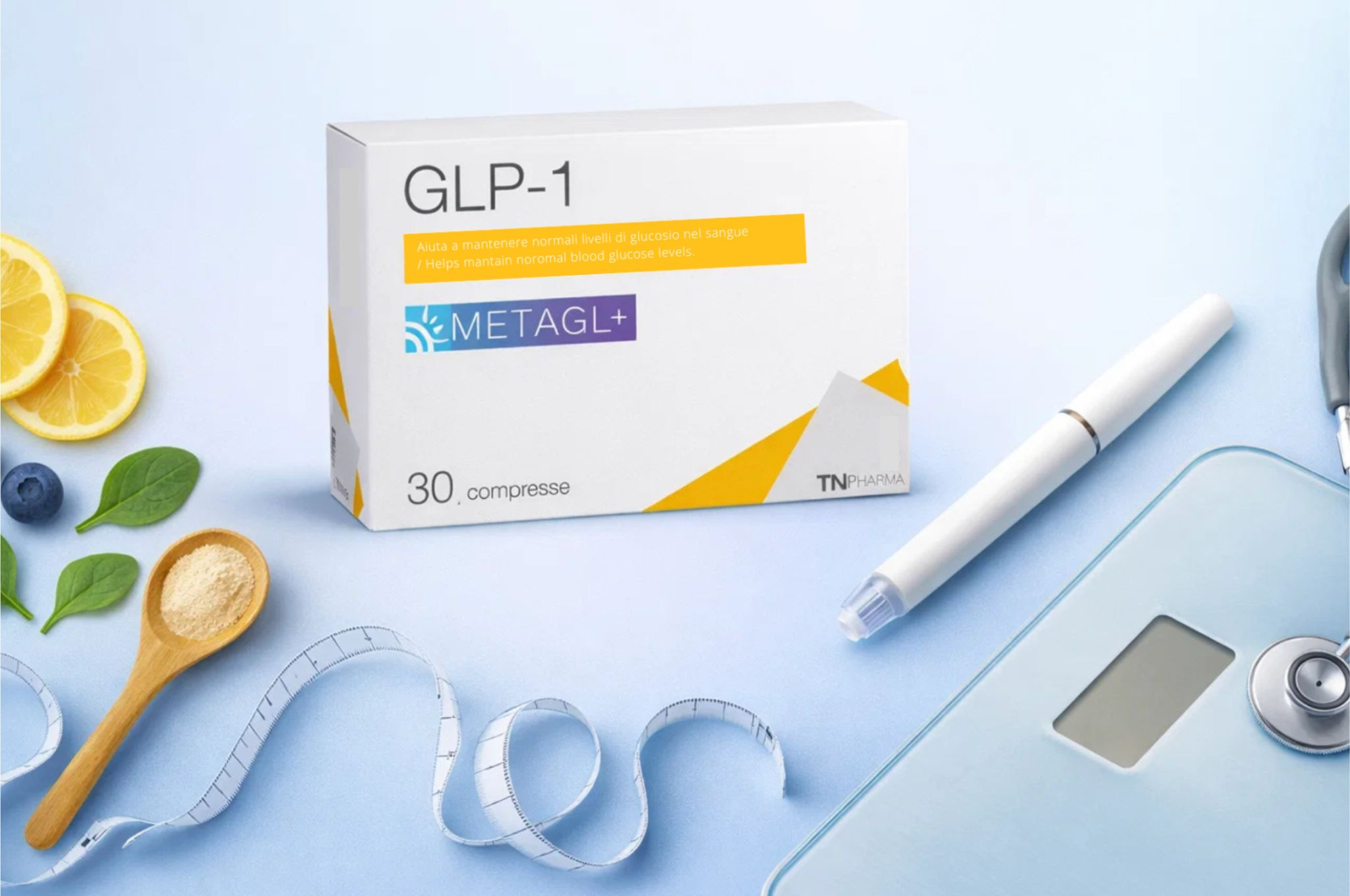
Tsunami Nutrition’s GLP-1 helps to stimulate this hormone as a dietary supplement by boosting its natural production, thereby avoiding any burden on the body.
The main GLP-1 medicines for weight loss
Medicines designed to promote weight loss mimic the action of natural GLP-1: they increase feelings of fullness and help reduce daily calorie intake.
Semaglutide (e.g. Ozempic, Wegovy)
One of the best-known drugs for both diabetes management and weight loss. Semaglutide works by increasing the feeling of fullness and slowing gastric emptying.
It is administered via a weekly injection, in accordance with the dosages prescribed by the doctor. Studies have shown optimal results in weight loss, provided the patient’s routine is combined with a balanced diet and physical exercise.
Liraglutide (e.g. Saxenda)
Liraglutide is ideal for weight management in cases of obesity or being overweight. It is administered daily using a pre-filled pen and also promotes a feeling of fullness by slowing down calorie absorption.
Thanks to its mechanism of action, it helps to effectively improve appetite control and supports gradual weight loss.
Other emerging medicines
In recent years , a range of medicines with different formulations and dosages have been developed to maximise their effect on weight loss. At present, availability is limited and administration must be carried out under medical supervision.
How to use GLP-1 for weight loss
GLP-1 for weight loss must be taken at the correct dosages and under medical supervision throughout the course of treatment to achieve effective results and reduce the risk of side effects.
These medicines are administered by injection, either using a pre-filled pen or an ampoule. It is essential to follow a treatment plan, starting with the lowest possible dose and gradually increasing to the required dosage to ensure the treatment is as effective as possible.
Administration: vials and pre-filled pens
GLP-1 medicines are administered using pre-filled pens or ampoules. In each formulation, the medicine is designed to ensure effective and controlled administration. Thus:
- The pre-filled pen is the most commonly used as it allows the correct dose to be injected and eliminates the margin for error, thereby preventing overdoses which can cause unwanted side effects;
- Ampoules are also widely used but require particular attention to dosage, which is why they are often used under medical supervision.
The initial and maintenance doses
The initial dose involves a smaller amount of solution to allow the body to adapt and reduce the risk of unwanted side effects, particularly gastrointestinal ones.
Any increase in dosage is determined by the doctor and may take a few weeks. Once the optimal dosage for promoting appetite control and weight loss has been established, the duration of treatment is determined, which varies according to the individual’s response.
It is important not to rely solely on medication, but to establish a healthy eating routine and a programme of physical activity to support the overall weight-loss process.
When to take the medication
How the medication is taken depends on the type of formulation chosen: by injection or pre-filled pen. Some medications are injected once a day, others once a week.
Generally, it is not necessary to time the injection to coincide with a specific meal, but it is important to maintain a regular schedule in terms of days and times so that the level of the medication stabilises in the body.
Availability, price and secure purchase
Medicines are effective tools for weight loss, but require a prescription and medical supervision for their use.
Their availability depends on the active ingredient, the dose and health insurance cover. It is importantto avoid buying medicines through unofficial channels or from unauthorised sellers. This ensures compliance with health standards and avoids the risk of adverse side effects.
The cost of GLP-1 treatment
The cost of treatment with GLP-1 medicines depends on the specific active ingredients used, the duration of treatment and any available health insurance cover. Generally, these medicines are not cheap, and prices may be influenced by the chosen method of administration.
Before starting treatment, it is important to find out about any available funding and to plan your weight-loss journey carefully.
Why are they only available from pharmacies on prescription?
These medicines act on complex mechanisms involving appetite, metabolism and blood sugar levels. Consequently, before starting treatment, a clinical assessment is required to determine whether the medicine is truly suitable, to establish the correct dosage and to avoid any potential side effects.
The risks of buying online via unofficial channels such as Amazon
Buying medicines that require a prescription from e-commerce sites, such as Amazon, poses a significant risk to your health and could further complicate the weight-loss process.
Out-of-date medicines, those that do not comply with European regulations, or those whose true origin has not been verified may be circulating online. It is essential to undergo a medical check-up to determine the correct dosage and monitor the body’s response to ensure maximum safety.
Results, reviews and side effects
The results reported by those who have tried these products and the potential side effects may vary from person to person depending on factors such as metabolism, lifestyle and the body’s response.
Medicines should always be taken alongside a healthy diet and physical activity, as well as under medical supervision to properly monitor the body’s response.
How many kilos can you realistically lose?
Actual weight loss with GLP-1 medicines varies from person to person and depends on how consistently the treatment is followed. Generally, there is a gradual reduction in weight – not immediate, but sustained and steady over time.
It is important to have realistic expectations; GLP-1 is a weight-loss aid, not a miracle cure!
What do reviews and personal experiences say?
Feedback from those who have shared their weight loss experiences with GLP-1 mainly highlights the positive aspects regarding reduced appetite and better control over gradual weight loss.
Thanks to the feeling of fullness, many report that it has been easier to stick to a controlled diet and reduce emotional eating.
Everyone stresses the need for medical supervision to manage any changes in dosage or unwanted side effects.
The most common side effects
The most common side effects are mainly related to the gastrointestinal system. Among the most frequent symptoms are: nausea, a prolonged feeling of fullness, vomiting or constipation.
Particularly during the initial phase of treatment, the body needs time to adjust, and it is essential to follow your doctor’s instructions and check whether the treatment is suitable for your own state of health.
Frequently asked questions
What are the most common side effects of GLP-1?
Nausea, vomiting, constipation and a feeling of fullness are generally the side effects to be managed, and these tend to subside over time.
Do I need a prescription to use GLP-1 for weight loss?
Yes, a doctor’s prescription is required to use GLP-1 medicines. However, no prescription is required for the GLP-1 supplement by Tsunami Nutrition, which supports the metabolic processes associated with the active ingredients in GLP-1.
How long does it take to see the first results?
The first results can be noticed after 2 to 4 weeks, particularly in terms of reduced appetite. For significant weight loss, the process takes several months when combined with a healthy diet and physical activity.
Is GLP-1 treatment for weight loss suitable for everyone?
No, GLP-1 treatment is not suitable for everyone. It is recommended for people who are obese or overweight and must always be assessed by a doctor.
What happens if I stop taking the medication?
If you stop taking the GLP-1 medication, the feeling of fullness diminishes and your appetite returns to its usual levels. To maintain the results, it is important to always combine the treatment with a balanced diet and physical activity.
For those seeking natural weight loss that does not slow down the metabolism, supplementation with the active ingredients of GLP-1 from Tsunami Nutrition is a valid alternative to aid appetite control and support body recomposition programmes.