- Health and wellness
- 587 views
What is L-carnitine?
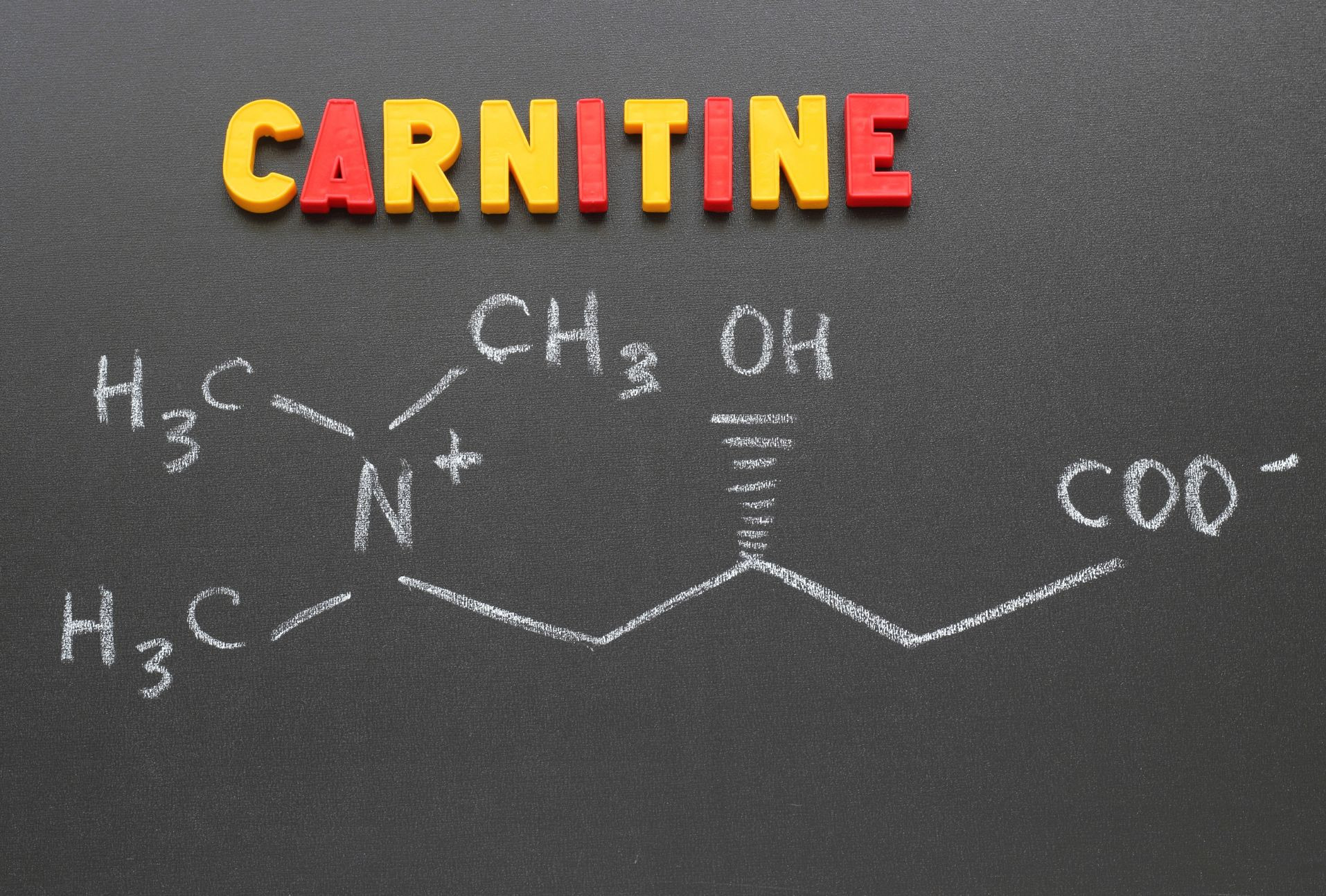
L-carnitine is a molecule that the body produces itself from two amino acids: lysine and methionine. This synthesis takes place mainly in the liver and kidneys, and nearly 95 per cent of the total supply is found in the skeletal muscles.
It is therefore not a vitamin, contrary to what its former name, ‘vitamin BT’, sometimes suggests. It is a semi-essential substance: the body produces it, and the diet provides the remainder.
Its function is specific and well-documented. L-carnitine transports long-chain fatty acids across the membrane of the mitochondria, those tiny powerhouses where fats are converted into energy. Without this transporter, fatty acids remain at the entrance to the mitochondria, unable to be burnt there.
It is this mechanism (and this alone) that explains L-carnitine’s reputation as an aid to fat loss. We shall examine later just how valid this reasoning really is, because the discrepancy between the theoretical mechanism and the observed effect is particularly instructive in this case.
The different forms of carnitine
Not all carnitines are the same, and the name on the label has practical implications.
- L-carnitine tartrate is the form most widely studied in the context of sport, particularly with regard to muscle recovery. It is the form most commonly found in sports nutrition products.
- Acetyl-L-carnitine (ALCAR) is unique in that it crosses the blood-brain barrier. It is therefore intended for cognitive rather than muscular uses.
- Propionyl-L-carnitine has been studied more extensively in the context of the circulatory system.
- L-carnitine fumarate is a form combined with fumaric acid, which is also involved in energy metabolism.
A useful point of reference regarding raw materials: Carnipure® is a pharmaceutical-grade L-carnitine produced by fermentation, which is found in particular in Carnipure Liquid Professional. The inclusion of a specific raw material on the label is a sign of transparency that should not be overlooked in this type of product.
L-carnitine and weight loss: what the data actually say
Here, we need to be frank, because the subject is rife with exaggerated claims.
The usual marketing argument can be summed up in one sentence: carnitine transports fats to the mitochondria, so more carnitine means more fat is burnt. This argument is false, and for one simple reason: in a healthy person, the muscles are already close to saturation with carnitine. Adding more of the transporter when the transporter isn’t the limiting factor doesn’t change the rate of transport.
Studies that have measured the actual effect on body weight report statistically significant but modest results – in the region of one kilogramme over several weeks – in people with a calorie deficit who are physically active. In other words: carnitine does not create anything; it may simply support a process already set in motion by diet and exercise.
A regulatory point that deserves to be made clear: to date, no health claims have been approved for L-carnitine in the European Union, neither for weight loss nor for performance. Any product that promises guaranteed fat burning is outside the scope of the regulations.
If your goal is body composition, the hierarchy of factors remains unchanged: a calorie deficit, sufficient protein intake, and resistance training. Supplements come into play afterwards, and our ranking of the best fat-burning supplements places each product category in its proper place within this hierarchy.
Where the evidence is strongest: recovery
This is the paradox of this molecule. The best-documented benefit is not the one that is most frequently highlighted.
Several studies on L-carnitine tartrate, at a dose of 1 to 2 g per day, report a reduction in markers of muscle damage after exercise, less muscle soreness and a perceived faster recovery. The proposed mechanism involves improved oxygenation of muscle tissue and a reduction in exercise-related oxidative stress.
For someone who exercises regularly, this is probably the most relevant perspective: viewing carnitine as a recovery aid rather than a fat burner.
Where to find carnitine in the diet
Dietary carnitine comes almost exclusively from animal sources, and its concentration follows a simple rule: the redder the meat, the more carnitine it contains.
An omnivore typically consumes a few tens to a few hundred milligrammes a day; a vegan, only a few milligrammes. And yet, vegans do not suffer from a functional carnitine deficiency: their bodies compensate by increasing their own synthesis and reducing urinary losses. This is a remarkably effective regulatory mechanism, and yet another argument against the idea of routine supplementation.
Dosage, timing and duration
The protocols used in the available studies range from 1 to 3 g per day, with 2 g being the most common dosage. Above this level, intestinal absorption plateaus and the excess is excreted by the kidneys.
Some practical guidelines:
- Split the dose rather than taking it all at once: absorption is better with two 1 g doses than with a single 2 g dose.
- Take it with carbohydrates. This is the point most often overlooked: insulin significantly promotes the uptake of carnitine into the muscle. Taking it on an empty stomach is far less effective than taking it with a meal.
- Think in terms of weeks, not days. Muscle saturation is a slow process; a one-off dose before training makes no physiological sense.
- For recovery, taking it after exercise or spread out over the day makes sense.
The liquid form offers a real practical advantage here: it allows the dose to be adjusted to the nearest millilitre and mixes easily with a carbohydrate drink. The various formulations are grouped under the category of L-carnitine-based dietary supplements.
Contraindications and precautions
L-carnitine is well tolerated at standard doses, but there are four situations that require particular caution.
Firstly, the thyroid. This is the most important and least well-known precaution: carnitine reduces the action of thyroid hormones at the cellular level. This property is even utilised in certain formulations designed for hyperthyroidism. The consequence is clear: if you have hypothyroidism or are taking thyroid hormone replacement therapy, carnitine may interfere with your hormonal balance. You must discuss this with your doctor before taking any carnitine. To understand the interactions between micronutrients and thyroid function, our article on zinc and selenium for the thyroid provides a useful overview.
Next,renal impairment: carnitine and its metabolites are excreted by the kidneys, and impaired kidney function alters this balance.
Seizure disorders, for which medical supervision is required.
Pregnancy and breastfeeding, where there is insufficient data to recommend supplementation.
As for side effects, the most common are digestive in nature (nausea, abdominal cramps) at high doses. A more surprising effect is worth mentioning: at doses exceeding 3 g per day, some people develop a fishy body odour, linked to the breakdown of carnitine by gut bacteria. This is reversible upon discontinuation.
Based on this same bacterial mechanism, research has focused on a metabolite called TMAO and its possible link to cardiovascular health. The data remain controversial and do not allow for definitive conclusions, but they provide a further argument for not exceeding the usual doses without good reason.
Frequently asked questions
What is the recommended dose of L-carnitine for weight loss?
The protocols studied range from 1 to 3 g per day, generally taken in divided doses with a meal containing carbohydrates.
However, the question deserves to be reframed: no dose of L-carnitine will result in weight loss in the absence of a calorie deficit. The reported effects on body weight are modest and occur in conjunction with a controlled diet and regular physical activity. Increasing the dose does not improve the result, as intestinal absorption quickly reaches a plateau.
Is L-carnitine effective without exercise?
No. This is probably the most important point in this article. The role of carnitine is to transport fatty acids to the mitochondria so that they can be oxidised there, but this oxidation only takes place if there is an energy requirement.
Without physical activity, there is no increased demand, so there is nothing extra to transport. Carnitine without exercise does nothing, and no formulation can change this fact.
What is the difference between L-carnitine and acetyl-L-carnitine?
The difference lies in their intended use. Acetyl-L-carnitine crosses the blood-brain barrier, which directs it towards cognitive functions, concentration and nerve function. L-carnitine tartrate, on the other hand, remains mainly in the muscular and peripheral systems.
For training or recovery purposes, the tartrate form is the most appropriate. For cognitive benefits, acetyl-L-carnitine is more suitable. These are not competing versions of the same product but two different tools.
Can L-carnitine and caffeine be combined?
Yes, there are no problematic interactions between the two, and the combination is common in formulations designed for body composition: caffeine acts on fat mobilisation and energy expenditure, whilst carnitine acts on their intracellular transport.
The only precaution concerns caffeine itself, for which the EFSA’s recommended limit is 400 mg per day for adults – a limit that is easily exceeded when combining coffee, pre-workout supplements and thermogenic supplements. Our article on thermogenic supplements and how they work explains this in more detail.
Do you need to take carnitine if you don’t eat meat?
It is not necessary. A vegan’s dietary intake is indeed very low – a few milligrammes compared to several tens of milligrammes in an omnivore. However, the body compensates by increasing its endogenous synthesis and reducing urinary losses.
Tissue carnitine levels in vegans remain within the normal range, and no functional deficiency has been reported. Supplementation may be considered for sports-related recovery purposes, but not to correct a deficiency.
There is one thing to bear in mind about this molecule, and it’s worth more than a sales pitch: L-carnitine is not a fat burner; it is a transporter. It does not determine what is burnt; it simply transports what your calorie deficit and training have made available. It’s not very spectacular, it’s true, but that is precisely what allows you to know what to expect from it.