- Health and wellness
- 745 views
The role and importance of selenium supplements for the thyroid
The thyroid is the gland with the highest concentration of selenium per gram of tissue in the entire body. This is no coincidence: this trace element is essential for the functioning of selenoproteins, a family of enzymes that regulate the conversion of the inactive thyroid hormone T4 into its active form, T3, and which protect thyroid cells from damage caused by free radicals.
Without an adequate supply of selenium, this entire enzymatic process slows down — and the entire function of the gland is affected as a result.
Selenium deficiency is associated with an increased risk of developing autoimmune thyroid disorders, hypothyroidism and impaired hormone production. Conversely, an optimal intake supports the synthesis and conversion of thyroid hormones, helps to lower levels of anti-thyroid antibodies and contributes to maintaining the structural integrity of the glandular tissue. It is for this reason that selenium has an authorised health claim: it contributes to normal thyroid function.
Among the most extensively studied nutrients in this field, selenium is the one backed by the most robust and well-established evidence. It is not the only one, however: if you’re looking to support thyroid health through diet and supplementation, the article on coenzyme Q10 and the thyroid is well worth a read: this is another nutrient whose protective role in glandular function is far from trivial.
Benefits of selenium in Hashimoto’s thyroiditis
Hashimoto’s thyroiditis is the most common autoimmune disorder of the thyroid. The immune system produces antibodies that attack thyroid tissue and trigger a chronic inflammatory process which may eventually lead to hypothyroidism. Selenium can offer several benefits in combating Hashimoto’s thyroiditis.
Several clinical studies have shown that selenium supplementation can have tangible benefits, by reducing anti-TPO antibody levels in people with Hashimoto’s.
In some trials, this reduction exceeded 40 per cent compared with placebo after 3 to 6 months of continuous use. The effect achieved is not a cure for the autoimmune disease, but a modulation of the immune response that reduces the severity of the inflammatory damage inflicted on the glandular tissue. As Hashimoto’s thyroiditis requires medical supervision, no supplement can replace prescribed treatment: any use of selenium must be discussed with your doctor or endocrinologist.
Protection against thyroid oxidative stress
The synthesis of thyroid hormones produces a by-product: hydrogen peroxide, an oxidising molecule that is potentially harmful to cells. Under normal conditions, selenium-dependent enzymes from the glutathione peroxidase family neutralise this peroxide before it damages the tissue. When selenium levels are low, this antioxidant system is weakened and thyroid cells become more vulnerable to chronic oxidative stress.
This mechanism is particularly significant in inflammatory thyroid conditions, where the tissue is already under considerable strain. An adequate intake of selenium maintains the body’s antioxidant defences at an effective level: cumulative damage to follicular cells is limited and the gland’s functional capacity is better preserved over time.
The combined action of zinc and selenium on the thyroid
Selenium does not work alone. Thyroid function relies on a network of micronutrients that act in a coordinated manner, and zinc plays a key role in this. Whilst selenium supports the conversion of T4 to T3 and protects cells from oxidation, zinc is involved at an earlier stage, in the synthesis of thyroid hormones, as well as in the activity of the receptors that enable these hormones to act on target tissues.
A zinc deficiency can therefore compromise thyroid function even when selenium intake is adequate — and vice versa.
In practice, combining selenium and zinc in a single formula or as part of a coordinated treatment plan makes physiological sense: the two minerals complement one another and cover different, yet equally critical, stages of the thyroid axis.
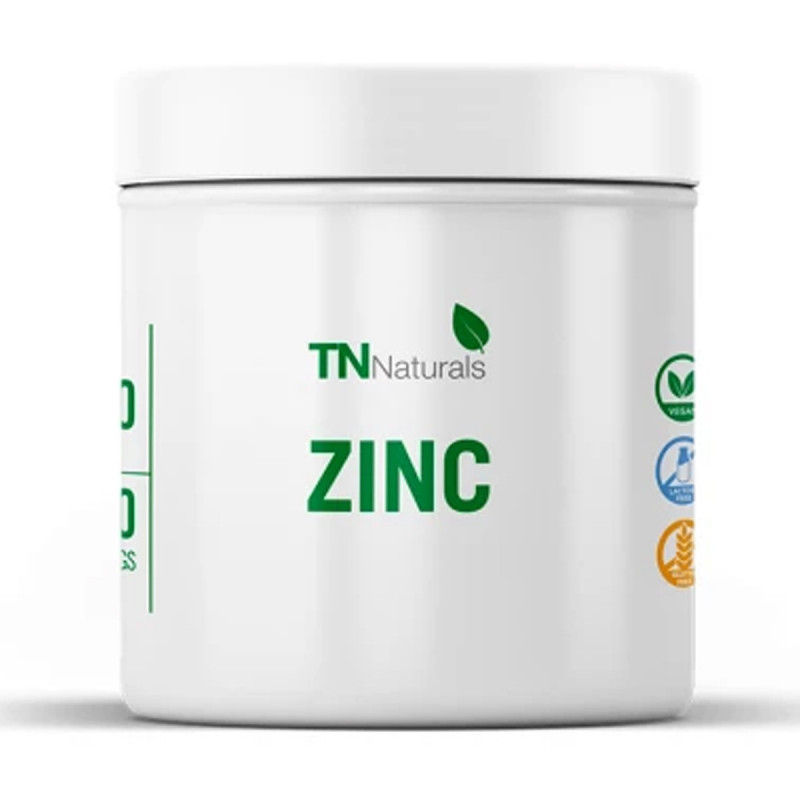
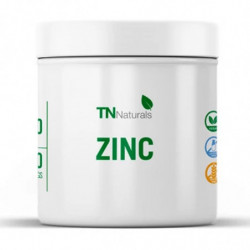
To harness this synergy, a product such as TN Naturals Zinc is an ideal solution: it provides zinc in a vegan, gluten-free and lactose-free formulation, and contributes in particular to the normal functioning of the immune system, the protection of cells against oxidative stress, and the maintenance of healthy hair, skin and nails.
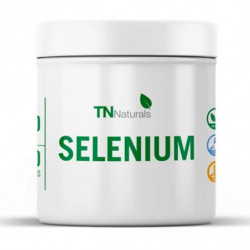
When combined with TN Naturals Selenium, it can offer comprehensive nutritional support to those wishing to look after the wellbeing of their thyroid and their body as a whole.
Synergy between minerals for a healthy metabolism
The synthesis and regulation of thyroid hormones involve several trace elements working in tandem. Selenium and zinc are the main ones, but their role forms part of a wider system in which iron, magnesium and iodine also play a part at specific stages of the metabolic chain. A deficiency in just one of these elements is enough to slow down the entire process, even if all the others are present in optimal quantities.
Among the forms of zinc available on the market, chelated forms offer greater bioavailability than conventional inorganic salts such as zinc sulphate. This is the case with zinc bisglycinate, a form chelated with glycine which ensures more efficient intestinal absorption and causes fewer digestive side effects than conventional forms.
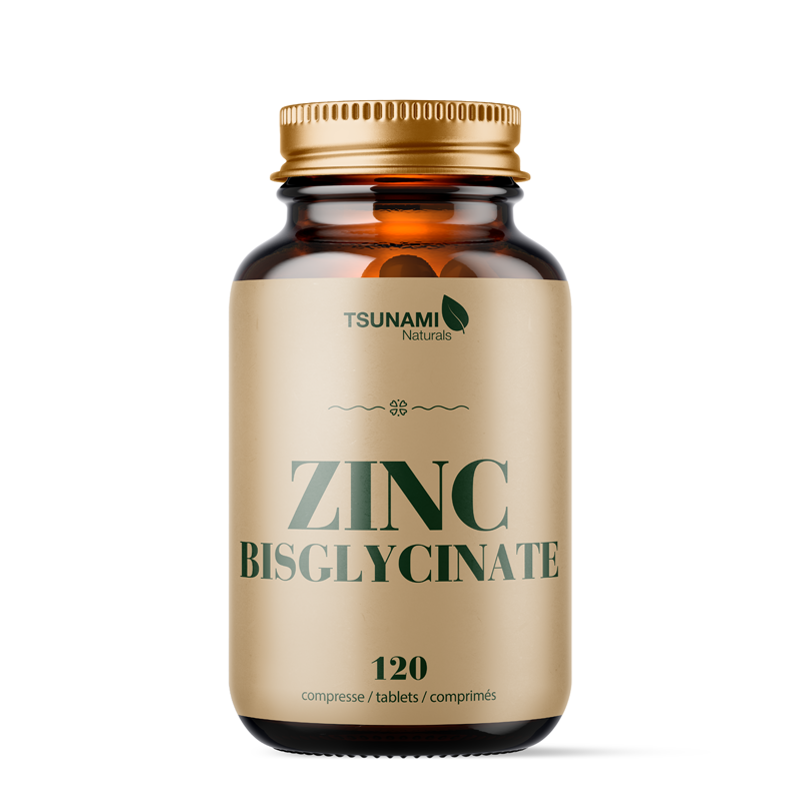
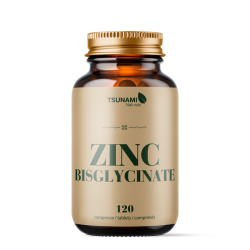
TN Naturals’ Zinc Bisglycinate is therefore a valuable supplement: it provides zinc in the form of bisglycinate, one of the most bioavailable forms and one of the best tolerated by the body.
Its formulation is also vegan, gluten-free and lactose-free, making it suitable for specific dietary requirements.
The benefits of iodine in combination with selenium
Iodine is the building block of thyroid hormones: without it, the thyroid cannot synthesise either T3 or T4. It is an essential nutrient that the body does not produce itself and must obtain from the diet, mainly via iodised salt, fish and dairy products. Iodine deficiency remains one of the leading causes of hypothyroidism worldwide, particularly in mountainous regions far from the sea.
However, the link between iodine and selenium is more subtle than it appears. A high intake of iodine without sufficient selenium can increase the production of hydrogen peroxide in thyroid tissue and exacerbate oxidative stress rather than limiting it. In other words, taking iodine supplements without ensuring an adequate intake of selenium can prove counterproductive, especially in people with Hashimoto’s disease, whose tissue is already inflamed. The correct combination of the two minerals is therefore crucial: it is not a question of choosing between iodine and selenium, but of ensuring that both are present in the correct proportions. Given these interactions, any iodine supplementation in a person being treated for a thyroid disorder must be approved by a doctor.
How to identify the best selenium supplement for the thyroid
Not all selenium supplements are created equal. The chemical form of selenium has a significant impact on absorption, tissue retention and overall effectiveness. Making an informed choice therefore means looking beyond the quantity stated on the label and examining the form in which the mineral is supplied.
The main forms available are inorganic selenium (sodium selenate and sodium selenite) and organic selenium (selenomethionine and selenocysteine). Organic forms, and selenomethionine in particular, have superior bioavailability: they are absorbed more efficiently and accumulate in tissues at higher concentrations than inorganic forms. It is for this reason that most clinical studies documenting benefits for the thyroid have used selenomethionine as the form of supplementation.
The difference between selenium supplementation and Levothyrox
Selenium and Levothyrox (levothyroxine) act in entirely different ways and are by no means interchangeable: confusing the two is a logical fallacy that can have very real consequences for the management of a thyroid condition.
Levothyrox is a replacement therapy: it directly supplies the thyroid hormone T4, which the gland no longer produces in sufficient quantities. It is prescribed when thyroid function is impaired and the body requires an external supply of the hormone to maintain its metabolic balance. Selenium, on the other hand, is a nutrient that supports the enzymatic processes linked to thyroid function, but it does not replace the hormone. It cannot be used as a substitute for Levothyrox, and under no circumstances should you reduce the dose on your own initiative, thinking that selenium will compensate for it. The two coexist and, in many cases, complement each other effectively — but always under medical supervision. Any change to the dosage is the sole responsibility of your doctor.
Characteristics of the best selenium supplements
A good selenium supplement for the thyroid should clearly state the chemical form used — preferably selenomethionine — and specify the dose per serving in micrograms, not milligrams. It should also be free from unnecessary excipients and, ideally, certified by independent analyses attesting to its purity and confirming that its actual contents match the declared composition.
Products that combine selenium, zinc, vitamin E or other cofactors for thyroid function in a single formula can be a practical choice for meeting several needs with a single supplement. To discover options that meet these criteria, the ‘Thyroid Health’ category brings together formulations selected by Tsunami Nutrition for the quality and transparency of their ingredients.
Contraindications and precautions regarding selenium supplements
Selenium is an essential micronutrient, but the margin between a beneficial dose and an excessive dose is narrower than for other minerals. The recommended daily intake is around 55 micrograms for adults, whilst the upper safe limit — beyond which there is a risk of adverse effects — has been set by the EFSA at 255 micrograms per day.
Before starting selenium supplementation, it is worthassessing one’s overall dietary intake: a person who regularly eats Brazil nuts, fish, meat and whole grains may already be meeting their optimal requirements through their diet, making additional high-dose supplementation unnecessary.
Side effects associated with selenium overdose
Selenosis, caused by a chronic excess of selenium, presents with a characteristic clinical picture. The first signs often involve the nails, which become brittle, and the hair, which breaks or falls out abnormally. As the mineral accumulates, symptoms such as garlic-smelling breath (due to the formation of dimethyl selenide), nausea, fatigue, irritability and, in the most advanced cases, neurological disorders may occur.
In supplements sold to the general public, doses are generally calibrated to remain well within safe limits. The risk of overdose with a standard product is low. However, the risk becomes a real concern when several selenium-containing supplements are taken together without being aware of the total intake, or when high therapeutic doses — such as those used in certain treatment regimens for Hashimoto’s thyroiditis — are taken without regular monitoring of blood levels.
People who should avoid mineral supplementation
Certain groups of people should undergoa prior medical assessment before taking any selenium or zinc supplements, or even refrain from doing so altogether in the absence of medical supervision. People withkidney failure should monitor their mineral intake in general: the kidneys play a central role in their excretion, and reduced excretory function promotes accumulation. Those taking immunosuppressants or corticosteroids should be aware that selenium supplementation can modulate the immune response — a desirable effect in many contexts, but one that should be discussed with a doctor when undergoing specific treatment.
Pregnant women have increased selenium requirements, but here too, intake must be adjusted in consultation with a healthcare professional to avoid both deficiencies and excesses. Finally, anyone undergoing treatment for cancer must discuss this with their oncologist before adding any supplements to their treatment plan.
Frequently asked questions
What are the contraindications of selenium for the thyroid?
The main contraindication for selenium in relation to the thyroid concerns people with hyperthyroidism: in this situation, the gland is already overactive and producing excess hormones. As selenium supports the conversion and activity of thyroid hormones, unsupervised supplementation in an already overactive condition may not be advisable without specific medical advice. For a more in-depth look at the clinical characteristics of this condition, the article onhyperthyroidism: definition and symptoms provides a comprehensive overview, which is useful for understanding when and how to intervene.
Other contraindications include kidney failure, immunosuppressive treatments and the risk of accumulation when taking several selenium-containing products at the same time.
Which supplements are unsuitable for the thyroid?
Certain substances can interfere with thyroid function or the absorption of thyroid medication, and it is worth being aware of them. Soya, in high doses, can reduce the absorption of levothyroxine if consumed shortly before or after taking the medication. Calcium and iron similarly interfere with the absorption of levothyroxine when taken at the same time: this is why the medication should be taken on an empty stomach and at least 2 to 4 hours apart from supplements containing these minerals.
Certain plants and natural substances warrant particular attention. This is the case with bromelain, whose relationship with thyroid function is more complex than it appears. The article on bromelain and the thyroid clarifies the benefits, interactions and situations in which this substance is — or is not — recommended in the presence of a thyroid disorder.
Who should not take selenium?
As mentioned above, the groups requiring the greatest caution are people withkidney failure, those undergoing immunosuppressive therapy and those whose diet already provides high levels of selenium. In these cases, the risk is not negligible and seeking prior medical advice is a genuine precaution, not merely a formality.
People whose thyroid condition is accompanied by other systemic disorders — such as complex autoimmune diseases or metabolic disorders — often have to weigh up the options between various supplements, each with its own safety profile. Collagen is a good example of this, as it raises similar questions amongst this group of people: the article ‘Is collagen bad for the thyroid?’ analyses in detail the relationship between this structural protein and glandular function, and provides the most useful answers for those wishing to take supplements in an informed manner.
How much selenium should you take for your thyroid?
The recommended daily intake for adults is approximately 55 micrograms. In people with Hashimoto’s thyroiditis, the clinical protocols described in the literature have used doses of between 100 and 200 micrograms per day of selenomethionine, over a minimum period of 3 to 6 months, to observe measurable effects on anti-TPO antibodies. These doses form part of a supervised medical protocol: they must never be self-administered and require a prescription as well as clinical monitoring.
It is important not to exceed 255 micrograms of total selenium per day, in order to remain below the upper safety limit established by the EFSA.
What are the contraindications for zinc and selenium?
When taken together, zinc and selenium are generally safe and well tolerated at the standard doses found in commercial preparations. The main contraindications relate to the same categories as those already described for selenium alone: kidney failure, medication that may interfere with mineral absorption, and situations where dietary intake is already high.
With regard to zinc in particular, chronic overdose may interfere with copper absorption, an effect that is most evident at high doses maintained over long periods. Provided the recommended doses for standard supplementation are adhered to (8 to 11 mg of zinc and 55 to 200 µg of selenium per day), the safety profile of this combination is sound. As always, if you have a diagnosed medical condition or are currently undergoing treatment, discussing this with your doctor before starting supplementation remains the safest course of action.