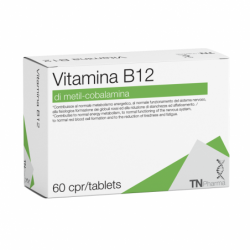
- Health and wellness
- 1428 views

High vitamin B12 levels: what this really means
You’ve picked up your test results and the ‘vitamin B12’ line is marked with an asterisk, above the laboratory’s upper limit. The first instinct is almost always the same: to assume you’ve had too much and worry about toxicity.
This is almost always the wrong way to think about it, and it’s important to state this straight away: excess vitamin B12 is not toxic. It is a water-soluble vitamin, and the body excretes any excess it doesn’t need in the urine. There is no established upper safe limit for B12, precisely because no toxicity threshold has been identified.
So why is this result worth your attention? Because in someone who is not taking any supplements, a high B12 level is not a problem in itself: it is a signal. It indicates that something is altering the way your body stores or releases this vitamin. And that ‘something’ is worth identifying.
This shift in perspective is at the heart of this article: we’re not trying to bring a figure down; we’re trying to understand what it tells us.
Reminder: what is vitamin B12 used for?
Vitamin B12, or cobalamin, is the only vitamin to contain a cobalt atom, hence its name. It is also the only one that the body stores in significant reserves: the liver stores enough to cover several years’ worth of requirements.
It has numerous recognised functions. Vitamin B12 contributes to normal energy metabolism, the normal functioning of the nervous system, the normal formation of red blood cells, the normal metabolism of homocysteine, normal psychological functions, the normal functioning of the immune system, the reduction of fatigue and the process of cell division.
This ability of the liver to store B12 is key to understanding what follows: it is because B12 is stored in the liver that the condition of the liver directly influences blood levels.
The real causes of high B12 levels
There are two very different categories behind an elevated result.
The common cause: supplementation
This is by far the most common – and the most reassuring – explanation. Taking a supplement, a multivitamin, a fortified food or having a recent injection automatically raises blood levels, sometimes well above reference values.
This result therefore does not indicate any disorder: it simply reflects your intake. B12 injections, in particular, produce spectacularly high levels for several weeks. This is the first question your doctor will ask, and often the only one needed.
An important practical point to bear in mind: if you need to have your B12 levels tested to investigate fatigue, make sure to mention any supplements you are currently taking. A test carried out whilst taking supplements is difficult to interpret and may mask a condition that warrants further investigation.
Reasons for further investigation
This is where the matter becomes serious. In someone who is not taking supplements, a high B12 level is associated with several medical conditions that should be investigated:
- liver damage, hepatitis, cirrhosis, fatty liver disease: damaged liver cells release the B12 they were storing into the bloodstream
- chronic alcohol consumption, via the same hepatic mechanism
- certain blood disorders, particularly myeloproliferative syndromes, which increase the levels of B12-binding proteins
- kidney failure, which reduces urinary excretion
- more rarely, certain cancers, particularly liver cancer
This list is not intended to cause concern, but to provide guidance. An isolated high level in a person with no symptoms does not, on its own, mean much. However, when combined with fatigue, abnormal liver function tests or blood count results, it becomes a useful diagnostic clue – which is precisely why it is worth discussing this with your doctor rather than trying to ‘bring the figure down’.
How to interpret your results
A word of warning before looking at any figures: reference values vary from one laboratory to another, depending on the assay method used. Always rely on the range printed on your own report, not on a table found online.
The last line is the one we most often overlook. Normal B12 levels do not rule out a functional problem: in some cases, the vitamin is present in the blood but is not being utilised properly by the cells. Additional markers (homocysteine, methylmalonic acid) can then provide further insight, and it is up to the doctor to decide whether to order these tests.
What an excess of B12 does not cause
Several claims are circulating, and it is worth sorting through them.
Excess B12 from diet or supplements does not cause toxicity. No upper safe limit has been set by the European authorities, and the very high doses used in certain medical protocols are well tolerated.
Two effects have nevertheless been reported, and it is more honest to mention them than to remain silent:
- acne flare-ups or skin rashes, described mainly following high-dose injections. These subside once treatment is stopped.
- rare allergic reactions to injectable forms, linked more to the excipients than to the vitamin itself.
On the other hand, an excess of B12 does not cause fatigue, weight gain or liver damage. This particular misconception is particularly common and needs to be corrected: it is not high B12 levels that damage the liver; rather, it is a damaged liver that causes B12 levels to rise. Cause and effect are reversed in popular belief.
The pitfall of self-diagnosis
One final point, as it lies at the heart of this issue. The symptoms that lead people to have their B12 levels checked – persistent tiredness, difficulty concentrating, tingling sensations and low mood – are common to a wide range of unrelated conditions.
An iron deficiency, a thyroid disorder, or a folate or vitamin D deficiency can produce very similar symptoms. An insufficient intake of iodine, by slowing down thyroid function, also causes fatigue and difficulty concentrating.
In other words: seeing an abnormal reading on a test result does not mean the cause has been identified. It is just one factor amongst many, the interpretation of which rests with the person who has the full clinical picture before them.
To understand where B12 fits within the B-vitamin family and the roles each plays, our selection of the best B-vitamin supplements provides a comprehensive overview.
Frequently Asked Questions
Is an excessively high vitamin B12 level dangerous?
A high level in itself is not dangerous. Vitamin B12 is water-soluble, non-toxic even in excess, and no upper safe limit has been established for it.
What matters is the cause. In someone taking supplements, there is no need for further investigation. In someone who is not taking any supplements, a high level may indicate liver damage, a blood disorder or kidney failure, which is why it is important to discuss this with your doctor rather than becoming alarmed or ignoring it.
How can you lower an elevated vitamin B12 level?
The question is poorly phrased, and this is the most useful point of this article. The aim is not to lower B12 levels: the aim is to understand why they are high.
If the high levels are due to supplementation, simply stopping the supplements is enough; levels will gradually fall over a period of several weeks to several months, depending on liver reserves. If supplementation is not the cause, reducing intake would serve no purpose: the cause lies elsewhere, and that is what needs to be identified.
Is it possible to have an excess of B12 from diet alone?
This is extremely unlikely. Foods rich in B12 (liver, meat, fish, seafood, dairy products) provide modest amounts relative to the gut’s absorption capacity, which is itself limited by a saturable transport mechanism.
In practical terms, the gut can only absorb a few micrograms per meal, regardless of the amount consumed. It is precisely for this reason that injectable forms exist: they bypass this limit in people who cannot absorb dietary B12.
High vitamin B12 levels and the liver: what is the link?
The link is direct, but works in the opposite direction to what one might expect. The liver is the main organ for storing vitamin B12. When its cells are damaged (due to hepatitis, cirrhosis, fatty liver disease or alcohol), they release the B12 they had been storing into the bloodstream.
Elevated levels may therefore reflect liver damage, rather than being its cause. This is one of the reasons why a doctor who discovers high B12 levels without supplementation will often request liver function tests.
Should you stop taking B12 supplements if your levels are high?
This is a decision to be made with your doctor, not on your own. An elevated level whilst taking supplements is to be expected and does not in itself constitute a reason to stop.
It all depends on the reason for the treatment. If it is correcting a malabsorption problem (Biermer’s disease, digestive surgery, a strict vegan diet), stopping it simply because the blood level is high would be tantamount to discontinuing something that is working. If, on the other hand, the treatment was started without a specific medical indication, it is legitimate to question its benefits.
If you are concerned about a high result, here is the simplest approach: make a note of all the supplements and fortified foods you consume, including those you consider insignificant; note the date of your last injection, if there was one; list the symptoms you are actually experiencing, without interpreting them. Providing your doctor with these three pieces of information will help distinguish between an insignificant figure and a warning sign that warrants further investigation – and this is precisely what a single test result, viewed in isolation on a screen, will never be able to do.