- Health and wellness
- 1436 views
What is coenzyme Q10 and what is it used for?
Coenzyme Q10 (CoQ10, also known as ubiquinone) is a substance produced by the body and found in virtually every cell in the body. Its main role is to help the mitochondria produce the energy that the muscles use to contract, the brain to function and the heart to beat. Without sufficient CoQ10, the cell’s energy production slows down.
Beyond this bioenergetic role, CoQ10 is a natural antioxidant: it neutralises free radicals and protects cell membranes from damage. In this respect, it works in conjunction with other vitamins and antioxidants that act in a coordinated manner to defend the body against oxidative stress. Among the molecules with which CoQ10 works synergistically is NADH, a cofactor involved in the same energy production chain within the mitochondria.
The key point is that the body’s production of CoQ10 is not stable over time: it tends to decline with age, as a result of certain medication, and under conditions of prolonged physical stress. This makes supplementation a useful strategy in a number of contexts, from sport and cardiovascular health to recovery from persistent fatigue. For an overview of its roles in the body, see our guide to coenzyme Q10: what it’s used for, its benefits and when to take it.
Recommended daily dose of coenzyme Q10
Unlike vitamins,there is no official recommended daily intake for CoQ10. Dosages are determined according to the individual’s specific goal and circumstances. Generally speaking, the doses used in studies range from 50 mg to 300 mg per day, with the majority of protocols falling between 100 and 200 mg.
Dosage for cholesterol and heart health
People taking statins have a specific need: by lowering cholesterol, these medicines also block the metabolic pathway that produces CoQ10. This results in a reduction in Q10 levels in the body, which often manifests as fatigue and muscle pain. In this situation, the recommended regimens generally start at 100–200 mg per day, with some people taking up to 300 mg to compensate for the drug-induced depletion — an approach that should be discussed with their GP.
From a broader cardiovascular perspective, CoQ10 supports heart muscle function (which has one of the highest concentrations of Q10 in the whole body) and helps protect LDL from oxidation. For a comprehensive overview of natural strategies for managing lipid profiles, see the guide to the best supplements for controlling cholesterol and triglycerides.
Daily requirements and recommended dosage
Here is a handy guide by objective and age group:
- Healthy adults under 40, for preventative use: 50–100 mg per day is sufficient to maintain adequate levels and support antioxidant function;
- Over 40 years of age or those with a physically demanding lifestyle: 100–200 mg per day, as endogenous production begins to decline and requirements increase;
- Athletes undergoing intense training: 100–200 mg per day, taken mainly with the meal preceding the training session;
- Those on statin therapy: 200–300 mg per day to compensate for drug-induced depletion, on medical advice;
- Fibromyalgia, chronic fatigue, mitochondrial disorders: 200–300 mg per day, often divided into two doses. In these situations, supplementation must be supervised by a healthcare professional.
Bioavailability is just as important as the dosage: pure CoQ10 powder is absorbed by the gut to a highly variable degree. Formulations using advanced delivery technologies such asUbiqsome®, which utilises a patented phytosomal system to enhance solubility and intestinal absorption, enableeffective plasma levels to be achieved even with doses lower than those found in standard capsules. To compare the available options, the coenzyme Q10 section brings together professional-grade formulations that meet high quality standards.
When and for how long should coenzyme Q10 be taken?
The best time to take CoQ10 is with a meal containing some fat: oil, nuts, avocado, fish or meat. CoQ10 is fat-soluble: without dietary fat present in the gut at the time of absorption, a significant proportion of the dose is lost. On an empty stomach, absorption drops significantly.
If taking a single daily dose, the main meal (lunch or dinner) is the most practical option. If the dose is split into two intakes (as is often the case with doses of 200–300 mg), the recommended schedule is morning and evening with the corresponding main meals.
As regards duration, CoQ10 is not a short-term supplement. The first noticeable effects (more energy, less muscle fatigue, better recovery) begin to be felt after 4 to 8 weeks of regular use. Those using it to support long-term treatment (with statins, for example) should continue taking it for the entire duration of the treatment: stopping it will cause levels to drop again.
Those using it for sporting performance or as an antioxidant may consider 2–3-month cycles alternated with 30–45-day breaks, or continuous low-dose maintenance therapy.
Symptoms and causes of coenzyme Q10 deficiency
A CoQ10 deficiency rarely manifests as a single, recognisable symptom. It most often presents as a cluster of symptoms that people tend to attribute to stress, exercise or ageing, and which, for this reason, are not investigated further.
Among the most common signs are:
- Persistent tiredness: waking up already exhausted, tiredness lasting all day, and rest not being enough to recover;
- Heavy muscles: persistent muscle pain, frequent cramps, slow recovery after training;
- A foggy mind: difficulty concentrating, poor memory, slower reaction times;
- Shortness of breath on exertion: the cardiovascular fatigue threshold drops and you struggle at paces that were previously manageable;
- A weakened immune system: you fall ill more often, recover more slowly, and suffer from recurring inflammation.
Among the most common causes of deficiency:
- Age: after the age of 30–35, endogenous production declines, with this decline accelerating after the age of 50;
- Treatment with statins: as described above, their mechanism of action directly reduces CoQ10 synthesis;
- A diet low in high-quality fats and animal proteins: the main dietary sources of CoQ10 are meat, offal and fish; highly restrictive diets reduce intake;
- Intense and prolonged physical exertion: athletes consume more CoQ10 due to increased mitochondrial energy production;
- Certain medical conditions: heart disease, diabetes, mitochondrial disorders and fibromyalgia are associated with low levels of CoQ10.
Contraindications and side effects
CoQ10 is generally well tolerated. No toxic dose has been documented for oral use up to 1,200 mg per day in clinical studies. That said, certain situations require caution:
- Anticoagulants (warfarin): CoQ10 is structurally similar to vitamin K and may reduce the effect of warfarin. Those affected should monitor their INR after starting supplementation and inform their doctor;
- Blood pressure medication: CoQ10 may slightly lower blood pressure. People already taking antihypertensive medication should monitor their blood pressure during the first few weeks;
- Pregnancy and breastfeeding: safety data for these periods remains limited. It is best to consult your doctor before starting;
- Chemotherapy: some chemotherapy drugs act via oxidative mechanisms. The antioxidant action of CoQ10 could, in theory, reduce their effectiveness. It is essential to seek advice from an oncologist before taking any supplements during a course of treatment.
Gastrointestinal side effects (nausea, stomach discomfort) are rare and occur mainly at high doses taken on an empty stomach. They can be resolved by taking the supplement with meals.
Frequently Asked Questions
Does coenzyme Q10 help with weight loss?
Not directly. It is not a fat burner and does not affect lipid metabolism in a way that promotes weight loss. What it does is optimise cellular energy production: a person who was deficient and who takes a Q10 supplement tends to feel more energetic, train more effectively and recover more quickly, which can indirectly support weight loss efforts, as it enables them to be more active and consistent.
For those, however, looking for supplements with a more direct effect on metabolism and weight management, the guide to the best weight-loss supplements covers the most well-researched solutions that work on several fronts at once.
What are the main dietary sources of CoQ10?
The main dietary sources of CoQ10 are found primarily in animal products, particularly in the most active muscle tissues.
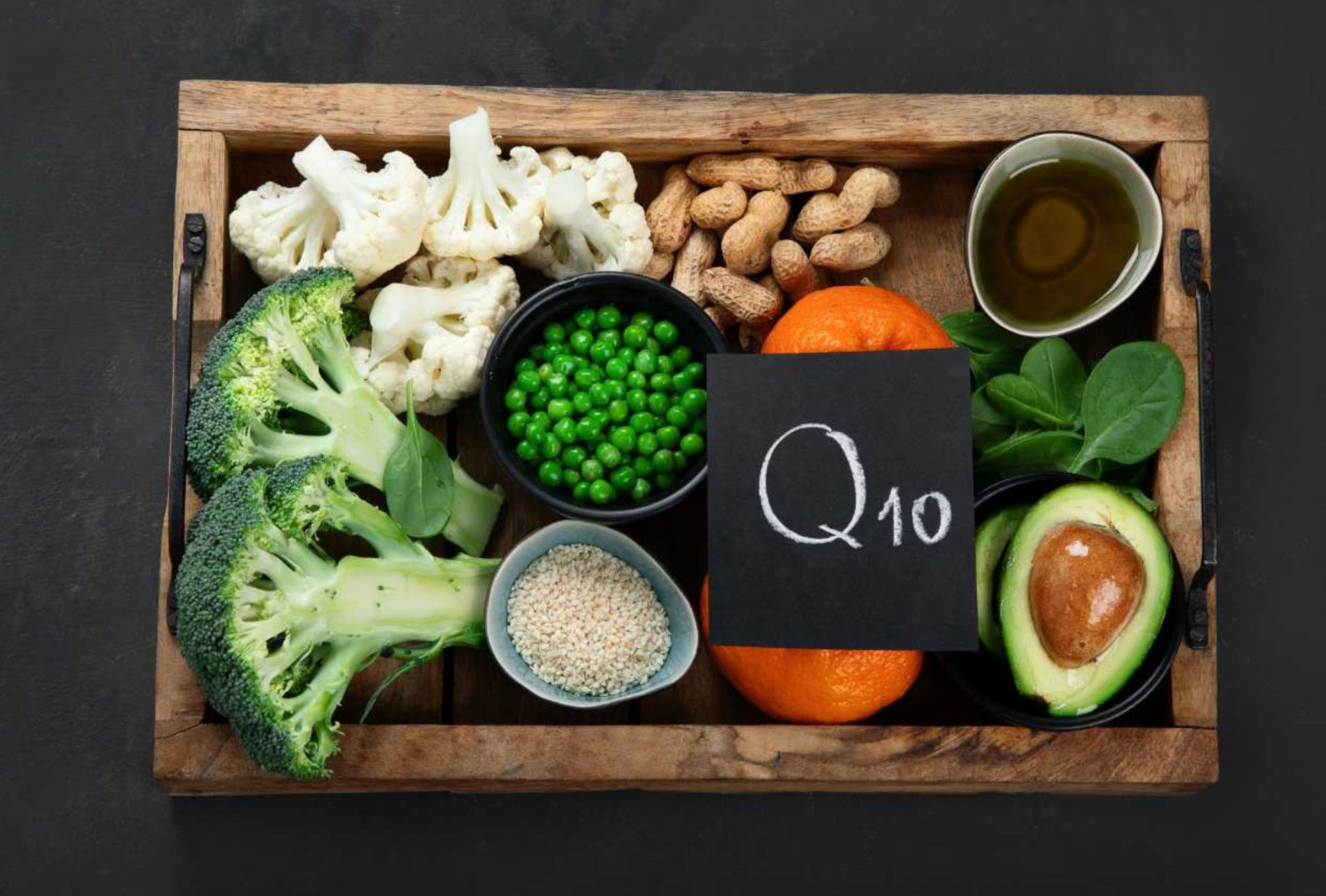
The richest sources by far are offal: beef heart, liver and kidney contain between 60 and 115 mg of CoQ10 per kilo. Next come oily fish such as mackerel, sardines and herring (35–45 mg/kg), beef (around 30 mg/kg) and poultry. Among plant-based sources, the most beneficial are pistachios, peanuts, soya, spinach and broccoli, though their levels are much lower (5–20 mg/kg).
The practical limitation is that, even with a diet rich in these sources, the daily intake of CoQ10 rarely exceeds 5–10 mg, which is far below the 100–300 mg required for tangible effects. This is why, in almost all contexts where CoQ10 is used for a specific purpose, supplementation becomes the most realistic way of achieving these levels.