- Health and wellness
- 929 views
Functions and importance of coenzyme Q10 in the body
Coenzyme Q10, also known as ubiquinone or CoQ10, is a molecule produced naturally by the body and found in virtually every cell in the body. Its main role is carried out in the mitochondria, the ‘powerhouses’ of the cell: without it, the production of ATP (the energy that powers the muscles, heart and brain) slows down or comes to a halt.
Put simply, CoQ10 is the ‘electrical wire’ that transports electrons along the mitochondrial respiratory chain. When it functions properly, the body produces energy efficiently. When levels become low, everything slows down (and this manifests itself through specific symptoms). By acting in synergy with other bioenergetic molecules such as NADH, CoQ10 forms an integrated system for cellular energy production.
But it does more than just provide energy: CoQ10 is also a powerful antioxidant. It protects cell membranes from damage caused by free radicals – those unstable compounds that build up as a result of physical stress, pollution, an unbalanced diet or simply the passage of time. It is in this dual role (energy production + antioxidant) that much of its value lies, for athletes, for people on medication and for anyone wishing to protect their body over time.
There is, however, one point to bear in mind: the body’s own production of CoQ10 declines with age. After the age of 30–35, a gradual decline sets in, which becomes more pronounced after the age of 50. As a result, the body has less and less CoQ10 available at precisely the time when it needs it most.
The main symptoms of coenzyme Q10 deficiency
A CoQ10 deficiency rarely manifests as a single, recognisable symptom. It more often presents as a range of vague signs, which people tend to attribute to stress, intense training or simply ‘getting on in years’. Here are the most common ones:
- Chronic fatigue and lack of energy: this is the most common warning sign. You feel exhausted even after a night’s sleep, recovery after training takes longer and performance declines for no apparent reason;
- Muscle weakness and pain: muscles tire more quickly, recover less effectively, and you experience pain that does not go away with rest. This is very similar to (and is often confused with) statin-induced myopathy in those taking these medicines;
- Mental confusion and difficulty concentrating: the brain consumes enormous amounts of ATP; a CoQ10 deficiency affects memory, mental clarity and reaction times;
- Reduced exercise tolerance: you become short of breath sooner, the lactate threshold drops and training sessions become more strenuous at the same intensity;
- Irregular heart rhythm or a feeling of cardiac fatigue: the heart is the organ with the highest concentration of CoQ10 in the body; a deficiency can affect its contractile function and rhythm;
- Weakened immune system: increased susceptibility to infections, slower recovery and recurrent inflammation.
Those who experience one or more of these symptoms persistently may find the article on the best supplements for physical and mental fatigue useful, as it provides a comprehensive overview of the available supplementation strategies. In the event of persistent symptoms, it is essential to seek advice from a healthcare professional to determine the cause.
Benefits of supplementation and applications
Taking CoQ10 supplements is not only beneficial for people with a confirmed deficiency: it is a valid strategy for anyone wishing to optimise cellular energy production, protect the cardiovascular system and manage situations where CoQ10 levels are chronically low. The strongest clinical evidence relates to several areas.
Role in the management of fibromyalgia
Fibromyalgia is a condition characterised by widespread muscle pain, chronic fatigue and sleep disturbances. Several studies have found that patients with fibromyalgia have significantly lower CoQ10 levels than the general population, particularly in peripheral blood mononuclear cells.
In these individuals, CoQ10 supplementation has shown encouraging results in several areas: a reduction in pain intensity, improved sleep quality, a reduction in perceived fatigue and an improvement in markers of oxidative stress.
The doses used in the studies range from 100 to 300 mg per day, with clearer results observed after at least 3 months of continuous use. The proposed mechanisms involve both improved muscle mitochondrial function and a reduction in free-radical-related inflammation. These findings have yet to be confirmed, and any course of action in this regard must be supervised by the doctor responsible for the patient’s care.
The relationship between coenzyme Q10 and cholesterol
The link between CoQ10 and cholesterol involves statins, the world’s most widely prescribed medicines for lowering LDL cholesterol. The problem is that statins, by blocking the enzyme that regulates cholesterol production in the liver (HMG-CoA reductase), simultaneously block the pathway that produces CoQ10. The result: lower cholesterol levels, but also less CoQ10 available for the muscles and the heart.
This explains why people taking statins often complain of muscle pain, fatigue and reduced physical performance: these are symptoms of CoQ10 depletion. Replenishing CoQ10 helps to correct the deficiency caused by the medication, without interfering with its therapeutic effect. To find out more specifically about the link between CoQ10 and statin-related muscle pain, see our article on coenzyme Q10 and muscle pain. For further information on supplementation strategies for high cholesterol, the guide to the best supplements for high cholesterol and triglycerides is available.
When it comes to diet, choosing high-quality fats makes all the difference to overall cardiovascular health: the relationship between fatty foods and cholesterol is explored in more detail in the article on peanut butter and cholesterol.
How to increase your coenzyme Q10 levels
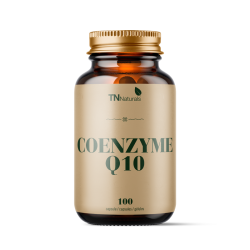
There are two ways to increase CoQ10 levels in the body: through diet and through supplementation. In most cases, particularly after the age of 40 or when taking medication that reduces endogenous synthesis, diet alone is not sufficient and supplementation becomes the most effective option. To find high-quality formulations, a wide range of coenzyme Q10 supplements is available in the store.
Foods richest in vitamin Q
CoQ10 is present in many foods, but in highly variable amounts. The richest sources are:
- Offal: beef heart (approx. 113 mg/kg), liver (approx. 65 mg/kg) and kidney (approx. 73 mg/kg) are the richest dietary sources in absolute terms. Rarely consumed in the modern Western world, but highly nutritious;
- Oily fish: mackerel (approx. 43 mg/kg), sardines (approx. 41 mg/kg) and herring are excellent sources, readily available and easy to cook;
- Beef: beef contains around 31 mg/kg, with higher levels found in the most active muscle cuts;
- Nuts: pistachios and peanuts are among the most valuable plant-based sources, containing around 20 mg/kg;
- Broccoli and spinach: these are among the richest vegetables, although the levels are lower (5–10 mg/kg);
- Soya and soya oil: decent plant-based sources for those following a plant-based diet.
The problem is that, even when consuming these sources daily, dietary intake of CoQ10 remains in the region of 3–6 mg per day, which is far short of the 100–300 mg required to achieve clinically relevant effects. This is why supplementation is the most realistic approach when one genuinely wishes to correct a deficiency.
How to choose the right supplement
Not all CoQ10 supplements are created equal. The most important factor to consider is bioavailability: CoQ10 is a large molecule that is difficult for the gut to absorb, especially in its standard powder form. Here’s what to look for before buying:
- The form of the molecule: CoQ10 exists in two forms, ubiquinone (the oxidised form, which is cheaper) and ubiquinol (the reduced form, which is directly active as an antioxidant). Ubiquinol generally has higher bioavailability, particularly in older people or those with absorption problems;
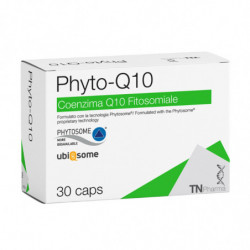
- The delivery system: formulations that use patented technologies to improve solubility and intestinal absorption ensure significantly higher plasma levels than standard capsules.Ubiqsome® is an example of a patented phytosomal technology that improves the solubility and absorption of CoQ10, enabling effective plasma levels to be achieved with lower dosages than those of conventional formulations;
- The absence of unnecessary additives: colourings, artificial flavourings and preservatives add no benefit and often make the formula less effective;
- The dosage form: oily softgels generally have better bioavailability than powder capsules, as CoQ10 is fat-soluble and is better absorbed in the presence of fats.
Dosage and duration of use
The optimal dosage depends on the objective and the context of use. Here are the general guidelines based on available data:
- General wellbeing and antioxidant support: 50–100 mg per day is an adequate maintenance dose to support energy production in the absence of any specific deficiency;
- When taking statins: it is advisable to start with 100–200 mg per day; some people may benefit from doses of up to 300 mg to compensate for the depletion caused by the medication — on medical advice;
- Fibromyalgia and chronic fatigue: studies use doses of between 150 and 300 mg per day, often divided into two doses, under the supervision of a healthcare professional;
- Sports performance and recovery: 100–200 mg per day, preferably taken before training or with the meal preceding it.
Regarding timeframes: CoQ10 is not a supplement with an ‘immediate effect’. It generally takes 4 to 8 weeks before any changes that can be considered significant are noticed, particularly in terms of energy levels and muscle function. For those taking it to support long-term treatment (with statins, for example), supplementation must be continued for the entire duration of the treatment. It is best taken during or immediately after a meal containing some fat, as this significantly improves its absorption in the gut.
Contraindications and precautions for use
In terms of safety, CoQ10 has an excellent safety profile : it is well tolerated by most people, even at high doses (up to 1,200 mg per day in clinical trials without any significant adverse effects). That said, certain situations warrant attention:
- Anticoagulant treatment with warfarin: CoQ10 has a structure similar to that of vitamin K and may slightly reduce the anticoagulant effect. People taking warfarin should monitor their INR after starting supplementation and inform their doctor;
- Antihypertensive medicines: CoQ10 has a mild blood-pressure-lowering effect; in those already taking medicines to lower blood pressure, it may enhance this effect. Monitoring blood pressure during the first few weeks is a sensible precaution;
- Pregnancy and breastfeeding: safety data for these periods are limited. It is advisable to avoid taking supplements or to consult your doctor before starting them;
- Chemotherapy: certain anti-cancer drugs act via oxidative mechanisms which CoQ10, as an antioxidant, could theoretically counteract. It is essential to seek the advice of an oncologist before taking any supplements during a course of chemotherapy.
Gastrointestinal side effects (nausea, stomach discomfort) may occur rarely, particularly at high doses taken on an empty stomach. These can be resolved by taking the supplement with meals.
Frequently asked questions
What blood tests are available for coenzyme Q10?
Blood tests for coenzyme Q10 are not part of standard diagnostic procedures. It is instead a specialised test that measures the plasma concentration of CoQ10 (expressed in µg/mL or µmol/L), available in clinical laboratories equipped with chromatographic techniques (HPLC).
Plasma levels considered normal are generally between 0.4 and 1.9 µg/mL, although reference ranges may vary slightly from one laboratory to another. Levels below 0.4 µg/mL are considered indicative of a significant deficiency.
People who may benefit from requesting this test:
- Patients who have been taking statins for more than 3–6 months and who complain of fatigue or muscle pain
- People with fibromyalgia or unexplained chronic fatigue
- People with diagnosed mitochondrial disorders
- Those who have been taking CoQ10 for some time and wish to check the effectiveness of the supplementation.
This test is not usually reimbursed by the National Health Service in the absence of specific clinical indications, and must therefore usually be carried out privately. Alternatively, for those who do not wish to undergo the test, it is possible to assess the subjective response to supplementation during the first 8 to 12 weeks: a perceived improvement in energy levels and stamina, and a reduction in muscle pain, are already an indirect indicator of its effectiveness.