- Health and wellness
- 880 views
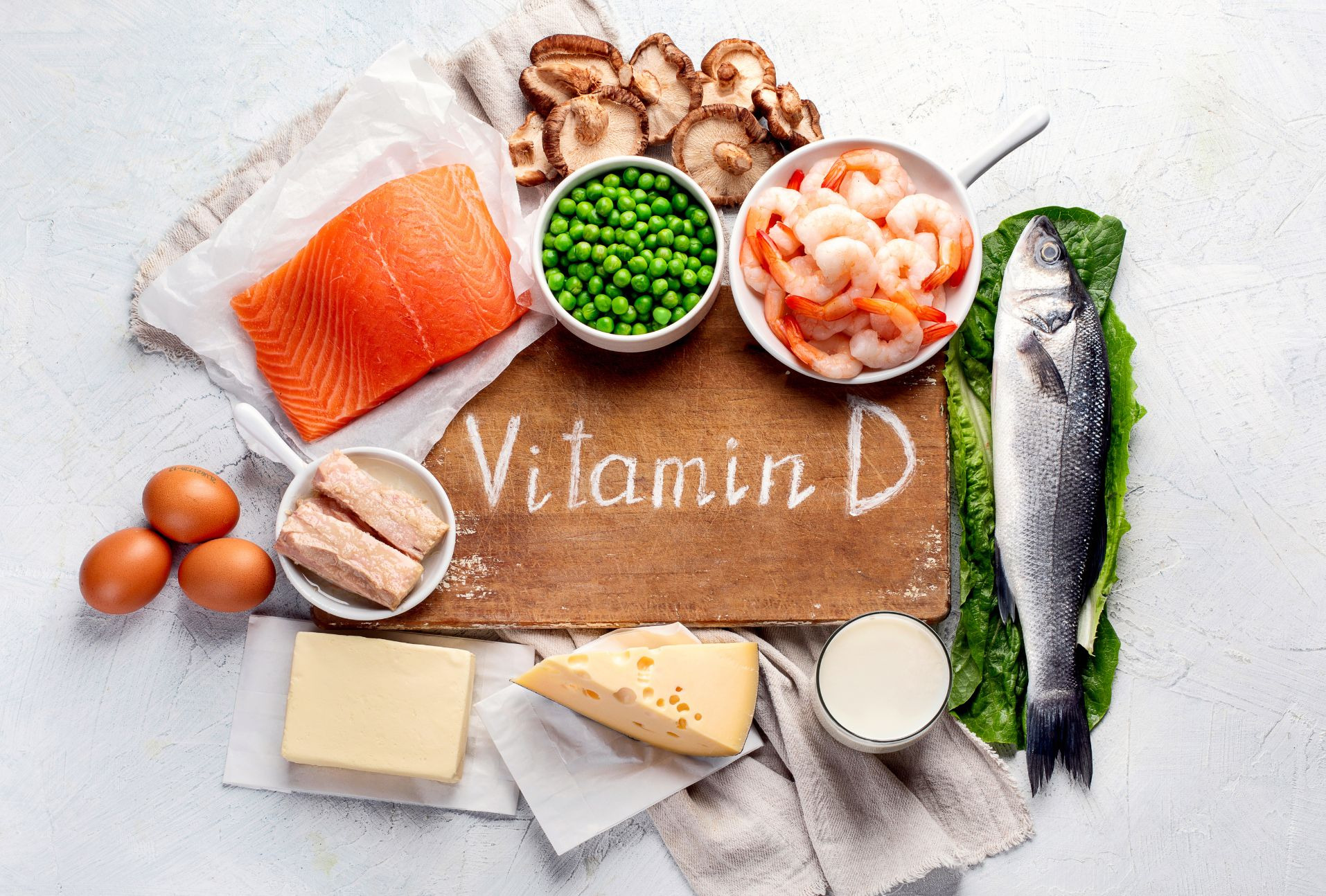
Why diet alone is not always enough
Vitamin D occupies a unique position amongst micronutrients: most of our intake does not come from food but from the skin, which synthesises it when exposed to UVB rays. Diet plays a supplementary role, not a primary one.
This poses a structural problem in our part of the world. From October to March, UVB levels are too low to allow for significant synthesis. For nearly half the year, therefore, diet becomes the only natural source available — and it was never intended to fulfil this role on its own.
The nutritional reference value established by ANSES for adults is 15 µg per day, or 600 IU. As we shall see, achieving this figure through diet alone requires a level of consistency that few people actually maintain.
Oily fish: the richest sources
These are the undisputed champions of dietary vitamin D, by a long way. They contain the D3 form (cholecalciferol), which the body utilises most efficiently.
These figures are indicative averages, which vary depending on origin, season, farming method and preparation. Wild salmon does not have the same content as farmed salmon, and cooking at high temperatures reduces some of it.
Cod liver oil deserves special mention: its concentration is extremely high, far exceeding that of other foods. It should be consumed in accordance with the doses indicated on the packaging, and never in unlimited quantities.
Other animal sources
Apart from oily fish, a few other foods provide a useful contribution, albeit a more modest one.
- Egg yolk: approximately 5 µg per 100 g, or around 1 to 2 µg per yolk. This is a genuine but limited source, which depends heavily on the hen’s diet.
- Veal and beef liver: a few micrograms per 100 g, with the added benefit of providing both iron and vitamin A.
- Butter: approximately 1 to 2 µg per 100 g. As the quantity consumed is small, its contribution remains marginal.
- Hard cheeses: low levels, in the region of 0.5 µg per 100 g.
A useful point to note: as vitamin D is fat-soluble, it is concentrated in the fatty parts. Skimmed dairy products therefore contain significantly less than their full-fat equivalents, unlike calcium, which is not affected by skimming.
Plant-based and vegan sources
This is where things get properly complicated. Plants contain very little vitamin D, and when they do, it is most often vitamin D2 (ergocalciferol), which the body utilises less efficiently than D3.
Mushrooms
Mushrooms are the only plant source that is naturally significant. Like human skin, they synthesise vitamin D when exposed to ultraviolet light — but in the form of D2.
The vitamin D content is modest in their natural state, at around 1 to 2 µg per 100 g. It increases significantly in mushrooms exposed to UV light, a treatment now mentioned on some packaging. Sun-dried varieties, particularly shiitake mushrooms, also have higher levels.
Fortified foods
For vegetarian and vegan diets, fortified products often provide the most reliable source:
- plant-based drinks (soya, almond, oat) fortified with vitamin D
- certain margarines, which are routinely fortified in several countries
- enriched plant-basedbreakfast cereals and yoghurts
However, check the form used on the label: products fortified with plant-based D3, derived from lichen, are more effective than those fortified with D2.
Let’s be clear on this point: meeting your vitamin D requirements through an exclusively plant-based diet is the exception rather than the rule. For such individuals, vegan D3 supplementation is often the most practical solution, particularly in winter. The available formulations are set out in our guide to vitamin D3 and the recommended dosage.
How to optimise dietary intake
A few simple principles will help you make the most of what your diet can actually provide.
- Two to three portions of oily fish a week: this is by far the most effective way to boost your intake. Tinned sardines and mackerel are economical, convenient and a rich source of vitamin D.
- Always combine with fats: as vitamin D is fat-soluble, it is absorbed much more effectively as part of a meal containing fats. A drizzle of olive oil over mushrooms is no small matter.
- Opt for gentle cooking methods: frying and cooking at very high temperatures break down some of the vitamin D. Steaming, baking at a moderate temperature and tinned fish preserve the vitamin D content better.
- Don’t skip the egg yolk: that’s where the vitamin D is found, not in the white.
- Expose your mushrooms to the sun before cooking them: one to two hours, with the gills facing upwards, significantly increases their vitamin D content.
A reminder to put things into perspective: even an exemplary diet does not replace the need for sun exposure. The two sources are complementary, and when the latter becomes ineffective from October to March, diet alone struggles to bridge the gap. This explains the frequency of deficiencies in late winter, as detailed in our article on vitamin D deficiency.
Frequently asked questions
Which food is richest in vitamin D?
Cod liver oil is by far the food with the highest concentration of vitamin D, in amounts that are unrivalled among common foods. It should be consumed in accordance with the recommended doses.
Among foods consumed regularly, smoked herring tops the list with around 20 µg per 100 g, followed by mackerel and salmon at around 8 to 13 µg. A single portion of herring alone meets an adult’s daily recommended intake.
Which fruits and vegetables contain vitamin D?
No fruit or vegetable contains vitamin D in significant quantities. This is a persistent misconception, but vitamin D is not present in plants in the traditional sense of the term.
The only exception is mushrooms, which are botanically neither fruit nor vegetables: they synthesise vitamin D2 when exposed to ultraviolet light, with levels of around 1 to 2 µg per 100 g, and even higher after UV exposure.
How can you get vitamin D without eating fish?
There are three approaches to combine. Egg yolks and liver provide a modest but real contribution. Mushrooms, particularly those exposed to UV light, are the best plant-based option. Fortified products — plant-based drinks, margarines, cereals — are often the most consistent source.
However, we must be realistic: without oily fish, it is very difficult to meet the nutritional reference value through diet alone. For diets that exclude fish, vegan vitamin D3 supplementation is generally the safest option, particularly during periods of low sunlight.
Does cooking destroy vitamin D?
It breaks down some of it, but without completely eliminating the intake. The greatest losses occur when cooking at very high temperatures, particularly when frying.
Steaming, baking at a moderate temperature or cooking en papillote preserves the vitamin D content better. It is worth noting that tinned fish retains its vitamin D well, as the preserving oil retains the fat-soluble fraction: do not automatically discard the juice from your tinned sardines.
Do you need to take supplements if you eat oily fish regularly?
This depends on your exposure to sunlight and the time of year. Eating two to three portions of oily fish a week, combined with regular exposure to the sun during the summer months, enables many people to meet their requirements.
However, between October and March, vitamin D synthesis in the skin is virtually non-existent in our latitudes, and diet alone rarely meets the recommended intake consistently. Those at risk — the elderly, people with limited sun exposure or those with dark skin — may need additional supplementation even with a healthy diet. Our guide to vitamin D: benefits, deficiency and when to take it details all these situations.
There are foods rich in vitamin D, but they are few in number and concentrated in a single food group: oily fish. Two to three portions a week, combined with fats and regular sun exposure when the season allows, form the basis of good vitamin D status. When this is not enough, particularly in winter, the Tsunami Nutrition range of vitamin D supplements steps in with highly bioavailable formulations.