- Health and wellness
- 600 views
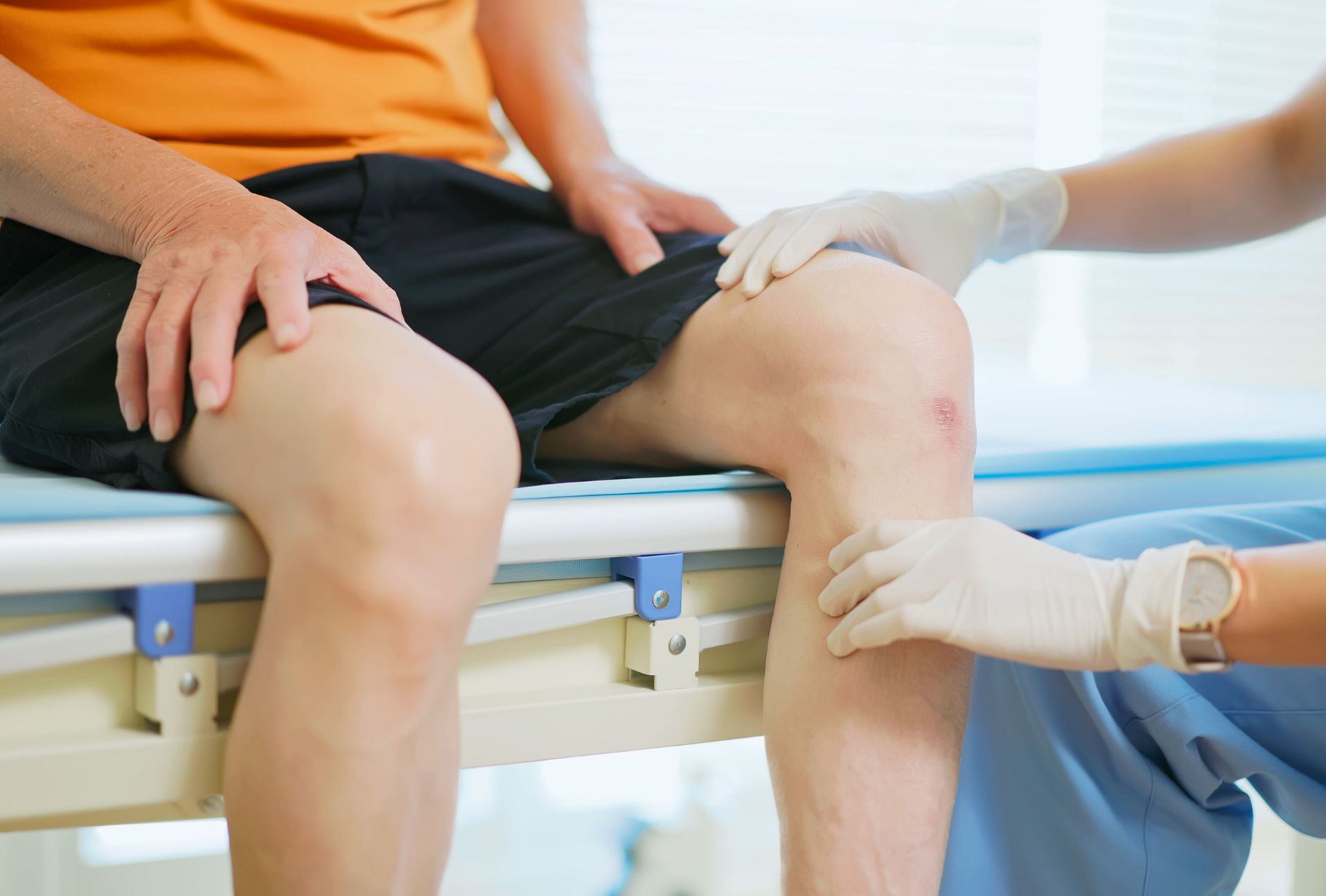
Why do joints crack?
A knee that clicks when standing up, a shoulder that creaks during a workout, fingers that crack when you wake up: these joint noises are extremely common and, in the vast majority of cases, completely harmless.
However, it is important to know exactly which sound we are talking about. The term ‘cracking’ actually covers three distinct phenomena, whose causes and implications are completely different. Knowing how to distinguish between them helps us to differentiate between what warrants no attention and what warrants a consultation.
Cavitation: the most common mechanism
This explains the clear, audible crack – the one that ‘feels good’ and does not occur immediately if you try again.
Movable joints are enclosed within a capsule containing synovial fluid, a lubricating fluid in which gases are dissolved. When a movement suddenly pulls the joint surfaces apart, the pressure in this space drops and a gas bubble forms and then collapses. This collapse produces the characteristic sound.
Two practical consequences arise from this mechanism. Firstly, it is painless by nature. Secondly, it takes a certain amount of time (often fifteen to twenty minutes) for the gases to redissolve before another crack is possible. If you cannot make the same joint ‘crack’ again straight away, this is due to cavitation.
Sliding tendons and ligaments
The second mechanism produces a different sound: drier, more subtle, and, above all, reproducible at will.
It corresponds to a tendon or ligament passing over a bony prominence. As it moves, the structure becomes taut and then suddenly relaxes as it clears the obstacle. This is typically observed in the hip, shoulder and ankle.
This type of clicking is nothing to worry about if it is painless. It becomes worth investigating if it is accompanied by discomfort, as it may then indicate an imbalance in tension between the muscles surrounding the joint – something that can be addressed through exercise.
Cracking sounds related to cartilage
The third type is the one that warrants the most attention. This is no longer an isolated cracking sound but a sensation of friction, grinding or grit, often continuous throughout the movement.
This indicates a loss of smoothness in the cartilage surfaces, which no longer glide as easily over one another. It is mainly encountered in the knee, particularly during deep bends, squats or when going down stairs.
This is the only one of the three mechanisms that warrants medical advice, particularly if it is accompanied by pain, swelling or a loss of mobility. As cartilage has a limited capacity for repair, early treatment is more beneficial than delayed treatment.
Painless cracking: is it cause for concern?
No. An isolated, painless cracking sound, without swelling or restricted movement, is not a sign of a joint problem. It is a normal mechanical phenomenon, and its frequency simply varies from person to person depending on body type and tissue laxity.
We must also dispel a widely held belief: cracking your fingers does not cause osteoarthritis. The idea has been around for decades, but studies looking into the matter have found no link between this habit and subsequent joint deterioration. It may annoy those around you; it does not damage the joints.
One useful observation, however, is that cracking sounds are more common in the morning and after a prolonged period of inactivity. The synovial fluid is then more viscous and the tissues less mobile. The cracking sounds generally subside once the joint has warmed up, which in itself is an interesting piece of information on what to do.
When a cracking sound should raise concerns
Certain combinations of symptoms indicate a more serious problem. Seek medical advice if the joint noise is accompanied by any of the following:
- pain, either at the moment of the cracking sound or as a persistent sensation
- swelling or a sensation of warmth around the joint
- prolonged morning stiffness lasting longer than thirty minutes
- a locking sensation or a feeling that the joint is ‘sticking’
- a loss of mobility or reduced range of movement
- instability, the sensation that the joint is giving way
- sudden onset following an injury
In these situations, it is no longer the cracking sound that matters, but what accompanies it. The sound is then merely one indication amongst others, and diagnosis is a matter for the doctor.
The joints most commonly affected
Not all cracking sounds are the same, depending on where they occur:
- The knee, the noisiest joint and the one most prone to problems. Cracking sounds during deep flexion are common and often harmless; a sensation of continuous grinding warrants closer attention.
- The shoulder, where cracking is often linked to tendons passing through a narrow space. A noise accompanied by pain during movements above the head warrants an examination.
- The hip: a reproducible clicking sound is very common here and generally harmless, caused by a tendon sliding over a bony protrusion.
- The fingers and neck: almost always caused by cavitation, and therefore harmless. However, be wary of forceful manipulation of the neck, which is best left to a professional.
- The ankle: cracking sounds following a previous sprain may indicate residual instability, which can be addressed through physiotherapy.
How to reduce joint cracking
No method can permanently eliminate mechanical cracking. However, there are several approaches that can genuinely improve joint comfort and reduce the frequency of noises caused by an imbalance in tension.
Mobility and muscle strengthening
This is by far the most effective approach. A joint is stabilised by the muscles surrounding it: when these are weak or out of balance, the structures work inefficiently and friction increases.
- Always warm up before exercising. Clicking noises are significantly reduced in a warmed-up joint, where the synovial fluid is more fluid.
- Strengthen the stabilising muscles rather than just the prime movers. For the knee, this means working the glutes and hamstrings as much as the quadriceps.
- Work on full-range mobility with moderate loads, rather than restricting movement for fear of noise.
- Avoid prolonged inactivity. A joint that does not move becomes stiff, and a stiff joint cracks more.
An important point for exercisers: avoiding an exercise simply because it causes a pain-free joint to crack is counterproductive. Restriction weakens the stabilising muscles and exacerbates the imbalance in the medium term.
Hydration and body weight
Synovial fluid is composed mainly of water. Inadequate hydration alters its viscosity and therefore the quality of lubrication. It is not a miracle cure, but it is a basic prerequisite that is often overlooked.
Body weight, for its part, has a direct mechanical impact on weight-bearing joints. Every kilo results in increased stress on the knee when walking and going down stairs.
Nutritional support
Several nutrients are involved in the structure and maintenance of joint tissues. Here is what is widely recognised, and what is less so.
- Vitamin C contributes to the normal formation of collagen to ensure the normal function of cartilage and bones. This is a recognised claim, and collagen is the main component of cartilage.
- Vitamin D contributes to the maintenance of normal bones and normal muscle function, and therefore to the active stability of the joint. Our guide ‘Vitamin D: benefits, deficiency and when to take it’ details its role.
- Manganese contributes to the normal formation of connective tissues and to the maintenance of normal bones.
- Collagen peptides are the subject of numerous studies on joint comfort. It is important to remain cautious: no health claims have been recognised to date in this area. Our article on collagen peptides summarises what we know, whilst the one on their contraindications outlines the precautions to be aware of.
For a comprehensive approach to joint comfort, our selection of the best dietary supplements for bones and joints showcases the available formulations, which are also grouped under the ‘bone and joint health’ category.
It is worth reiterating clearly: no supplement can make mechanical creaking disappear. Nutritional support helps maintain the long-term health of joint tissues; it does not alter the behaviour of a gas bubble in the synovial fluid.
Frequently Asked Questions
Why do my joints crack so much?
In the majority of cases, this is due to cavitation: gas bubbles that form and collapse in the synovial fluid when pressure changes abruptly. It is a normal mechanical phenomenon, the frequency of which depends on body structure, tissue laxity and activity levels.
The cracking sounds are more frequent in the morning, after a prolonged period of inactivity, and decrease once the joint has warmed up. If they are painless and do not hinder movement, they are not a sign of a problem.
Does cracking your knuckles cause osteoarthritis?
No. This is one of the most persistent myths on the subject, and studies on the matter have found no link between this habit and the development of osteoarthritis in the fingers.
The sound comes from the collapse of a gas bubble, not from bones rubbing together. This habit therefore does not damage the joint surfaces, although it may annoy those around you.
Which supplement should you take to stop joint cracking?
No supplement can stop mechanical cracking, and this must be made clear to avoid false expectations.
What can be supported, however, is the long-term health of joint tissues: vitamin C contributes to the normal formation of collagen for the normal function of cartilage; vitamin D helps maintain normal bones and muscle function; and manganese contributes to the normal formation of connective tissue. By far the most effective approach remains muscle strengthening and mobility exercises.
Is it serious if your knee cracks when you squat?
A distinct but painless cracking sound during deep flexion is very common and usually harmless. The knee is the noisiest joint in the body, due to its mechanical complexity.
What changes the picture is the presence of a continuous grinding sensation throughout the movement, rather than an isolated click, or when accompanied by pain, swelling or locking. In this case, seek medical advice.
Does sport make the cracking worse?
More often than not, the opposite is true. A joint surrounded by strong, balanced muscles functions more smoothly, and warming up significantly reduces noise by thinning the synovial fluid.
The problem isn’t sport itself, but two common mistakes: failing to warm up, and avoiding movements that make a noise. Restricting your range of motion for fear of a painless cracking sound gradually weakens the stabilising muscles and ultimately makes the situation worse. Vitamin D is one of the micronutrients that regular exercisers should monitor, as highlighted in our article on essential supplements for natural bodybuilders.
In the vast majority of cases, joint cracking is a normal mechanical phenomenon that requires no treatment. What matters is what accompanies it: pain, swelling, stiffness or a loss of mobility are reasons to seek medical advice. To support the long-term health of your joints, explore the products in Tsunami Nutrition’s bone and joint health range.